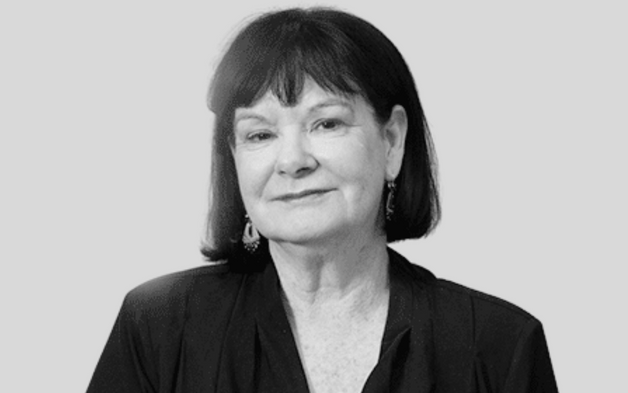

The pandemic has exposed harsh new equalities warns ITUC

The pandemic has exposed tragic fault lines and new levels of inequality, said Sharan Burrow, general secretary, International Trade Union Confederation, speaking at FIS Maastricht on the eve of her departure from the organisation where she has been general secretary since 2012.

Fault lines visible in the number of informal workers and the loss of women from the workplace. While inflation in food and energy following in its wake has made life much more challenging for families, causing more inequality and poverty, and pushing back the transition, she said.

Burrow linked companies’ struggle for talent to a “broken” labour market. Over half of the global economy works in the informal sector, with another large proportion of the world’s workforce in insecure work.

“The world of work is not serving anyone well,” she said. In a new Social Contract, she outlined key demands for workers spanning jobs, rights, social protection, equality and inclusion.

Returning to full employment is key for people to trust economies and governments again. She stressed the importance of creating more jobs in sectors spanning care to green infrastructure and technology. Without this kind of investment, the divisions between nations will grow, and with it discontent. “Trust in democratic institutions is so low,” she warned.

Companies need to be prepared to pay minimum living wages to build confidence in the economy and to ensure people can afford to support themselves through increasing shocks, whether climate or health-related. She said that more than half the world’s population has no social protection.

Sponsored Content

Burrow also sounded the alarm on progress around diversity. Women have lost out during the pandemic and involuntarily left the labour force in a damaging development for women and the global economy. Elsewhere, she noted a rise in racism, made worse by the lack of policy around refugees and inclusion.

SDGs

Burrow said the world will only deliver on the SDGs with global cooperation. But she noted “low ambition” at COP27, particularly around developed countries paying for damages inflicted on the economies of poorer countries. “Countries are not serious about the notion of a Just Transition,” she said.

The SDGs represent solutions but require countries to put people and planet first. “We are creating the seeds of our own destruction,” she said, highlighting how some US investors now  “rage” against integrating ESG.

“What is it they value?” she asked, urging delegates to value people, homes and an economy wrapped in democracy that gives everyone a fair go in the world. She said leaders have made a promise to achieve net zero, but are now forgetting the commitments they made.

She highlighted the role of the union movement in supporting the SDGs, particularly around equality and inclusion. Creating a shared future of common security and prosperity involves including people, and the unions that represent them, in that vision.

She noted how union uptake in the US is at record lows; workers are bullied to not join unions and employers close down operations to avoid unionized workers.

“Companies will do anything to oppress workers and keep them poor; to not sit at the table and not work with them,” she said. She concluded that many CEOs are not aware of the conditions for workers making their products further down their supply chain in a “hidden workforce.”


Leave a Comment

Impact investing’s case for scale

Impact investing’s case for scale

Impact investing has come a long way in the past two decades, going from a niche strategy to a $1.5 trillion industry, but there are still challenges for it to reach institutional scale due to the lack of products and insufficient evidence of outperformance in some parts of the market.

Sort content by

CPP takes a fundamentally different approach to equities

Access and analysis of unique data is key to CPP Investments’ active equities team creating “one of the most sophisticated fundamental shops in the world” head of the team Frank Ieraci told the Fiduciary Investors Symposium at Stanford.

Managing not just measuring risk is key to long-term returns

Nobel Prize-winning economist Myron Scholes told the Fiduciary Investors Symposium at Stanford University that the focus of asset owners needs to shift from measuring risk to managing it, to avoid the downside while capturing the upside and allowing compounding to do its thing.

Asset owners need organisational prowess to take advantage of distress

The market has already entered the early stages of a multi-year restructuring cycle that will present many opportunities for credit providers. Researchers and investors from GIC, CalPERS and IMCO recommend some organisational changes that will ensure asset owners can make the most of those opportunities.

Operational excellence as critical as asset allocation for success

Asset allocation is often nominated as the most important element in long-term investment performance. But the Fiduciary Investor s Symposium at Stanford University heard that no investment strategy or process can operate in a vacuum – it can’t happen effectively without operational excellence.

Get on board: why the megatrend is your friend

Megatrends are the forces that will shape our planet, our society and our lives decades into the future. The Fiduciary Investors Symposium at Stanford University heard Megatrends provide potentially rich pickings for investors, as long as they know how to use them,.

The future of portfolio construction

Evolving portfolio construction techniques that include more attention to liquidity management, diversification and resilience are needed in a macro environment that has more complexity and volatility delegates at the Fiduciary Investors Symposium at Stanford University heard. Investors from CalSTRS, CPP Investments and MFS share their approach.

Previous



