

Russia’s war in Ukraine is a war on Europe, not just in Europe. Bloody conflict between Europe’s first and third largest armies is unravelling key European beliefs and will trigger a change in the balance of power between European countries that will reshape the continent.
The war is creating a new vulnerability and loss of confidence within the EU. It has laid bare Europe’s dependency on US security, revealing Europe as a US protectorate at a time the US is more focused on its relationship with China. It has also upended the idea that economic interdependency – aka Russia’s dependency on Europe buying its gas and Europe’s dependency on Russia for its gas – guarantees peace.
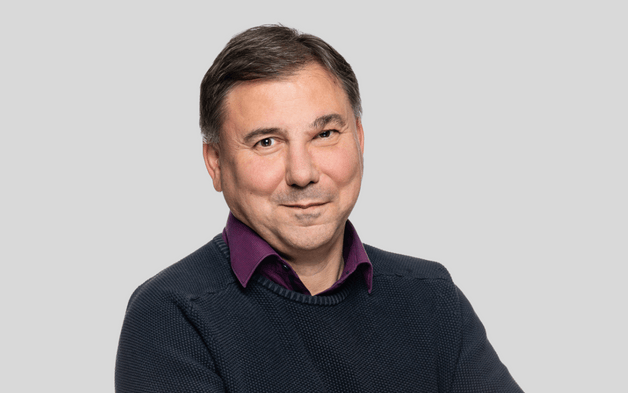
“The ability to change the world through trade has proven unlikely,” said Ivan Krastev, Chair, Centre for Liberal Strategies, European Council on Foreign Relations; permanent fellow at the Institute for Human Sciences and author of the acclaimed book, “After Europe,” speaking at FIS Maastricht.
Europe’s new vulnerability comes after years of the continent acting like a laboratory from pioneering regionalism to coming to lead the world on ideas around sustainability. “To what extent are others going to imitate us now?” he asked.
The EU has been built on an assumption that military power had lost its purchase. An idea that flourished most after US military failures in Iraq and Afghanistan. “War in Ukraine has shown that military power doesn’t matter until you don’t have it,” said Krastev, noting that Germany is now increasing its defence capabilities in a significant identity change.
Regardless of the outcome of the war, he said a major decoupling with Russia lies ahead. Goods and services Europe sourced from Russia will now have to come from somewhere else – often countries Europe doesn’t want to trade with.
“The world is changing, and we are not going back to where we were. The EU should try to reposition itself, but it has been one of the biggest winners of recent years and therefore it is in tough position.” Indeed, Europe’s success whereby small and medium sized countries have been able to outperform, makes dealing with the current crisis particularly challenging. “The EU was suited to an order that is not here anymore,” he said.
Immigration
War in Ukraine is also creating an immigration crisis as Ukrainians continue to pour into Europe. Most recently fleeing as Russia destroys critical infrastructure in cities in western Ukraine like Kiev: around 7 per cent of households in Poland now house refugees at a time the cost of living is going up. The refugee crisis also has profound costs for Ukraine which is experiencing major depopulation of mostly young people (women and children) who will integrate outside the country and are unlikely to return.
Power re-balance
The refugee crisis marks a rebalancing of power in Europe. Ukrainians have been welcomed into eastern European countries which have had little immigration to date. Now these countries are questioning France and Germany’s leadership of the EU. Poland, particularly, is wanting this crisis to lead to a redistribution of power and greater recognition of the political price the country is paying. “Poland needs to be heard,” said Krastev. “The Polish army will be stronger than the German army; the relationship between east and west is changing and levels of arrogance and provincialism are changing.”
EU unity will also be challenged when it comes to negotiating the peace process. Different nation states will have a different idea of the peace, with some pushing for Putin’s removal. This will contrast from previous crisis like the GFC or Syrian immigration into Europe in 2014-2015 when Germany held the solutions.
Criticised for being naïve in its relationship with Russia, building too much economic dependence on Chinese demand and too much security dependency on the US, Germany has lost influence in the bloc. It amounts to a new power balance with the relationship between Germany and Poland as important now as Germany and France. “Gravity is going to move to the east,” predicted Krastev adding that the war has helped European society rediscover the power of nationalism.
A shift to the east will mark a new phase in Europe’s evolution. Many eastern European countries have had difficult histories and don’t take their existence for granted. The EU comprises culturally diverse western Europeans in Germany, France and the Netherlands, former colonial empires with a different view of sovereignty compared to ethnically homogenous eastern Europeans with different sensibilities. The same distinction is visible in eastern Europe’s largest companies which still mostly trade in Europe rather than overseas, he said.
China / US
Europe will feel the heat from growing tensions between the US and China. For example, it is leading to new trends in friend-shoring, creating shorter supply chains and heightening the risk around data sharing, forcing corporates to change strategy. “Decoupling means you must ensure countries are on your side in the supply chain,” said Krastev. “The difficult relationship between the US and China gives Europe less room to manoeuvre.”
Risks
Krastev said that Europe will pay the price for the destruction of Ukraine more than the US where Republicans are trying to change levels of support. He flagged that Germany’s tolerance of high inflation is low and said that politicians will struggle when young Europeans feel like they are the losers. But he concluded with a hopeful message that Europe has the capacity to change. “Europe acts only if it is pushed into a corner. Our system changes in dramatic times, and that sense of drama is now here.”








Leave a Comment
You must be logged in to post a comment.
Login