Disruption in demographic trends

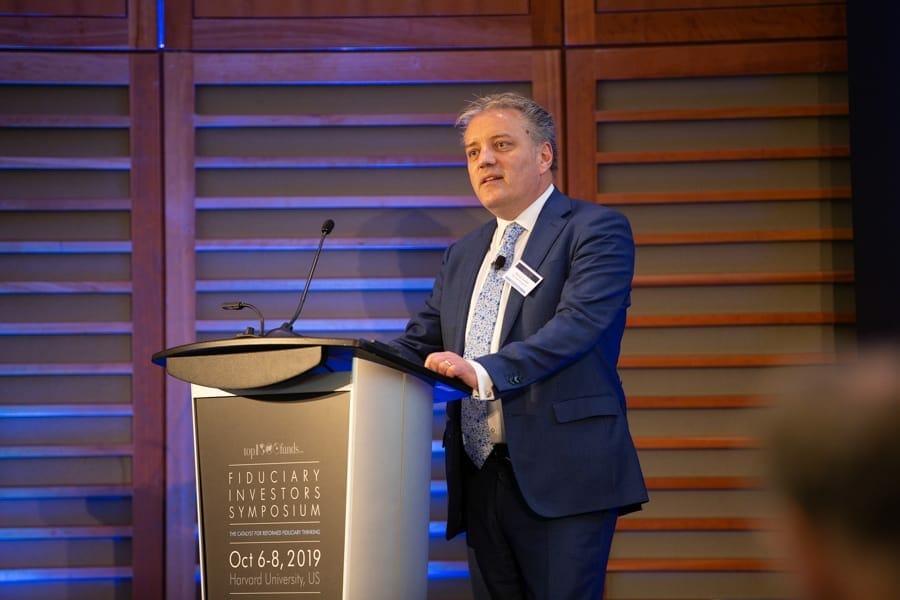
Demographic trends will have a profound impact on pension funds’ investment returns, argued Patrick Zweifel, chief economist at Pictet Asset Management speaking at the Fiduciary Investors’ Symposium at Harvard University. Ageing populations mean retirement ages need to rise and will see pension funds increase risk to stretch for returns. It could also see tougher economic conditions as increased longevity impacts on economic growth and falling saving rates could also lead to rises in interest rates, he told delegates.

World population growth has been slowing since its peak in the 1970s, said Zweifel. Population growth in Europe and America is slowing faster than Asia (also in decline but from a higher base) which will represent 60 per cent of the world’s population in the future. In another trend, the world’s age structure is changing with “less and less young people” in an accelerating phenomenum. The fertility rate is declining so that global population growth will be below “the replacement rate” by 2030, he said.

In contrast, improved healthcare means people are living much longer.

“The impact of a lower fertility rate and increased longevity will drive the share of the working population lower and effect growth,” he said.

It will also impact savings and investment, with an accompanying impact on interest rates which he forecast will rise, reversing the trend in falling rates, to counter the decline in savings in “many moving parts.”

Turning to China, Zweifel told delegates that despite China’s declining working population, employment has risen on account of China’s higher economic participation rate. Older people are working longer and there is an increased share of women in the workforce.

Sponsored Content

“If the right policies are implemented by governments, you can maintain productivity growth to offset the negatives of demographic transitions,” he said. Governments are responding to the demographic transition with policies, but he said policies to support savings or boost productivity “are the hardest.”

Regarding productivity, governments can increase working years and push the retirement age higher. Alternatively, they can support the fertility rate. For example, France and Sweden actively support women in having more children. In another strategy, governments can boost the labour supply by favouring migration. However, migration flows are not constant with populism, he said.

“Populism has had an impact on migration.”

Zweifel said that on one hand the rising number of old people puts more pressure on savings. On the other, it could also encourage people to save more. If people know they are going to live longer, they may start to save more for retirement, he predicted, noting this could particularly be the case in Asia. A natural response to living longer is to increase savings, he said.

“Households are rational and anticipate these things.”

Leave a Comment

Modern slavery needs investor action

Modern slavery needs investor action

Asset owners and managers can help solve modern slavery and invest to stem the suffering of the 40.3 million workers in the world trapped in some form of labour abuse.

Sort content by

The dangers of MMT: A counter argument

Look no further than the economic travails of Italy and Japan to see the perils of Modern Monetary Theory, MMT, said Sonal Desai, CIO, fixed income at Franklin Templeton. Speaking at the Fiduciary Investors’ Symposium at Harvard University, she countered the arguments of Stephanie Kelton, a leading MMT scholar at Stony Brook University and senior economic advisor to presidential candidate, Senator Bernie Sanders who espoused the virtues of MMT in a previous session MMT: A solution to broken policy?

FIS Harvard 2019 podcasts

The Fiduciary Investors Symposium at Harvard University brought together more than 85 asset owners from 20 countries to discuss globalisation, human capital, inequality, longevity, technology, medicine and ethics, and the role of institutional capital in creating real change in the world. We were joined by many distinguished speakers and have put together a podcast series of our favourite sessions.

Healthcare’s multiple opportunities

William Haseltine had a long career at Harvard Medical School, educating a generation of doctors, and designing the strategy to develop the first treatment for HIV/AIDS. He addressed the Fiduciary Investors Symposium about important topics in medicine and health development.

Threats to equity bond correlation

A full-blown trade war, and changes in monetary policy triggered by a loss of credibility in the Federal Reserve and other global policy institutions, could result in a return of the positive correlation between bonds and stocks, and investors need to be aware of the risk, warned Luis Viceira, George E. Bates Professor in the Finance Unit and Senior Associate Dean for Executive Education at Harvard Business School, at the Fiduciary Investors’ Symposium at Harvard University.

Inequality risk equal to climate change

Rebecca Henderson, the John and Natty McArthur University Professor at Harvard University who co-teaches Reimagining Capitalism at HBS, says inequality is equal to climate risk in its potential impact. She told delegates at the Fiduciary Investors Symposium at Harvard University when a system no longer generates freedom and prosperity it must be changed. Change is possible because we have the resources and technology to do it. A first move is decent jobs for people at the “bottom”.

We are going to live longer; prepare now

Understanding the economic implications of changing demographics is essential for investors, said Aubrey de Grey, a biomedical gerontologist speaking at the Fiduciary Investors' Symposium at Harvard University He said the technology exists today so that the ageing process can be combated and people will live much longer in the future than what they do today, so really “longevity is a side effect of health”. He urged investors to think about how people living longer will affect consumer behaviour and investee companies.




