
CalPERS hunts for third pillar PE teams

CalPERS is conducting searches for outside partners to run its new Pillar III private equity program focused on venture capital investment in life sciences, technology and healthcare.

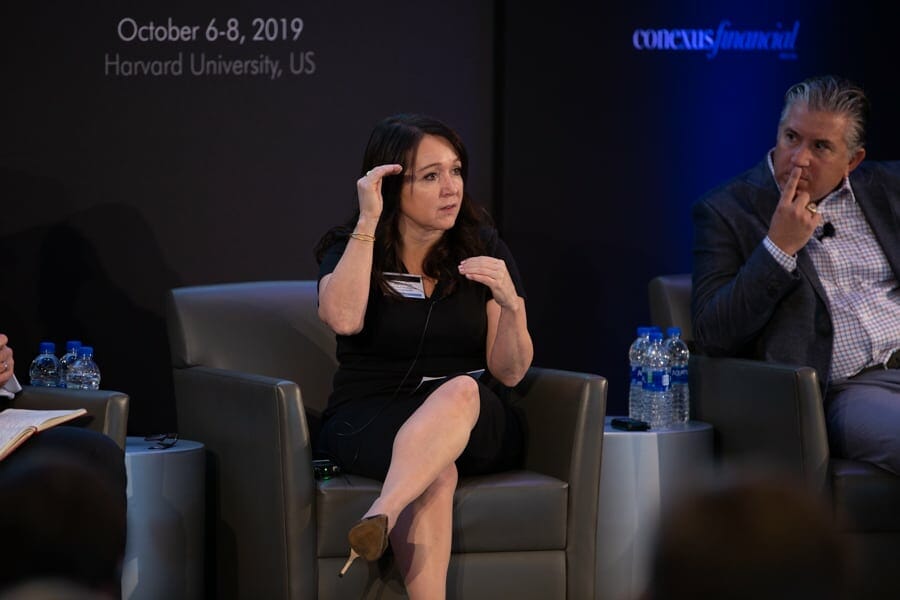
The giant pension fund is on the hunt for “a team of talented individuals” aligned to CalPERS’ mission, said Marcie Frost, chief executive at the $370 billion pension fund, speaking at the Fiduciary Investors’ Symposium at Harvard University, describing the fund’s search for the right team as “patient” and “thoughtful,” rather than rushing to meet a “deadline.”

The focus on life sciences, biotechnology and healthcare comes as the fund seeks to increase its $30 billion private equity allocation, a vital contributor to a 7 per cent return target.

Healthcare and life sciences also offers new investment opportunities following “challenging access” to Silicon Valley. Something Frost attributed to tech companies’ concern that public scrutiny and public record requests at the pension fund infringed their intellectual property.

“We are a public institution and we incubate our ideas very publicly,” she said.

Healthcare also offers an important investment seam as CalPERS struggles to recover ground after a lost decade of private equity investment.

Sponsored Content

Despite the pension fund being at the forefront of the asset class in the 1980s alongside first-mover peers like $139 billion Washington State (now boasting a 22 per cent private equity allocation) and $77. 3 billion Oregon Public Employee Retirement Fund (with a similarly chunky 17.5 per cent allocation) CalPERS didn’t keep pace and its allocation has dwindled to 8 per cent. Something Frost attributed to the consequences of “a decade” of not participating in fund raising with GPs and “inconsistent” capital provision.

Now the pension fund’s “belief in the investment thesis” behind life sciences and biotech, a desire to hold companies long-term and secure income streams to match liabilities, plus a conviction that growth will be “more pronounced in VC than buyouts,” means it can position as a “a reliable and strategic partner,” she said.

“I am excited about the opportunity. We are a 70 per cent funded system and we need to take more risk and be opportunistic. There are opportunities if we get the structure and teams we need.”

Yet CalPERS complex governance structure poses a challenge. Frost said the CalPERS board needs to “send the same message” that the pension fund is a trusted partner and reliable source of capital to the financial sector.

Something that was recently jeopardised when private equity teams talking to the fund had their names leaked to the public, she said.

Alongside its search for new partners, the pension fund is also seeking to improve its “important” relationships with existing private equity partners, said Frost.

“We want to get out of the penalty box with some of our GPs so they start bringing us their best ideas,” she said.

She also noted that CalPERS must navigate building its private equity allocation without paying a “market wage.”

Only when the model is proven, and had an impact on returns, will the focus turn to other parts of strategy like “paying market” or bringing it in-house.

“We have to have the experience before we move in this direction,” she said. Frost added that CalPERS’ CIO Ben Meng will “look at every strategy” in the portfolio over the next 18 months.

“You will see a lot of removal from the portfolio,” she said. CalPERS currently runs 70 per cent of its assets in house, with large passive allocations.

Opportunities

Once the team is installed it won’t be short of investment opportunities, said co-panellists Benjamin Davis, chief executive, Octopus Ventures, and Moty Avisar, co-founder, Surgical Theatre, an Israeli company that has developed pioneering virtual reality surgical technology.

The increased spending on healthcare per capita (forecast to rise from 10 per cent of GDP in the US to 20 per cent by 2050) reflects the size of the problem, yet society is doing little to solve it.

“It is a similar situation to climate change and global warming. There is a big problem, but nobody is tackling it,” said Davis.

Octopus is structured around specialist teams which “meet thousands” of companies around the world in search of unique people and products that “solve problems.” AI and robotics whereby “machines do the jobs people can’t” is one fast-growing area of innovation, he said.

Octopus is also keen on “taboo areas” like mental health and femtech, the category of healthcare that uses technology to focus on women’s health.

Innovations to meet growing longevity with wellness products is another opportunity. Here new products for the elderly include virtual reality glasses for dementia sufferers, sensory digital touch-tables and even robotic animals.

“Trust me, they work well. People engage with them and they are less maintenance than real animals,” he said.

Virtual reality

Virtual reality surgery will see patients becoming consumers, offering them the ability to better understand their own surgery, predicted Avisar.

It will also mean surgery improves “in terms of outcome and planning,” and higher retention rates for surgeons.

“When a patient comes to see a surgeon, only half stay with that surgeon,” he said. Engaging patients will become centre stage, allowing more people to “avoid illness” by better knowledge of their own health.

“The technology is now there for the patient to feel part of decision making,” he said.

Leave a Comment

Modern slavery needs investor action

Modern slavery needs investor action

Asset owners and managers can help solve modern slavery and invest to stem the suffering of the 40.3 million workers in the world trapped in some form of labour abuse.

Sort content by

The dangers of MMT: A counter argument

Look no further than the economic travails of Italy and Japan to see the perils of Modern Monetary Theory, MMT, said Sonal Desai, CIO, fixed income at Franklin Templeton. Speaking at the Fiduciary Investors’ Symposium at Harvard University, she countered the arguments of Stephanie Kelton, a leading MMT scholar at Stony Brook University and senior economic advisor to presidential candidate, Senator Bernie Sanders who espoused the virtues of MMT in a previous session MMT: A solution to broken policy?

FIS Harvard 2019 podcasts

The Fiduciary Investors Symposium at Harvard University brought together more than 85 asset owners from 20 countries to discuss globalisation, human capital, inequality, longevity, technology, medicine and ethics, and the role of institutional capital in creating real change in the world. We were joined by many distinguished speakers and have put together a podcast series of our favourite sessions.

Healthcare’s multiple opportunities

William Haseltine had a long career at Harvard Medical School, educating a generation of doctors, and designing the strategy to develop the first treatment for HIV/AIDS. He addressed the Fiduciary Investors Symposium about important topics in medicine and health development.

Threats to equity bond correlation

A full-blown trade war, and changes in monetary policy triggered by a loss of credibility in the Federal Reserve and other global policy institutions, could result in a return of the positive correlation between bonds and stocks, and investors need to be aware of the risk, warned Luis Viceira, George E. Bates Professor in the Finance Unit and Senior Associate Dean for Executive Education at Harvard Business School, at the Fiduciary Investors’ Symposium at Harvard University.

Inequality risk equal to climate change

Rebecca Henderson, the John and Natty McArthur University Professor at Harvard University who co-teaches Reimagining Capitalism at HBS, says inequality is equal to climate risk in its potential impact. She told delegates at the Fiduciary Investors Symposium at Harvard University when a system no longer generates freedom and prosperity it must be changed. Change is possible because we have the resources and technology to do it. A first move is decent jobs for people at the “bottom”.

We are going to live longer; prepare now

Understanding the economic implications of changing demographics is essential for investors, said Aubrey de Grey, a biomedical gerontologist speaking at the Fiduciary Investors' Symposium at Harvard University He said the technology exists today so that the ageing process can be combated and people will live much longer in the future than what they do today, so really “longevity is a side effect of health”. He urged investors to think about how people living longer will affect consumer behaviour and investee companies.