

Much can be said about Canada’s so-called Maple 8 funds and their pension models which have provided stellar learning materials, with pupils like California Public Employees’ Retirement System (CalPERS) and others around the world.
The collective consists of eight public pension funds with a number of shared characteristics: extensive in-house investment capabilities; freedom from political interference; significant ownership in illiquid and alternative assets; and the ability to offer competitive market compensation for talents, just to name a few.
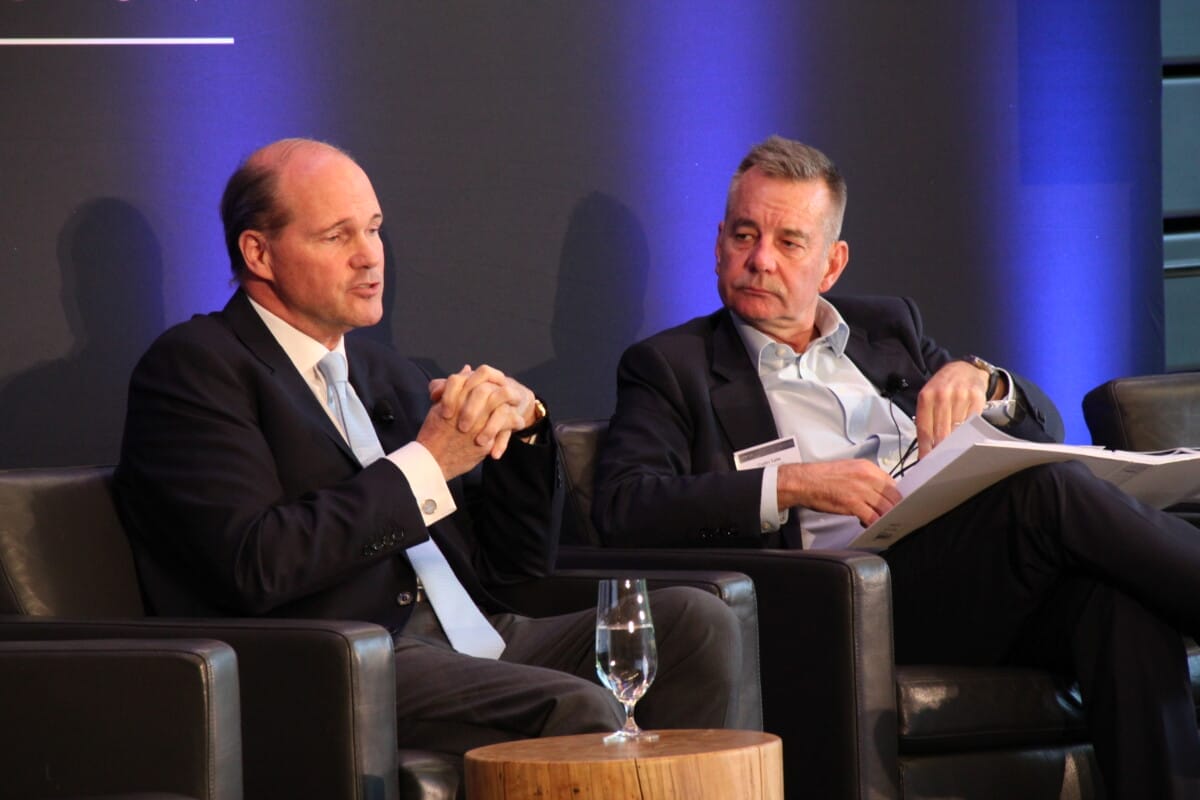
However, at the Top1000funds.com Fiduciary Investors Symposium, president and chief executive of the C$128 billion ($93.5 billion) Ontario Municipal Employees Retirement System (OMERS), Blake Hutcheson, said the Maple 8 are actually all “dramatically different”.
“Newspapers write about us as though we’re one – we couldn’t be more different, couldn’t come from more different places, and couldn’t have more different structures,” he told the symposium in Toronto.
“So [for] CPP… the state looks after the liabilities, they are an investment arm governed by the Feds with a really long view. PSP is also governed by the Feds, no stakeholders or members per se. They can take a very different view of their balance sheet than we do.
“OMERS, for example, we have 620,000 members, every decision we take is in respect to our own liability, and our liability stream.
“All our asset allocations are to dovetail with how we get or keep 100 per cent funded, and how we make sure that our cash flow matches because today, our outflows are bigger than inflows.”
OMERS currently has fewer than two active members for every retiree and according to the fund’s own estimate, it will have fewer than one active member for every retiree by late 2030s. If member life expectancy increases faster than the fund has assumed in its valuations, its pension liabilities will also increase.
Liquidity matters
“Every place we start is what’s our liability? What do we need to do to pay pensions? How do we stay 100 per cent funded? And how do we construct a portfolio based on our known needs – independent of any other philosophical way to invest?” Hutcheson said.
OMERS’ allocation today consists of 20 per cent equities, 30 per cent fixed instruments (bonds, private and public credit) and, with some leverage, it holds 50 to 60 per cent in private assets (real estate, infrastructure, and private equity).
Speaking of the shift into a higher interest rate environment and what the future holds for investors, he said one “can’t be really wrong and still be right for long”.
“A lot of people were really wrong and still right for a while, and there was a massive transfer of wealth from those who were typically savers to those who were borrowers. Anybody [who] was borrowing was gaining rank against the rest of us, because money was free.
“Now, the day of reckoning is coming for those who are over levered – that didn’t work so well. And for those who have capital, there’s a massive opportunity.”
When the cost of money increases, Hutcheson said it’s more important than ever for investors to “move quickly”. OMERS’ pivot to credit in the shifting economic environment is one such example, he said, and its fixed instrument portfolio is now getting a consistent 10 per cent return.
“We can lend money into assets we know and we understand and get 500 to 700 basis points more than we would have a couple of years ago,” he said.
“Rather than taking the cost of money and making it a negative, you can transform your portfolio to take advantage and make it a positive.”








Leave a Comment
You must be logged in to post a comment.
Login