
GIC, OPTrust on how TPA reshapes allocation process, accountability

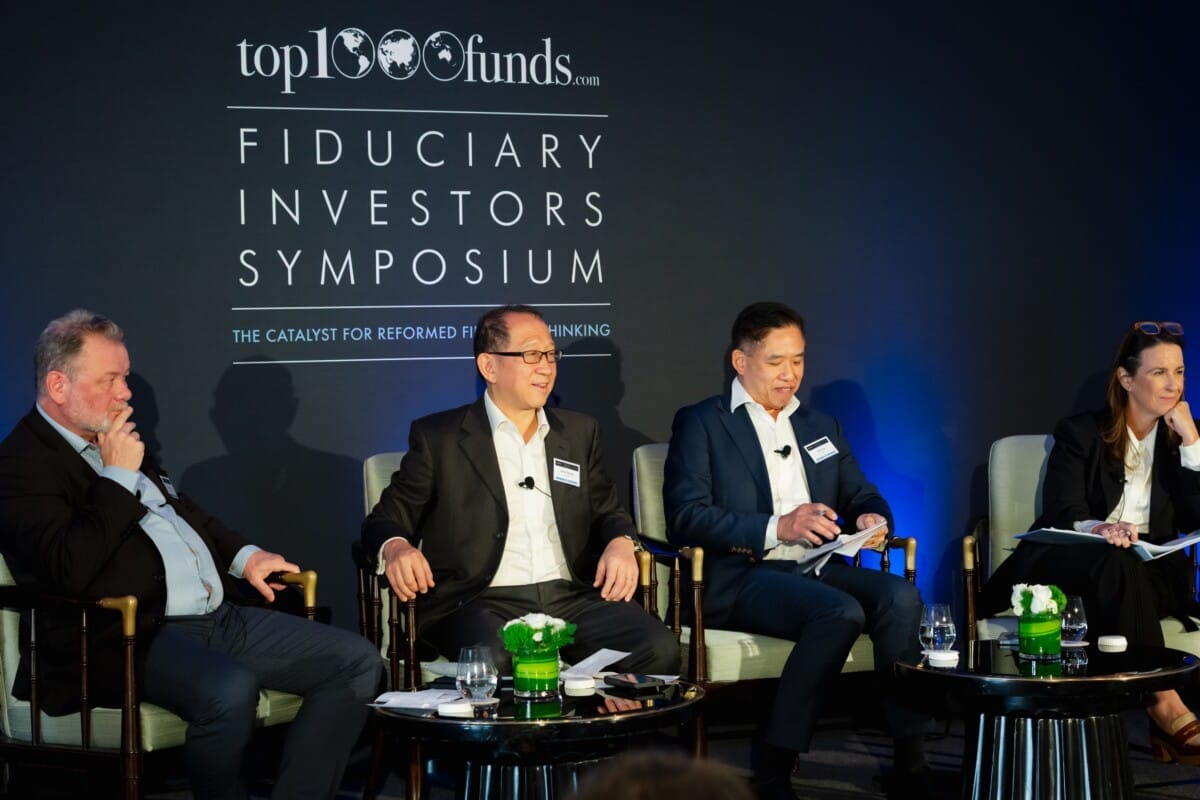
Daniel Lau (L) and James Davis

Long-time practitioners of the total portfolio approach said one of its greatest advantages is that the investment team can make significant asset allocation at its discretion, as interest towards adopting the framework picks up among asset owners to handle more complex decision-making.

At the Top1000funds.com Fiduciary Investors Symposium this month, Singaporean sovereign wealth fund GIC and Canadian pension fund OPTrust – both of which adopted TPA over a decade ago – unpacked the governance and risk frameworks that facilitated TPA implementation in their organisations, and the ensuing benefits.

OPTrust chief investment officer James Davis said two defining characteristics of TPA is that it doesn’t seek to fill asset class buckets like SAA and offers clear delegated authority to the investment team, which means the fund has greater flexibility in allocating to opportunities where it sees them.

OPTrust is a fully-funded defined benefit pension plan with $27.2 billion in assets under management. Its public markets portfolio – including equities, credit, absolute return strategies and commodities – serves as a completion portfolio mainly for liquidity and liability hedging purposes.  

“We had opportunities to significantly change the overall asset allocation within our public markets portfolio without having to go through a long and drawn-out process with our board,” Davis told the symposium in Singapore.

“More recently, we’ve done that by making significant changes in our currency exposure. Maybe a little bit more now than a year ago, we had between 25 and 30 per cent US dollars in our portfolio. That’s been reduced to 10. We’ve had it as low as five.

Sponsored Content

“We have gold in the portfolio that’s at our discretion, which we think remains appropriate, and we brought our credit exposure down to zero.”

Davis added it’s critical that the board is looped into the conversation, but the investment team doesn’t need to seek approval when it comes to these significant allocation changes.

“If we had had an SAA framework, we wouldn’t have that flexibility to be able to do that.”

While the flexibility is one of TPA’s greatest edges, there still needs to be a mechanism through which investment teams can be held accountable but not policed for their decisions. GIC head of enterprise risk and performance Daniel Lau said this is where the risk department plays a crucial role.

Lau said having a healthy risk culture is critical to deploying TPA at scale.

The first principle for GIC’s risk culture is information parity – first and second line risk personnel need to be aligned with the same data and be involved in the investment process, he said.

“You want that because it stems from a belief that risk inputs make a better investment process, and the external environment is very challenging, so you want all of those risk inputs to be there and happening at the same time,” he said.

The second important element is psychological safety, he said. A robust TPA investment process involves debates around ideas, which means the investment team needs to be willing to be challenged, and risk teams need to be comfortable with being wrong in front of portfolio managers.

“These are ingredients which I think would help, really, even before you touch the portfolio, because once you touch the portfolio, then you go into other dimensions as well. But this is non-negotiable.”

Without the confinement of asset class buckets, TPA focuses on understanding the underlying drivers that influence the risk and return of a portfolio.

“One increasing area that we care about as an asset owner is physical risk. As the world moves away from a plausible transition, the fact that you own actual railroads, airports, toll roads and real estate [means] you need to ensure resilience, and without that, you potentially can get permanently impaired [returns],” Lau said.

“Then obviously, most pertinent I would say these days, is geopolitical [risk]. And geopolitical makes private assets much more difficult, because you cannot liquidate and you cannot run.

“So understanding the regime, understanding expropriation risk, just going back to the basics in terms of risk-reward and scenario analysis… is actually a really important dimension we think about.”

Leave a Comment

Rethinking portfolio construction at the human-AI nexus

Rethinking portfolio construction at the human-AI nexus

As artificial intelligence models become more sophisticated, asset owners and managers are rethinking portfolio construction as an activity sitting at the nexus of human and machine, which means gaining an edge over the market increasingly needs investors to tap into the wisdom from both sources.

Sort content by

Lessons from the middle: Leadership, resilience and the courage of conviction

The principles of high-performance leadership – whether in business or sport – remain remarkably consistent and include the ability to maintain clarity, integrity, and conviction under immense pressure. Former Australian test cricketer Usman Khawaja told the Fiduciary Investors Symposium that the only time you really lose is when you stop trying.

Steering portfolios through a fragmented world

As stagflationary shocks flip stock-bond correlations and the illiquidity premium in private markets proves elusive, the investors best placed to navigate a fragmented world are those with the governance infrastructure to deploy capital when others are forced to sell.

Private markets enter era of ‘true alpha’

Allocators are interrogating their private markets investments more rigorously as institutional investors question whether unlisted asset classes are entering an era of “true alpha” where managers skills are put to test. This trend is especially salient in private equity, and at FIS Singapore, asset owners and managers weighed the thesis around the asset class.

‘Math wins’: Why investors should push harder on fiscal discipline

Investors need to start demanding that governments act with more fiscal discipline as ballooning debts on sovereign balance sheets around the world approach a breaking point, MFS Investments, one of the world’s oldest asset managers, said at FIS Singapore.