
Transition portfolios of stocks and cash

Forget traditional portfolios of stocks and bonds, in portfolios of the future, low yielding bonds could be ditched for cash suggest FIS2020 Digital panellists.

Conventional 60:40 investment portfolios divided between stocks and bonds could shift to 60 per cent allocations to equity and 40 per cent allocations to cash.

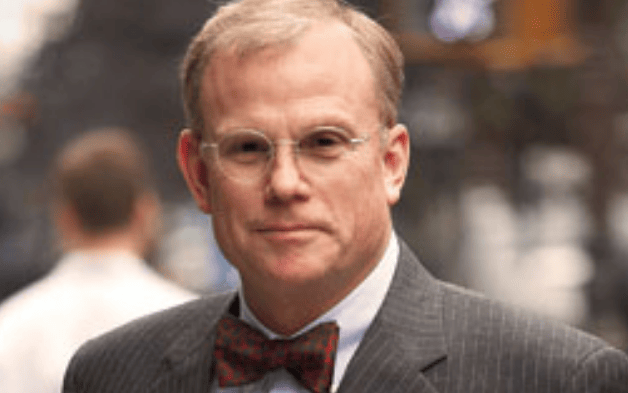
“You may find bonds don’t’ play a role,” predicted Stewart Brentnall, CIO at NSW Treasury Corporation, the investment arm of one of Australia’s state governments. Speaking at FIS 2020 Digital, Bentnall said investors should “wake up” to the impact of low yielding bonds in their portfolios, and noted that cash allocations allow governance teams to “to sleep at night” as an alternative to conventional fixed income.

Such new-look allocations could form part of what Brentnall called “transition portfolios” that incorporate measures for the future.

He said asset prices today poorly reflect the risk they carry. Moreover, Covid-19 has acted as a catalyst in highlighting the differences between mature (US and Europe) and less mature (China and Asia) markets that will impact benchmarks. Regarding globalisation, he welcomed the idea of production moving to new and alternative countries expressed by Nobel prize winner and professor of finance at MIT, Esther Duflo but said globalisation in its current form “would not flip on a six pence.”

Elsewhere, he said improving pollution levels and less environmental degradation because of the global lockdown could be a catalyst for investors to take positive action. Similarly, the “rising heat” on social justice issues can no longer be ignored. He said today’s low inflation could shift to inflation or stagflation and urged investors to bring their “mission” and “governance” arms together, citing NSW Treasury Corporation own efforts to look again at the mission of its clients and their ability to invest long term.

Sponsored Content

History tells us that global growth will continue. Charting the growth of per capita GDP through the centuries shows the persistent engine of “fundamental human ingenuity and productivity,” said Geoffrey Rubin, senior managing director and chief investment strategist at Canada’s $420 billion CPP Investments. Despite today’s handwringing and challenges, he said looking back into the past gives confidence that economic development will stretch into the future too.

Diversification will be key, while investors will also need to look “deeper than labels” to try and understand performance drivers. Elsewhere, low interest rates and the impact on government bond yields will see investors hunt for more opportunity in real assets and infrastructure. Regarding China, Rubin said the Canadian pension fund is moving towards a 20 per cent allocation to the country and said building exposure to the engines of Chinese growth was an “imperative” for both returns and diversification.

Angela Rodell, chief executive officer at Alaska Permanent Fund Corporation, believes that investment in technology will be a key driver in the years to come because COVID-19 has proven its link to GDP growth. She shared panellists’ concerns about low yielding bond allocations and rising inflation, noting counter strategies could include “looking at commodities differently” or allocations to gold or even crypto currencies.

She flagged the risk of getting “left behind” as “technology changes so rapidly.” Alaska will also focus on how it invests in healthy supply chains, exploring particularly how technology will help manage inventories and risk, she concluded.

To listen to the podcast with Geoff Rubin from CPP Investments, click here


Leave a Comment

Florida: Opportunities in a crisis

Florida: Opportunities in a crisis

The Florida State Board of Administration has made some strategic moves to take advantage of opportunities in the dislocation, including in private equity, distressed debt and active listed equities.. But CIO, Ash Williams, is concerned about the underlying real economy.

Sort content by

Overcoming deepening inequality: CalPERS

How can investors work together to combat inequality? In this podcast episode Amanda White speaks to the president of CalPERS, Henry Jones, about his own experience and the fund's journey in tackling diversity and inclusion, in particular issues of racism.

The path to a sustainable economy

This episode explores the key pillars of a sustainable recovery including the three important long term trends that need to be addressed climate change, loss of biodiversity and inequality. It explores the key role for the finance industry which includes building new models that are not only about maximising monetary profits but also transition theory, and the value of ecological and social capital.

Pandemic, recession, economic crisis

COVID-19 has delivered an enormous global shock, leading to steep recessions in many countries. The baseline forecast by the World Bank envisions a 5.2 per cent contraction in global GDP in 2020—the deepest global recession in decades.

The need for urgent action on climate

Nigel Topping who was appointed by the UK Government as the High Level Climate Action Champion for United Nations climate talks, COP26 joins Fiona Reynolds, chief executive of the PRI, in conversation with Amanda White, editor of Top1000funds.com This episode focuses on climate change and how, amongst and despite, the short-term focus of this COVID-19 crisis, we can mobilise government, business and investors into action around this important issue of climate change.

Building better retirement systems

The global COVID-19 pandemic has highlighted the need for better risk management tools to handle longevity and ageing. This paper by Wharton's Olivia Mitchell, offers an assessment of the status quo prior the coronavirus; evaluates how retirement systems are faring in the wake of the shock; examines insurance and financial market products that may render retirement systems more resilient for the world’s ageing population; and looks at the potential role for policymakers.

Building back better

For the economic recovery from the COVID-19 crisis to be durable and resilient, a return to ‘business as usual’ and environmentally destructive investment patterns and activities must be avoided. To avoid this, economic recovery packages should be designed to “build back better”.

Previous