
Transition portfolios of stocks and cash

Forget traditional portfolios of stocks and bonds, in portfolios of the future, low yielding bonds could be ditched for cash suggest FIS2020 Digital panellists.

Conventional 60:40 investment portfolios divided between stocks and bonds could shift to 60 per cent allocations to equity and 40 per cent allocations to cash.

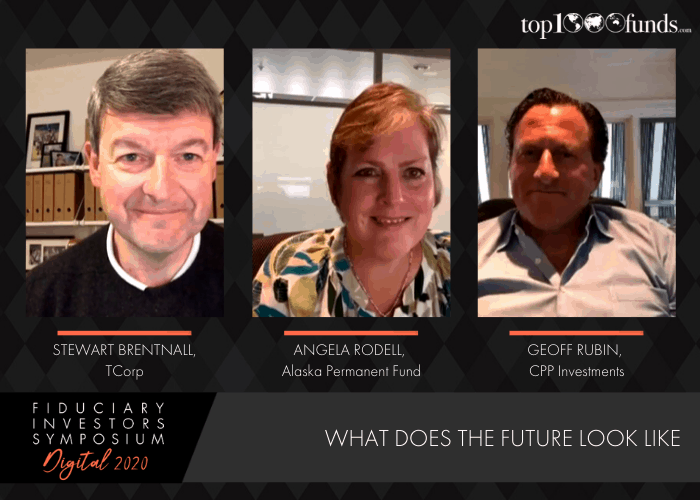
“You may find bonds don’t’ play a role,” predicted Stewart Brentnall, CIO at NSW Treasury Corporation, the investment arm of one of Australia’s state governments. Speaking at FIS 2020 Digital, Bentnall said investors should “wake up” to the impact of low yielding bonds in their portfolios, and noted that cash allocations allow governance teams to “to sleep at night” as an alternative to conventional fixed income.

Such new-look allocations could form part of what Brentnall called “transition portfolios” that incorporate measures for the future.

He said asset prices today poorly reflect the risk they carry. Moreover, Covid-19 has acted as a catalyst in highlighting the differences between mature (US and Europe) and less mature (China and Asia) markets that will impact benchmarks. Regarding globalisation, he welcomed the idea of production moving to new and alternative countries expressed by Nobel prize winner and professor of finance at MIT, Esther Duflo but said globalisation in its current form “would not flip on a six pence.”

Elsewhere, he said improving pollution levels and less environmental degradation because of the global lockdown could be a catalyst for investors to take positive action. Similarly, the “rising heat” on social justice issues can no longer be ignored. He said today’s low inflation could shift to inflation or stagflation and urged investors to bring their “mission” and “governance” arms together, citing NSW Treasury Corporation own efforts to look again at the mission of its clients and their ability to invest long term.

Sponsored Content

History tells us that global growth will continue. Charting the growth of per capita GDP through the centuries shows the persistent engine of “fundamental human ingenuity and productivity,” said Geoffrey Rubin, senior managing director and chief investment strategist at Canada’s $420 billion CPP Investments. Despite today’s handwringing and challenges, he said looking back into the past gives confidence that economic development will stretch into the future too.

Diversification will be key, while investors will also need to look “deeper than labels” to try and understand performance drivers. Elsewhere, low interest rates and the impact on government bond yields will see investors hunt for more opportunity in real assets and infrastructure. Regarding China, Rubin said the Canadian pension fund is moving towards a 20 per cent allocation to the country and said building exposure to the engines of Chinese growth was an “imperative” for both returns and diversification.

Angela Rodell, chief executive officer at Alaska Permanent Fund Corporation, believes that investment in technology will be a key driver in the years to come because COVID-19 has proven its link to GDP growth. She shared panellists’ concerns about low yielding bond allocations and rising inflation, noting counter strategies could include “looking at commodities differently” or allocations to gold or even crypto currencies.

She flagged the risk of getting “left behind” as “technology changes so rapidly.” Alaska will also focus on how it invests in healthy supply chains, exploring particularly how technology will help manage inventories and risk, she concluded.

To listen to the podcast with Geoff Rubin from CPP Investments, click here


Leave a Comment

Florida: Opportunities in a crisis

Florida: Opportunities in a crisis

The Florida State Board of Administration has made some strategic moves to take advantage of opportunities in the dislocation, including in private equity, distressed debt and active listed equities.. But CIO, Ash Williams, is concerned about the underlying real economy.

Sort content by

Is Europe in trouble?

In this Fiduciary Investors series podcast Amanda White talks to Iain Begg, Professsorial Research Fellow at the European Institute, London School of Economics and Political Science, about the economic and social turmoil of COVID-19 and the robustness of the EU to deal with this economically.

Alleviating global poverty: the role of the investor

Esther Duflo, the Abdul Latif Jameel Professor of Poverty Alleviation and Development Economics at MIT and current Nobel Prize winner in Economics discusses the impact of the coronavirus pandemic on developing countries, and the role that investors can play in alleviating poverty.

The future of the corporation

In this Fiduciary Investors Series podcast Amanda White talks to Henry Richards, who is the project lead on the Future of the Corporation at the British Academy. The discussion is part of our exploration of purposeful companies and the premise that we need to redefine business in the 21st century to build trust between corporations, investors and society.

Responsible capitalism: data challenge

In this Fiduciary Investors Series podcast Amanda White talks to chief executive of the Sustainability Accounting Standards Board, Janine Guillot, about stakeholder capitalism and the role investors can play in shifting the dial. We discuss the value SASB can play as a tool for decision making and how stakeholder issues can impact performance.

Real estate leaders must act now

To respond to the current and urgent threat of COVID-19, and to lay the groundwork to deal with what may be permanent changes for the industry after the crisis, real estate leaders must take action now.

Coronavirus: Is this the end of globalisation?

A conversation with Stephen Kotkin, Professor in History and International Affairs, Princeton University.

Previous