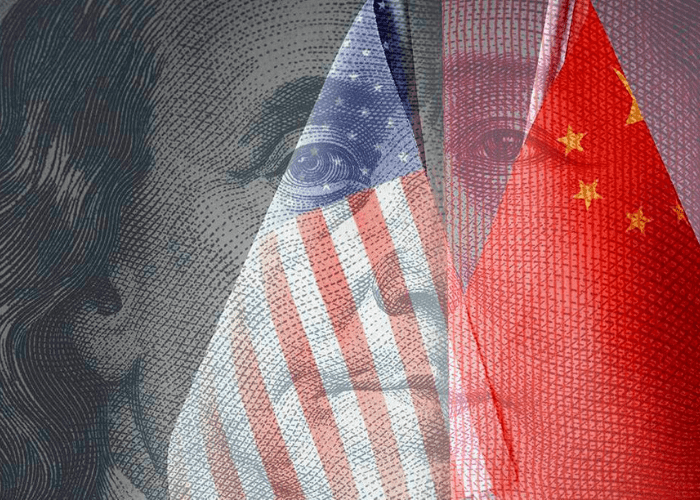

The shape of Asia’s new cold war

China’s decision to demolish the “one country, two systems” arrangement in Hong Kong appears to be a fait accompli, and in fact seems to have been preordained. Viewed in a broader context, the move represents a major salvo in a new cold war that is already playing out across three critical dimensions.

SEOUL – In retrospect, the decision by the Communist Party of China (CPC) to impose a new security law on Hong Kong seems to have been preordained. Historically, rising powers always try to expand their spheres of geopolitical influence once they pass a certain stage of economic development. It was only a matter of time before China would do away with the “one country, two systems” arrangement and impose its laws and norms on Hong Kong – a territory that it considers integral to the motherland.

Read The shape of Asia’s new cold war, published in Project Syndicate on June 10, 2020.

Sponsored Content

Leave a Comment

Florida: Opportunities in a crisis

Florida: Opportunities in a crisis

The Florida State Board of Administration has made some strategic moves to take advantage of opportunities in the dislocation, including in private equity, distressed debt and active listed equities.. But CIO, Ash Williams, is concerned about the underlying real economy.

Sort content by

America, China and Donald Trump

As trade wars between the US and China dominate financial markets, Princeton historian Stephen Kotkin has assured pension funds that the world order that has been in place since World War II remains intact.

Understanding US/China relations

Understanding the fractious relationship between US and China is more important– and simultaneously more confronting – than it has been in the past, according to Stephen Kotkin, professor of history and international affairs at Princeton University. While the China investment challenge has always been to capture the aspirational middleclass, the high-profile historian says “the big money that’s going to be made in China is going to be made from the dislocation”.

What can the past teach us?

Institutional investors' investment strategy should be serving the China middle class and the dislocation from within Asia, according to Stephen Kotkin,Professor of History and International Affairs at Princeton University speaking at the Fiduciary Investors Symposium at Cambridge University. He explored what the geopolitical conflicts of the past can teach us about the future. He looked at some of the key points in history, how China, the European Union and the US have survived, and what it means for the future.

A ‘Sputnik Moment’ with China?

Whither United States-China? Stephen Kotkin, Professor in History and International Affairs at Princeton University and adviser to conexust1f.flywheelstaging.com, discusses the changing nature of the complex relationship between the US and China and the struggle underway as these two large economies find their positions in the economic and technological hierarchy. So what should investors watch for?

Taiwan epicentre of geopolitical risk

The China-US trade war is the latest development in a tense relationship that threatens to bubble over into war over Taiwan, “incinerating” portfolios, Stephen Kotkin said.

Kotkin weighs in on geopolitical risks

Global tensions are an important consideration in decision-making. At a recent roundtable, geopolitical expert professor Stephen Kotkin discussed the risks related to China and the US.

Previous