
America, China and Donald Trump

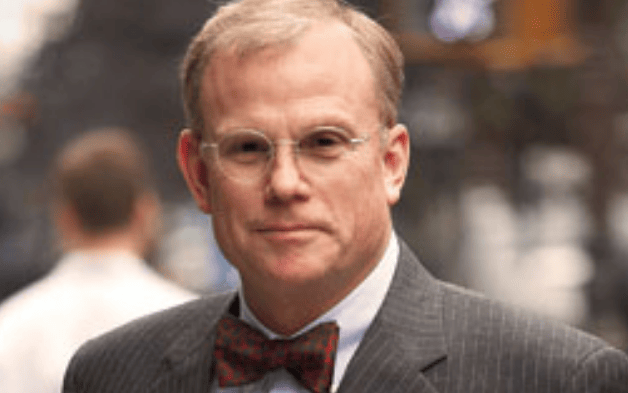
As trade wars between the US and China dominate financial markets, Princeton historian Stephen Kotkin has assured pension funds that the world order that has been in place since World War II remains intact.

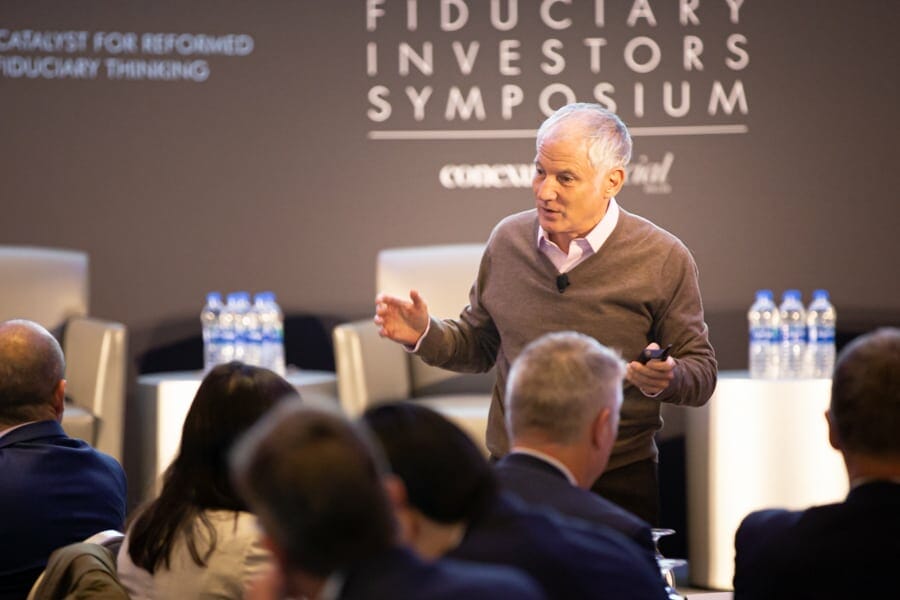
“The notion that the US is on the decline is complete bunk,” said Kotkin, speaking at the Fiduciary Investors Symposium at Harvard University this week. “It’s one of the most idiotic things that you hear relentlessly.”

The professor of history and international affairs at Princeton University said that despite the chaos in the White House under US President Donald Trump, there was no other country that came close to matching America’s military, economy, currency or its number of allies. He also said that China’s economy is not the “giant” that everyone thinks it is, despite its growth.

“If you add up the US economy with its allies, its overwhelming,” the academic said. China “knows this fact, they know that the US is still in the driving seat. China is not this insurmountable threat, it is instead something that needs to be dealt with,” he added.

His comments came amid media reports that Trump’s administration is weighing whether to restrict pension fund investment into China. Michael Trotsky, chief investment officer at the $75 billion Boston-based Mass PRIM later told delegates at the Harvard Symposium, that no institutional investor would support a restriction.

Sponsored Content

Kotkin said that the US institutions designed to keep the government in check were a lot stronger than people think, as evidenced by the launch of the impeachment investigation into Trump last month. He added that there is a loss of confidence among American elites because globalisation had failed to unite the world as they had predicted did not translate to a “systemic crisis” nor “equate to a US decline.”

As for the future of liberalism, Kotkin said the rule of law, separation of powers and open dynamic markets without monopolies still works in practice but it needed to be kept in check and cultivated.

“There is no system which is superior,” the professor said. “It can be corroded from the inside if not properly tended … but the instruments are still available for us to fix things. It’s not about getting rid of Trump, it’s about where did he come from in the first place.”

He also warned that the sentiment amongst voters that installed Trump to the White House and saw Britons vote for Brexit remain in place today, despite the lies that were peddled by politicians on both sides of the Atlantic.

“The politics are fake but the sentiments are real and that is a very important point,” he said. “They are all still there. You can argue that they are deluded, but there were 65 million people who voted for Trump and they are all American citizens.”

So what about climate change which is a constant source of controversy within the Trump administration? Kotkin told delegates that there was no government who will be able to achieve the vision that the people have for them. He said whether a country joins the Paris Accords on greenhouse emissions, or leaves as Trump has done, it will have little impact on the behaviour of companies.

“You can’t solve those problems without the private sector,” he told the pension fund delegates, when asked about ESG investing. “Your capital is invested in private enterprise.”

Leave a Comment

Florida: Opportunities in a crisis

Florida: Opportunities in a crisis

The Florida State Board of Administration has made some strategic moves to take advantage of opportunities in the dislocation, including in private equity, distressed debt and active listed equities.. But CIO, Ash Williams, is concerned about the underlying real economy.

Sort content by

Asset owners adapt and respond to COVID

The Responsible Asset Allocator Initiative finds that 25 leading public pension and sovereign wealth funds, with assets of $6 trillion, are investing tens of billions of dollars in COVID-19 solutions and in funds to support stricken companies. Here they look at what the leading asset allocators around the world are doing to respond to the pandemic.

Investors outline actions for resilience

Global economic activities will not be back to pre-COVID levels until 2022 according to CPP Investments’ outlook, with the giant Canadian investor expecting the situation to get worse before it gets better.

Five lessons from the COVID-19 crisis

The coronavirus pandemic sparked a surge of volatility across global financial markets. In this paper, MSCI looks at five key lessons for investors from the crisis, including that managing factors was more critical than picking stocks.

COVID-19 impact far from over

New research looking at the impact of COVID-19 under different scenarios – from opening of economies to no vaccine – suggests the economic consequences of COVID-19 under all scenarios is substantial and the ongoing economic adjustment is far from over.

IMCO uses nimbleness to advantage

Meticulous planning for the next market crash, and an eye on liquidity, meant IMCO was well positioned to invest, particularly in credit, when the opportunity arose. The fund continues to use its agility to its advantage and is now looking for opportunities in private markets.

Alternative data as a market predictor

It is critical to analyse how much COVID-19 could impact the US economy and stock markets but most of the traditional factors or economic indicators will lag the market movement. Therefore, alternative datasets other than the financial data show their explanation power to provide insights into the pandemic. This article, by academics at Tsinghua University, University of Illinois and Carnegie Mellon University, looks at the pattern of the market fluctuation from the perspective of alternative data.