
ESG: Engagement, stock picking and investment team expertise key at AP4

AP4, the SEK 459.1 billion ($41.4 billion) Swedish buffer fund, has been integrating sustainability since the 1970s. In those days, the key focus was scrutinizing corporate governance in the Swedish equity allocation. Today that focus has expanded to a broad ESG focus supported by AP4’s beneficiaries and Swedish government legislation.

However of all the risks under an ESG umbrella, AP4 views climate with particular concern.  Nearly a decade ago the fund concluded that climate and environmental risk wasn’t correctly priced and represented a significant systematic risk to the portfolio over the long-run. Particularly pertinent given AP4 invests with a 40-year horizon, longer than most pension funds.

Important milestones since include the buffer fund becoming one of the first investors in green bonds in 2012. In 2017, AP4 made ESG a formal investment belief, at which point sustainability became integrated by every investment team, sending a strong signal both internally and to the outside world.

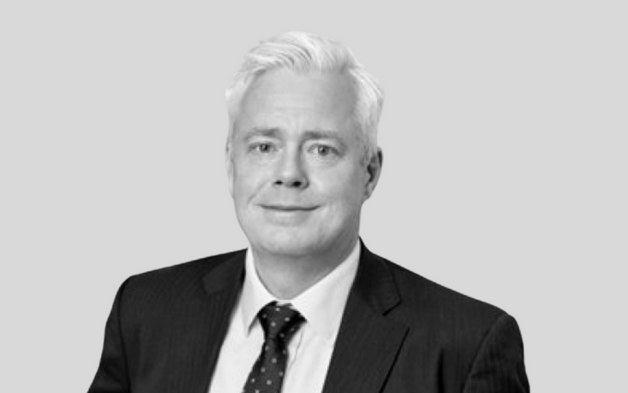
“Today it is part of our DNA but at the time not everyone was happy and we faced resistance within the organization,” recalls Niklas Ekvall, Chief executive, AP4, speaking at FIS Maastricht. “But if we hadn’t taken that decision, we wouldn’t be where we are today.”

Sustainability was pushed out into the organization so that each investment team had to take responsibility to integrate sustainability in their own asset class. Because all investment teams now house their own sustainability expertise, AP4 only has a small dedicated sustainability unit, focused mostly on reporting.

“The bulk of our resources are in the investment teams,” says Ekvall. “The idea is that teams share and learn from each other, particularly around climate scenario analysis.”

Sponsored Content

Engagement

AP4 screens the portfolio on a regular basis, using external vendors to support the process alongside its own internal tools. It is publicly engaging with around 100 companies on all ESG topics, although climate engagement given its systemic risk in the portfolio and broadest impact tends to dominate.

“Engagement is a very strong tool for value and for influencing companies. We stand up for the right of equity owners to give their opinion,” he says.

The buffer fund is prepared to exclude companies if corporate engagement doesn’t progress to corporate change. A key reason for divestment is a company violating Swedish legislation or treaties Sweden has signed, and AP4 will also divest if it doesn’t agree with companies’ business models, particularly in sectors with a large climate impact.

Still, Ekvall is mindful that many energy intensive industries like steel and chemicals are producing goods vital for working society and a successful transition.

“Divestment would not be responsible,” he said. “If you want to have an impact, you need to be invested in these sectors.”

Stock picking

Investing in the energy transition has included fundamental stock picking, continues Ekvall. In a bottom-up process, the investment team finds companies that have a business model that will be viable in the future.

“Companies we own need plans and ambitions for the future,” he says.

This process has caused AP4 to reduce the number of energy intensive companies in its portfolio from 60 to around ten, comprising those with the most ambitious plans to reform. “These companies are part of the solution,” he said.

Carried interest ESG link

No corner of the portfolio is sparred integrating sustainability. AP4 views private equity as a compliment to listed equity, offering the ability to find exposures that are hard to come by in the listed market.

“Private equity is lagging behind in terms of sustainability,” he notes.

However, it is sometimes possible to integrate sustainability in private equity by pegging sustainable integration and success to carried interest paid to managers.

“We have introduced this into the terms and contracts with our private equity managers,” he says.

AP4’s 17 per cent allocation to alternatives includes a real estate allocation, long renown for its climate risk and responsible for between 20-40 per cent of portfolio emissions. AP4 works with real estate groups to plan for the transition including green construction, sustainably heating and cooling buildings and ensuring building waste goes into the circular economy.

“We still have some way to get to net zero,” he said, noting a need for better recycling markets.

AP4 promotes the introduction of a price on carbon because it would accelerate progress in the non-listed market. “The non-listed space is lagging,” he concludes.

Asset Owner:AP Fonden 4 (AP4)

Leave a Comment

The twin forces that are shaping a new world investment order

The twin forces that are shaping a new world investment order

Portfolios built for the old world will be severely tested as emerging forces shape a new world order. The Fiduciary Investors Symposium heard that geopolitical and macroeconomic upheaval, together with the disruption wrought by AI, should force asset owners to rethink the structure and composition of portfolios.

Sort content by

Chicken, beef or vegetables: assessing the real environmental impact of AI

The inexorable rise of AI is increasing energy demand around the globe, but the technology itself is also enabling greater efficiencies. Assessing its real impact requires an understanding of both its “footprint” and its “handprint”, and its impact may not be as dire as we’ve been led to believe.

Asset owners eye tech’s new foundation for investing

Institutional investing is entering a new era as blockchain-based rails make markets always-on, near-instant and capable of delivering hyper-customised portfolios. Are asset owners ready?

Khosla warns of disrupted decade before AI boom brings abundance

AI will deliver a five-year burst of productivity and cost cutting before a deflationary decade reshapes the global economy, according to legendary venture capitalist Vinod Khosla.

Managing fat tails and risks in the face of contradictory signals

Global investors face the difficult task of setting asset allocation in an environment where the global macro-economic backdrop suggests chaos and downside risk but markets continue to perform strongly.

Risk takers vs scalers: Investors split on where to access innovation

Investors are still split on whether it’s better to hunt for innovative companies in the public or private markets. But the biggest consideration for investing in new technologies might have more to do with liquidity.

Behind Norges’ search for pure alpha

Despite uncertainties, Norges Bank is tipping that the US stock market will continue to outperform Europe in the next two decades. The mammoth fund also explained how it carved out a $90 billion pure alpha portfolio from passive investments, overseen only by 8 portfolio managers.

Previous



