
Markets remain fragile

A risk management strategy that measures the resilience and fragility of markets, protected portfolios from the wild February downswing in equity markets and predicts there is more potential weakness to come.

Windham Capital, a Boston-based risk management firm and a founding partner of State Street Associates, looks at the world according to a proprietary investment risk cycle, which describes how financial turbulence and systemic risk interact with each other and how that impacts asset values.

This measure of systemic risk helps separate a fragile market from a resilient one and while it doesn’t tell you about an individual tail-risk event, it can indicate when one may be approaching so portfolios can be positioned to cushion the blow. Similarly, if the systemic risk measures shows that markets are resilient, portfolios can take advantage of that.

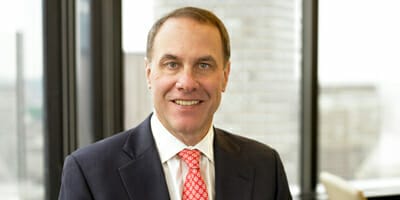
Chief executive of Windham and a professor of finance at Massachusetts Institute of Technology, Mark Kritzman, says implied systemic risk, or the absorption ratio, is a measure of how tightly coupled or unified the markets are.

This absorption ratio, or concentrated risk measure, was developed in response to the global financial crisis, but the most recent market activity is the first time it has had a chance to really shine since then.

“We came up with absorption ratio as a result of the financial crisis, to measure systemic risk and back tested it through the GFC,” Kritzman says. “Since then we have seen only one drawdown greater than 10 per cent, this is the first live test. Our expectation is it will provide the most value in large sell offs by helping investors to avoid those sell offs.”

Sponsored Content

Combining the absorption ratio with a measure of financial turbulence or risk similarity, which looks at how unusual the market is compared to historical norms, provides an index of market fragility versus resilience.

Using a measure of zero to 100, the index hit 48 the day the market peaked on February 19. By February 24, it was at 64 and jumped to 76 the following day. This triggered a shift into what Kritzman calls a fragile environment. Two days later it measured 99 and has been there ever since.

“This is the fastest increase we have ever seen, including in our back testing,” Kritzman said.

As a result, Windham quickly moved client portfolios into their most defensive posture, taking into account their different governance requirements, and helped protect against a large part of the market decline.

“The sell off since the peak in February was 21 per cent,” Kritzman says. “Since the indicator moved into the fragile regime on February 25, the market has been down 18 per cent. So, we were in the most defensive position for clients for a large part of the sell-off. This indicator is not going to pick the peak but it did a good job of giving an exit signal early in the sell off.”

“For some clients neutral is 70:30, for others it is 50:50, and some clients only allow movement within narrow bands,” he says. “As soon as the indicator showed that markets had transitioned into that fragile state, we moved all clients into their most defensive position within their guidelines. For one of them that was 0 per cent in equities.”

One response to “Markets remain fragile”

  1. James G. Lee, PhD, CFA, FRM

    Amanda, thanks for reporting Prof. Mark Kritzman’s cutting-edge work! I am reading their 2017 book, “A Practitioner’s Guide to Asset Allocation”, include chapter 16: Regime Shifts. To my understanding, there are three models/indicators: 1) Regime Shifts thru Hidden Markov Model, 2) Absorption Ratio, and 3) Financial Turbulence. With the high volatility of equity markets as we we have been experiencing since last week, I am wondering what their models/indicators are telling us this time? Also, what are the advantages of these models/indicators over implied volatilities (e.g., VXN for QQQ, VIX for SPY)? Would these three models/indicators provide earlier warnings and/or more accurate signals about upcoming market turbulence? If yes, how many days do these models expect the market turbulence to last this time? Thanks! James Lee, PhD, CFA

Leave a Comment

Long Covid for the global economy

Long Covid for the global economy

Prevention is the balm for global economic shock, says respected central bank adviser Professor Warwick McKibbin who says the world’s economic future is uncertain and inflation is likely to remain under a persistent pandemic.

Sort content by

Much more change to come

Amanda White looks back at the past six months, how investors have reacted and what change is yet to come.

Asset owners adapt and respond to COVID

The Responsible Asset Allocator Initiative finds that 25 leading public pension and sovereign wealth funds, with assets of $6 trillion, are investing tens of billions of dollars in COVID-19 solutions and in funds to support stricken companies. Here they look at what the leading asset allocators around the world are doing to respond to the pandemic.

Investors outline actions for resilience

Global economic activities will not be back to pre-COVID levels until 2022 according to CPP Investments’ outlook, with the giant Canadian investor expecting the situation to get worse before it gets better.

Five lessons from the COVID-19 crisis

The coronavirus pandemic sparked a surge of volatility across global financial markets. In this paper, MSCI looks at five key lessons for investors from the crisis, including that managing factors was more critical than picking stocks.

COVID-19 impact far from over

New research looking at the impact of COVID-19 under different scenarios – from opening of economies to no vaccine – suggests the economic consequences of COVID-19 under all scenarios is substantial and the ongoing economic adjustment is far from over.

IMCO uses nimbleness to advantage

Meticulous planning for the next market crash, and an eye on liquidity, meant IMCO was well positioned to invest, particularly in credit, when the opportunity arose. The fund continues to use its agility to its advantage and is now looking for opportunities in private markets.

Previous