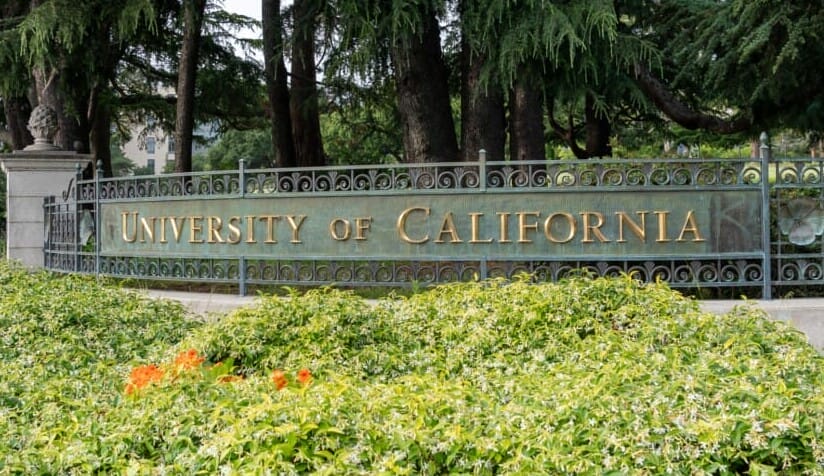

University of California: Less is more and simple is better in investing

Jagdeep Singh Bachher, chief investment officer of UC Investments which oversees the University of California’s $198 billion pension and endowment assets, argued the case for investing more in equity and keeping strategy simple at the latest board meeting.

Building on a narrative from previous meetings, Bachher said that his initial concerns that tariffs would have a negative impact on stocks have been offset by the impact of AI on the economic landscape, as well as the US administration’s stimulative polices around tax and deregulation in industries like banking and energy.

Pressure on the Fed to commit to cuts will also stimulate stocks and real estate, he predicted. “I do believe interest rate cuts will be part of the story going forward. Cuts are coming,” he said.

Defence spending, particularly in Europe, will also fan economic growth. “When you add all these things together [it is a reason] to stay calm and ride the equity market,” he said.

Trustees heard how the pace of annual revenue growth for companies at the forefront of AI has never been seen in history. Moreover, the AI revolution is being driven by large companies, which means equity investors stand on firmer terrain than during the dot-com bubble which was led by tech companies that didn’t have robust earnings.

Bachher also stressed the importance of investors “making the most” of opportunities to buy equity when they appear.

Sponsored Content

“We’ve learnt that a miss is more expensive than anything else. The dips are the opportunities to actually buy. We will have a decline at some point, when that happens, let’s take advantage of it.”

Time to dial down private assets – starting with hedge funds

The strong winds fanning equity markets combined with higher interest rates mean allocations to stocks and bonds are attractive once again. Investors can dial down their allocation to private assets and lower fees and reduce complexity, which is why the university has decided to remove hedge funds from its portfolio altogether. Hedge funds used to account for 10 per cent but have been whittled down over the years.

“We can’t be good at everything, and hedge funds is not one of the things we are good at doing,” he said.

In a swipe at managers, he said that rather than supporting the investor through market dislocations like the global financial crisis and the COVID pandemic, hedge funds actually exposed the fund to drama, illiquidity and high fees.

“I’m all about less is more; lower fees and less complexity and being able to sleep well at night,” said Bachher. “We saw a 17 per cent rise in the equity market this year; 20 per cent last year and 17 per cent the year prior. If you compound at these rates in the equity market, it’s not a bad place to be.”

He explained that when interest rates were zero, institutions invested in private assets to earn a return above bonds but now interest rates have moved higher, the picture has changed. Investors now have a new tool in the box and can afford to take less risk in private assets.

Amidst the opportunity, the investment team also pointed to risks.

High on that list is the US government’s ability to service interest on the ballooning deficit.  As long as the US economy continues to grow, the government will be able to pay the interest on its borrowing, but the challenge will come if the economy slows and goes into a recession.

Although China is also set to grow in AI in parallel with the US, many opportunities remain out of reach for US investors. Bachher said he has “changed his view on China” and will pay more attention to simple ways to execute and invest in China.

That is in contrast to his more negative outlook on China earlier in the year. The university reduced its allocation to China three years ago, and he said he had no plans to increase the allocation outside MSCI ACWI exposure because of uncertainties around tripping executive orders.

AUM about to hit $200 billion

The university’s assets under management, now $198 billion, will have grown to $200 billion by September 2025. This year alone, the portfolio increased by $18 billion – it has added $68 billion in the last five years. Assets are divided between the Retirement Fund ($154.4 billion), the Endowment (31.1 billion) and the Working Capital Fund (12.5 billion).

In another nod to his belief that simplicity pays, he attributed the rapid growth of AUM to the board’s decision to add more equity in 2018. Another crucial decision that has swelled assets under management was going short-duration on bonds.

“We would have lost $5 billion had we not make the decision to move from long to short duration,” he said.

However, the investment team also came under pressure to explain the poor funding ratio despite the growth in assets. In 2008, the fund was 103 per cent funded but is only 83 per cent funded today.

Bachher responded that the funding ratio will only be fixed by increased contributions, which are also imperative because of changing demographics.

“When things go well, the Faculty and the Senate and Staff say let’s cut contributions, but you can’t make the maths work. We are not a group of magicians, and employees, employers and the State have obligations. It’s not a rosy picture.”

Leave a Comment

Long term lens shields Colorado from private credit jitters

Long term lens shields Colorado from private credit jitters

As concerns in private credit mount, Colorado PERA CIO and COO Amy McGarrity says the pension fund isn’t seeing any strains in its growing allocation to the asset class, arguing that long-term investors are shielded from the risks because they can lock up their capital to weather market cycles.

Sort content by

How Ireland’s ISIF is helping crowd-in transition finance

The €15 billion ($16.1 billion) Ireland Strategic Investment Fund (ISIF) is finding compelling investment opportunities in the energy transition and is successfully drawing in additional investment to finance Ireland’s net zero commitments.

Texas ERS boosts cash allocation as higher rates end era of dead money

Texas ERS has bumped up its allocation to cash to 10 per cent, and revamped its global equities around a core fund with an overweight to AI and other Magic Seven themes, drug manufacturers and aerospace. Another key development in equities includes reducing the number of stocks by half.

Penn PSERS trims leverage, adds fixed income and hones in on fees

The $71.9 billion Pennsylvania Public School Employees' Retirement System has reduced net leverage, added fixed income and continues to shave costs off its external investment management fees, mostly by reducing private allocations. The trimming and shifting of the portfolio is part of an adjusted SAA responding to ongoing market changes.

CalSTRS looks at big picture with total portfolio function

The $315 billion CalSTRS is looking to build a top-down portfolio function to better incorporate liquidity management alongside portfolio construction and to consider how it can better deal with often lumpy cashflows to maximise returns, while continuing to keep a tight rein on risk.

How Railpen keeps illiquid asset allocation on track

New research on private markets at Railpen has produced a framework that focuses on scenario planning and the uncertainty inherent in illiquid investments taking account of “portfolio steerability”, allocation drift and the impact on short-term liquidity management resulting in a more dynamic approach.

Cashflows and risk management drive PSP Investments

The risk of a deficit is a key driver in the management of PSP Investments as it looks to build resilience and cashflows in its portfolio. Amanda White spoke to CIO Eduard van Gelderen.

Previous



