
The sudden death and strange afterlife of globalisation

Globalisation hasn’t died, it’s just going native.
Until recently, globalisation was perhaps the second-most fervently held article of faith for asset managers and allocators. The conviction was twofold: first, that globalisation was a good thing, and second, that it was on a one-way track.

In the words of economist John Maynard Keynes, referring to how contemporaries viewed the pre-1914 golden age of globalisation, “…most important of all, he regarded this state of affairs as normal, certain, and permanent, except in the direction of further improvement, and any deviation from it as aberrant, scandalous, and avoidable.”

Globalisation in asset management was born on portfolio managers’ trading screens, with ever-more integrated capital markets and vanishing capital controls. Its next manifestation was in fund passporting schemes (UCITS being by far the biggest).

Soon enough, allocators the world over started relying on similar yardsticks to identify and select managers (midwifed by investment consultants who themselves went global in the 2000s). Finally, globalisation made its way to regulators, with talk of “harmonising” approaches to regulating markets and the fund industry.

For allocators, what mattered was the substantial expansion of their investment universe and the frictionless deployment of capital across borders. For asset managers, globalisation meant scale: a single platform housing investments, operations, and business management, ideally in one location, powering a common set of strategies and products for sale globally. The 2008 financial crisis slowed things down a bit, particularly regulatory harmonisation, but the direction of travel didn’t change.

This model was upended, first gradually, and then suddenly. The gradual shift was the rise of the individual investor, who eclipsed institutions in terms of total dollars deployed, expected future flows, and fees paid. The primacy of individuals is leading to a more regulated industry centered on local vehicles, focused on local asset classes, and characterised by investors with diverging needs and levels of financial literacy.

Sponsored Content

The sudden shift was the steady staccato of ruptures in the global financial fabric: trade wars, pandemic, hot war, sanctions. Here the impact has been in the investment function: impeding the free flow of capital, policies that channel savings locally, permanently altered supply chains, and introducing politics as a major non-economic driver of asset valuations. All of these factors tilt the balance in favor of deeply local investment strategies and managers.

But globalisation isn’t gone. For one thing, the diversification benefits are too compelling. Furthermore, the majority of markets remain lopsided in one way or another: for example, not enough local debt issuance, or equities that lack any meaningful exposure to younger, dynamic, future-oriented companies. The potential exceptions are China and the US (bearing in mind that in China capital controls are firmly in place, and ESG adds further hurdles).

The post-2022 globalisation is a series of deeply rooted local investments that together result in a global portfolio. This model lacks the simplicity, ease-of-use, and scale of the 1991-2021 globalisation. It requires a thoughtful approach, guided by political inputs rather than solely financial inputs. For managers, the pursuit of global synergies will lead to disappointment: other than in a few corners of the industry (large institutions, select alternative strategies) there will be very little global operating leverage across the four major asset management markets of the US, EU, China, U.K. (that together account for over 80 per cent of investable assets). When it comes to demographics, product preferences, regulatory model, the role of ESG, and the role of policy in the markets—US, EU, China, and UK are sui generis.

Staying global will be an exercise in prioritising a few markets to go deep, rather than trying to access every market. The effort required to be successful in any one place will inhibit all but the very largest players, and local leaders will usually have an embedded advantage—sometimes explicitly, via regulatory favor.

This new, fractured globalisation is creating new winners and new investment opportunities.

The rise of politics and ESG as major non-economic valuation drivers requires a fresh look at investment processes and philosophies built on a now-irrelevant pricing data set. Diverging individual investor needs creates demand for new products and investment approaches. What remains unchanged is the single most fervently held article of faith for both managers and allocators: markets, in the long run, go up.

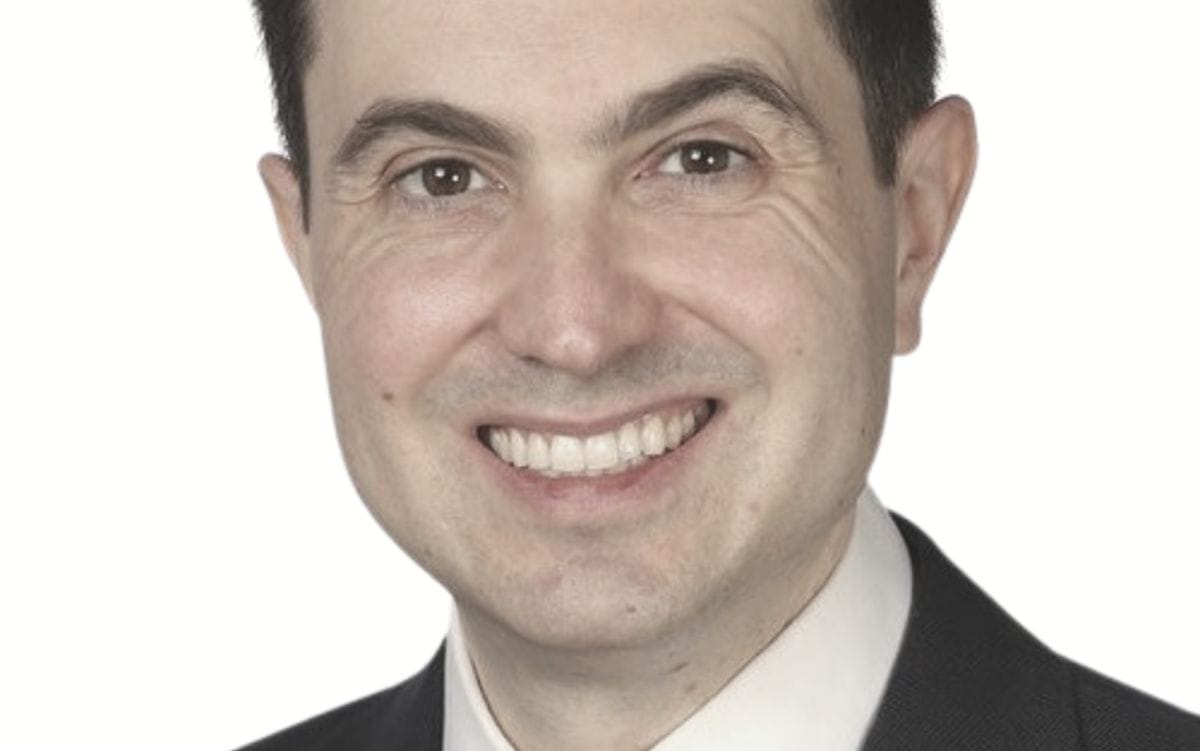
Daniel Celeghin is managing partner at INDEFI

Leave a Comment

Long term lens shields Colorado from private credit jitters

Long term lens shields Colorado from private credit jitters

As concerns in private credit mount, Colorado PERA CIO and COO Amy McGarrity says the pension fund isn’t seeing any strains in its growing allocation to the asset class, arguing that long-term investors are shielded from the risks because they can lock up their capital to weather market cycles.

Sort content by

Cash and overweight to US equities pays at New Jersey

The New Jersey Division of Investment generated double digit returns in fiscal year 2024 while maintaining good liquidity and dry powder on hand with an overweight to cash and cash equivalents. The cash position is likely to decline through 2025 given the robust pipeline in new private market opportunities.

San Jose Retirement: How risk-on restored returns

Uniquely positioned in Silicon Valley, the City of San Jose Retirement System is poised to fulfil its 4 per cent target allocation to venture capital. It underscores a bold risk-on strategy that CIO Prabhu Palani has used to transform the fund he joined in 2018.

New York City’s TRS: Junk rallies make active management hard

At the October investment committee meeting for the Teachers Retirement System of the City of New York, TRS' Tax Deferred Annuity Programme trustees heard how lower quality stocks are outperforming the broad market in what is commonly referred to as a “junk rally.”

Behind Future Fund’s $70bn inflation-related portfolio shift

In the past two years, the Future Fund has made around $70 billion worth of changes in the portfolio that can be traced back to stubbornly high inflation. Its director of research and insights, Craig Thorburn, outlined how asset allocation around currencies, alternatives and bonds are all looking different.

Texas Teachers marks highest ever quarterly return

Texas Teachers records the highest quarterly return in its 85-year history – 333 basis points of alpha – with US and Indian equities fuelling the excess return. The fund has made a number of recent changes to the portfolio including removing China and reducing allocations to private equity.

Better performance and alignment of purpose: The benefits of TPA

A total portfolio approach aligns investment implementation with the purpose of being a fiduciary, rather than short term or relative performance. Not only that, there is huge upside performance from the approach, the source of which is not what you might think according to Sue Brake.

Previous



