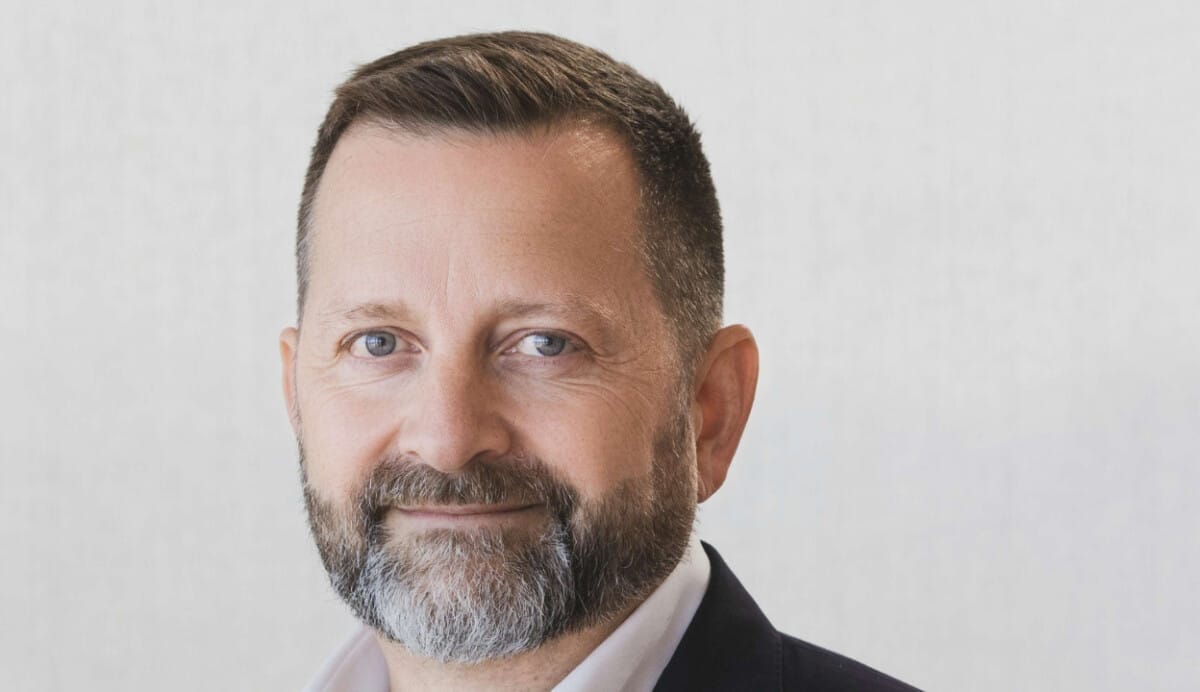

Iceland’s LV is eyeing more emerging markets allocation and private equity co-investments after conducting an SAA review, which will be finalised in the first half of 2026. CIO Arne Vagn Olsen says the shift is designed to make the $11 billion pension fund future-ready as he outlines the thinking around active management and manager selection.
Changes are afoot at Iceland’s Lífeyrissjóður verzlunarmanna (LV) as the $11 billion pension fund examines whether to incorporate more emerging markets allocation and private equity co-investments in its portfolio following a fresh strategic asset allocation review.
The review, which was conducted with Mercer and will be finalised in the first half of 2026, aims to understand the LV’s asset-liability relationship and will make the fund future-ready, says chief investment officer Arne Vagn Olsen in an interview last December.
“We are not necessarily in a rush to do this [review]. This is a very strategically important project for us, so we want to give it the time that it deserves, to discuss in-house, to discuss with the board and of course members and Mercer,” Vagn Olsen tells Top1000funds.com.
“We have analysed our risk budget and revised that, and having an updated risk budget means that you might have some more flexibility when you choose how to optimise the portfolio.”
LV is the largest open pension fund in Iceland and the second largest by overall assets under management following the $12 billion Lífeyrissjóður starfsmanna ríkisins (LSR), the pension fund for Icelandic state employees. But in January, LV began exploring a merger with the $5.4 billion Birta, which would make the combined entity the biggest pension fund in the nation.
A big investor in a small nation with a population of 390,000, LV’s assets under management are equivalent to one-third of Iceland’s GDP, which means any changes to the portfolio it makes need to be implemented gradually and steadily to prevent fluctuations in its foreign exchange market.
One shift spurred by the review is a potential change to the global equities benchmark, which is notable as almost all the fund’s international stock investments are passive.
“Traditionally we have had MSCI World as a benchmark, and it basically means that you’re excluding emerging markets as a benchmark composition. Doesn’t mean we haven’t invested into emerging markets, but one of the avenues we’re looking into is whether it would make sense to maybe switch to ACWI as a global equity benchmark,” he says.
The share of active management in LV’s global equities portfolio has steadily fallen – from 60-70 per cent when Vagn Olsen joined eight years ago to almost none today – after repeated manager underperformance.
“We are not against active managers. We simply have had trouble finding an active manager that has consistently outperformed, with the level of risk that we’re willing to take,” Vagn Olsen says.
“Private equity and public equity are the same block for us – it’s all equity in the end.
“The structure we have now is basically that you have the beta through the passive [listed] allocation, and the point is that you try to create the alpha through the alternatives, through private equity.”
LV currently allocates 37.8 per cent to foreign public and private equities and 13.5 per cent to domestic equities, as well as 11.9 per cent to foreign bonds, 11.1 per cent to government bonds, 18.8 per cent to mortgage bonds and real estate-related securities and 6.2 per cent to other bonds.
The fund is also examining the pros and cons of adding emerging markets debt to its foreign bond portfolio, complementing existing bank loans and higher-yielding exposures.
More co-investments
In private equity, Vagn Olsen describes LV as having a core-satellite approach, with the core part being strategies overseen by larger managers where the fund targets a 2-3 per cent annual outperformance over listed markets.
The satellites consist of managers “a bit more spicy”, such as those focused on, for example, tech or managers that have more “allowance” on what type of investments they can do such as turnaround and distressed deals.
LV has an overall private equity allocation target of 7.5 per cent, which Vagn Olsen says could change post the SAA review.
“We are looking into co-investments at the moment with our existing private equity managers. That is a way to both lower cost and potentially increase the gains by lower carry,” Vagn Olsen says.
The fund doesn’t have plans to put money into private debt as Icelandic legislation dictates that pension funds can only invest up to 20 per cent of their portfolio in unlisted securities, and Vagn Olsen would much rather put money to work in higher-returning asset classes like private equity.
This doesn’t mean the fund is averse to private debt and Vagn Olsen says it would consider it if a lifting of the unlisted investment cap comes to pass through the Icelandic Ministry of Finance next year.
“In Iceland, the latest change to the legislation was in 2016 when the concept of prudent person principle was introduced… but at the same time you’re very limited in how you can do that simply because of the quantitative limitations [on asset classes],” he says.
“The good news is that there is undergoing work between the Ministry of Finance, the Central bank of Iceland and the Icelandic Association of Pension funds with regards to reviewing the investment restrictions and there seems to be pretty good consensus on the need to change the legislation, as they are to some extent hindering what we would consider best practice in the management of a member’s assets.”
Bigger, better
Last April, LV swapped out Brown Brothers Harriman for global giant J.P. Morgan as its custodian. It was the prerequisite to another investment process overhaul which saw the fund move $2.5 billion in the foreign equity portfolio from pooled funds to separately managed accounts.
The move was enabled by LV’s rapidly expanding size, which doubled in the past seven years, Vagn Olsen says. The underlying assets remain the same across both structures.
“A few things that happen when you move from a pooled fund to a segregated mandate. In our case there are a lot of taxation treaties that we can now utilise on these assets which will automatically lead to financial gains” he says.
“We were able to negotiate lower fees and were able to express our responsible investment policies in greater detail, such as with an execution list.”
The transition was completed in November and won’t need ongoing resources, equipping LV with a clearer view of transactions, Vagn Olsen says. While he declines to put a specific number around the potential performance uplift, he says the fund “wouldn’t have done this if we didn’t see a clear financial gain of doing this for the long term”.
“So far so good, and we’re very much looking forward to reaping the benefits next year,” he says.