CalPERS: Leverage, liquidity, inflation

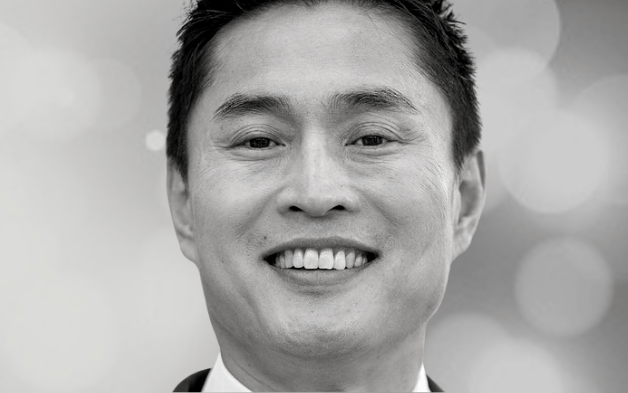
In this Fiduciary Investors series podcast Amanda White talks to Ben Meng, chief investment officer of CalPERS, the largest pension fund in the United States.

Meng, who oversees an investment office of nearly 400 employees and manages investment portfolios of roughly $400 billion, talks about the fund’s plan to achieve its 7 per return target – including the use of leverage – the liquidity management of the fund and how it could deploy capital during the crisis, and inflation.


About Ben Meng

Yu (Ben) Meng rejoined CalPERS in January 2019 as chief investment officer (CIO). He oversees an investment office of nearly 400 employees and manages investment portfolios of roughly $400 billion, including the Public Employees’ Retirement Fund and affiliate funds.
Yu, a U.S. citizen born in China, returned to CalPERS after more than three years as the deputy CIO at the State Administration of Foreign Exchange (SAFE), the largest asset pool in the world with assets under management of over $3 trillion U.S. dollars.

Prior to his time at SAFE, he served at CalPERS for seven years with his last role as the investment director of Asset Allocation. He also was a portfolio manager in fixed income.
Before joining CalPERS in 2008, Yu worked at Barclays Global Investors as a senior portfolio manager, Lehman Brothers as a risk officer, and Morgan Stanley as a fixed-income trader.
He also serves as a member of the Future of Finance Advisory Council (CFA Institute) and is an associate editor for the Journal of Investment Management.
In 2014 Yu was the recipient of the Cheit Award for Excellence in Teaching at the Haas School of Business.
He holds a master’s degree in financial engineering from the Haas School of Business at the University of California, Berkeley, and a doctorate in civil engineering from the University of California, Davis.


About Amanda White

Amanda White is responsible for the content across all Conexus Financial’s institutional media and events. In addition to being the editor of Top1000funds.com, she is responsible for directing the global bi-annual Fiduciary Investors Symposium which challenges global investors on investment best practice and aims to place the responsibilities of investors in wider societal, and political contexts.  She holds a Bachelor of Economics and a Masters of Art in Journalism and has been an investment journalist for more than 25 years. She is currently a fellow in the Finance Leaders Fellowship at the Aspen Institute. The two-year program seeks to develop the next generation of responsible, community-spirited leaders in the global finance industry


What is the Fiduciary Investors series?

The COVID-19 global health and economic crisis has highlighted the need for leadership and capital to be urgently targeted towards the vulnerabilities in the global economy.
Through conversations with academics and asset owners, the Fiduciary Investors Podcast Series is a forward looking examination of the changing dynamics in the global economy, what a sustainable recovery looks like and how investors are positioning their portfolios.

Sponsored Content

The much-loved events, the Fiduciary Investors Symposiums, act as an advocate for fiduciary capitalism and the power of asset owners to change the nature of the investment industry, including addressing principal/agent and fee problems, stabilising financial markets, and directing capital for the betterment of society and the environment. Like the event series, the podcast series, tackles the challenges long-term investors face in an environment of disruption,  and asks investors to think differently about how they make decisions and allocate capital.

Leave a Comment

Michael Pettis on China’s overinvestment paradox, and the Japan-style reckoning still to come

Michael Pettis on China’s overinvestment paradox, and the Japan-style reckoning still to come

China's advanced infrastructure and ballooning debt are two sides of the same story, says Carnegie Endowment nonresident senior fellow Michael Pettis, who compares China's coming consumption-led rebalancing to Japan's in the 1980s. In conversation with Top1000funds.com Asia Pacific correspondent Darcy Song, Pettis unpacks what this means for institutional investors weighing China exposure over multi-decade horizons, and why he remains bearish on the country's outlook.

Sort content by

Blue Owl’s James Clarke on navigating private credit’s first real cycle

Published in partnership with Blue Owl Capital. In this conversation, Top1000funds.com editor Amanda White spoke to Clarke about the credit cycle, the evolution of private credit, data centre financing, and what institutional investors should expect from their managers.

Treasurer Steiner on Oregon’s private equity future

Top1000funds.com editor Amanda White speaks to Oregon State Treasurer, Elizabeth Steiner, about the future role and expectations of private equity, how a maturing of the asset class puts pressure on returns, and the private/ public asset mix in the fund’s four-yearly asset allocation review which has just begun.

CalPERS’ Stephen Gilmore on the total portfolio approach

Listen to the detailed interview between Top1000funds.com editor Amanda White and CalPERS' CIO Stephen Gilmore to gain insights into how a TPA mindset has the potential, through a shared focus on the total portfolio, to add value, simplify accountability and open new opportunities for investments.

The world in flux and Trump’s role in a new equilibrium

The second Trump administration has so far brought a lot of things: market shocks, volatile trade policies, and turbulent foreign relationships. But beyond the chaos, renowned geopolitics expert Stephen Kotkin says Trump has an unwitting role to help the world rebalance and reach a “new equilibrium” in the global order.

Why Asia is the future

In the midst of the great power rivalry between the US and China, “we need to carve out a future that works well for all of us” says National University of Singapore’s Danny Quah, in a talk examining the global economy and the role of Asia. Listen here.

Reversal of investment themes demands investors change their assumptions

Investors are currently facing the end of uncertainty around assumptions they have made for decades, and need to shore up their portfolios with greater inflation protection, more active management, and by fostering innovation, according to chief strategist at the Investment Management Corporation of Ontario, Nick Chamie who spoke to Amanda White in the Fiduciary Investors Series




