
Sustainability among key industry’s tagged for China’s growth

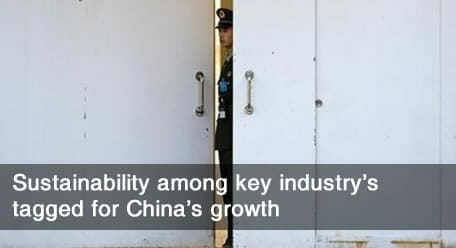
It’s not very salubrious but it’s secure. The four-star Jingxi Hotel in Beijing (pictured), which is owned by the People’s Liberation Army, hosted the annual plenum of the Communist Party’s Central Committee to draft the country’s next five-year plan.

The 12th five-year plan, nutted out by about 300 committee members, will be put to the National People’s Congress in March for ratification. The key themes in the latest plan are sustainability and reducing inequalities between provinces.

Analysts are predicting a lower GDP-growth target to be discussed between now and March, with details of the plan coinciding with a surprise 25bps point rise in the official interest rate last week – the first in China for three years.

A research note from HSBC Global Banking and Markets says more growth is likely to have to come from private consumption which has dropped from 50 per cent of total GDP to an estimated 36 per cent in the past 20 years.

“Expect further efforts to boost household incomes, primarily through higher minimum wages, as well as lower personal taxes,” the bank says.

Notwithstanding the stated concern for poorer provinces, the latest plan intends to speed the demographic shift to the cities, which will further boost consumption.

Sponsored Content

After the meeting, the Government confirmed a list of emerging strategic industries to be at the forefront of a “higher quality” of economic growth. They are: energy-saving and environmental protection firms, next generation IT, biotech, high-end manufacturing, new energy, new materials and composites, and clean-energy cars.

According to Shanghai Securities News, the group of industries currently make up only 3 per cent of GDP but are expected to contribute at least 15 per cent by 2020.

Leave a Comment

Sort content by

Investors must collaborate to innovate

Institutional investors are sheltered by competition, which in some instances can be beneficial, but it also means they are shielded from competitive forces that drive innovation. A new paper by Gordon Clark and Ashby Monk, looks at why the current model of either insourcing or outsourcing investment management doesn’t allow for innovation, and the models

Mercer’s plan for integrating ESG

How to implement ESG into portfolio construction and implementation is an ongoing challenge for asset owners. Mercer has come up with a number of strategies including the best way to use ESG ratings, active ownership, and tailored strategies that play to sustainability themes, including its own unlisted investment solution. Amanda White spoke to Jane Ambachtsheer,

PRI governance review to look at differential rights

The PRI has received many queries following the move by six Danish funds to abdicate as signatories over governance concerns. The association is holding a governance review that among other things will discuss the prospect of differential rights among signatories.   When six Danish funds, with a combined $300 billion, decided to leave the PRI

A trustee guide to factor investing

This research by academics at Tilburg University and the VU University Amsterdam, looks at the hurdles of implementing factor investing. It translates those into a checklist for implementing factor investing. The research, conducted for Robeco, finds that three approaches to factor investing are emerging and conducts case studies to examine how these approaches are implemented

Blackrock looks favourably on equities

Blackrock has a favourable view on equities, relative to bonds, but within fixed income it advocates an unconstrained approach. Amanda White spoke to chief investment strategist, Russ Koesterich.   Equities look cheap relative to bonds or cash, says chief investment strategist for Blackrock and iShares chief global investment strategist, Russ Koesterich, with the manager recommending

Howard Marks on alpha and making money

“It used to be easier to make money,” Oaktree Capital Management founder and chairman, Howard Marks muses as he discusses meeting the demands and goals of his clients in 2014. Marks is an avid communicator, and has been writing memos to clients for 24 years. The result is his book “The Most Important Thing”, which

Previous




