Michael Recce: The goldilocks approach to neuroscience, AI and investing

Apologies for the sound here, this interview was recorded using Skype and occasionally the quality drops.

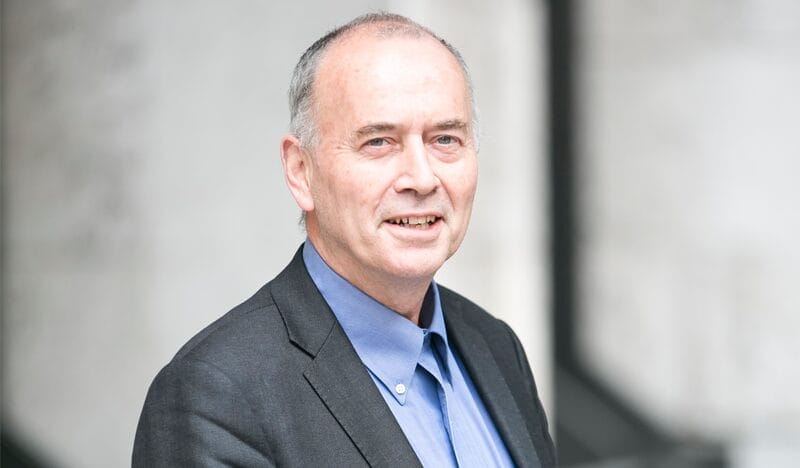
I chat with Michael, Chief Data Scientist at Neuberger Berman, on using alternative data sets to improve insights into portfolios, deep diving into specific companies and industries and how these sets allow us to look at the world in a richer and more immediate fashion than ever before.

Nothing on this podcast is to be considered investment advice or a recommendation. No investment decision or activitiy should be undertaken without first seeking qualified and professional advice.

Sponsored Content

Leave a Comment

WTW’s Urwin defends TPA value-add as attribution scrutiny intensifies

WTW’s Urwin defends TPA value-add as attribution scrutiny intensifies

Roger Urwin, one of the industry’s most well-known proponents of TPA, has defended it against the growing scepticism of its reported performance edge over SAA, saying “TPA is a system” and any performance attribution is difficult to isolate from the broader context each fund operates in. In an interview with Top1000funds.com, he also weighs in on whether some funds are inherently unsuitable for implementing TPA.

Sort content by

International reaction to QSuper’s innovation

Australian fund, QSuper’s creation of eight different investment cohorts for its 440,000 default fund members this month has sparked curiosity and admiration from defined contribution experts in the US, the UK and New Zealand. The investment strategies for each group will be focussed on an estimated retirement outcome for that segment, taking into account the

Risks are multi-faceted and evolving: Litterman

If Robert Litterman were a CIO of a public pension plan he would not try to hit an “unrealistic return target”. Amanda White speaks to him about risk, quants, asset allocation and climate change. There is a serious problem with US public pension funds and the “unrealistic commitments and unrealistic return targets” they have set,

Pension risk in DC funds

Defined contribution plans focus too much on the short-term accumulation of pension assets rather than the longer-term goal of securing an adequate retirement income. This paper by the World Bank, based on case studies from a number of countries, argues that pension supervisors have not properly defined the objectives of DC pension systems It suggests

Harvard’s sustainability plan

Last month Harvard Management Company was the first US university endowment to sign the PRI. It has also appointed its first vice president of sustainable investing as it seeks to incorporate ESG considerations in its decision making. So how is HMC integrating ESG in its portfolio?   Harvard University has taken a stand for sustainability.

Australian industry degraded by inflated fees

The Australian superannuation industry is often quoted as among the world’s best. However a new report by the Grattan Institute reveals Australian funds charge on average three times the OECD median rate. The report says that superannuation fee reform is the biggest opportunity for micro-economic reform in that country’s economy. The report, Super sting: how

Investors ignore liability matching at their peril

Two high profile pension funds, ATP of Denmark and HOOPP of Canada, have been very successful in managing their assets in two distinct portfolios. But the practice of fund separation, a portion of the portfolio for liability hedging and another for alpha generation, is not common in pension management. It should be. For these two

Previous



