
Investors hold power for sustainable future

Institutional investors need to move beyond “bombastic support” of environmental, social and governance (ESG) issues, says the head of the world’s peak trade union organisation, who also challenges investors to lead change in investment practices rather than just offer rhetorical support of the UNPRI.

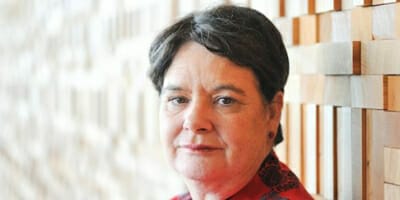
Sharan Burrow (pictured), general secretary of the International Trade Union Confederation (ITUC) says investors need to drive the green investment agenda rather than be passive participants in a status quo dominated by what she calls the “dormant agenda” of the financial sector.

“Serious investors need to look at the sustainability of capital and their responsibility under UNPRI. They are not serious about their ESG commitment, but they have to be. If they don’t drive green investment we won’t meet the challenge of a sustainable future,” she says. “We need to show responsibility for a sustainable future. I would challenge investors to do more.”

It is hands off for institutional investors to blame government policy for their inaction, she says.

“We are seeing the planning that goes to sustainability. South Africa for example has a growth plan which includes a 60 per cent target in green infrastructure and investment. Brazil and Argentina are conscious of green economy investing, and there are a dozen or so more countries I could name. It is no excuse for investors to say government is not capable of managing investments in that,” she says. “Investors also need to talk to governments about kick starting systems in emerging markets with official development assistance, putting money in basic infrastructure.”

“The transformation of the global economy needs to be green,” she says. “There is a moral responsibility for a healthy and sustainable future, but also the principles of the green economy must reflect respect and dignity of human beings.”

Sponsored Content

The ITUC, which represents 175 million workers in 151 countries and territories, has set out an alternative growth model that focuses on stimulating employment through infrastructure and climate related investments and public services.

Burrow says the IMF, World Bank and G20 Governments need to assume leadership and put a halt to destructive economic policies as austerity measures threaten to create several million more job losses, making it even more unlikely deficit targets will be reached.

The recent financial crisis – record low unemployment and in particular youth unemployment that has potential for social catastrophe, low demand and a decline in income share against productivity – is evidence that classical economic models have failed, she says.

“We have to raise global funds through unorthodox methods to rebalance the global economy,” she says.

To this end the ITUC advocates a financial transactions tax, and Burrow believes Europe will “go it alone” in the first instance.

She says a financial transactions tax would pay for job recovery programs and meet development and climate commitments.

“A financial services tax is absolutely feasible. It is short-sighted of industry to object because it will be returned to them in growth and demand through jobs, people, sustainability that underpins their business, it will help their growth. It is extraordinary they are actually sowing the seeds of their own destruction. There is no moral responsibility by the financial sector,” she says. “This time the crisis should provide a wake up call, classical economic models have failed.”

Ahead of the Durban climate summit in December and next year’s United Nations Conference on Sustainable Development, Rio+20, in Brazil, (http://www.uncsd2012.org/rio20/index.php?menu=14) the ITUC is developing research and its position on investment in green infrastructure and the greening of all industry.

In particular it is conducting research into the job growth that could be generated by a simple 2 per cent of GDP being allocated to a green economy.

“There are certain proposals we’ll write regarding an alternative growth model and a green economy. We’re looking at universal social protection and rights for people as well as income led growth and a commitment to a just transition. Investment in new areas of industry must be about green infrastructure.”

The ITUC alongside the European Trade Union Institute, the Trade Union Advisory Council and the Global Union Research Network have created a task force to define the parameters of a new growth model based on a more balanced relationship between government and the economy.

Asset Owner:World Bank

Leave a Comment

Sort content by

CalPERS urged to pull back commodities risk

CalPERS’ internal commodities team should enforce a tracking error limit for the portfolio it manages, and prepare to boost headcount and resources as investment opportunities evolve and funds under management grow, the fund’s primary asset consultant, Wilshire Associates, found in a review. mrec4inarticleinline Sponsored Content scnative1 scnative2 scnative3

Corporate US plans expect too much

US corporate defined-benefit plans are still severely underfunded, with an artificially high return expectation contributing to the situation, according to a report of the funding status of 308 US corporate defined benefit plans by Wilshire Consulting. mrec4inarticleinline Sponsored Content scnative1 scnative2 scnative3

Global instos collaborate on measuring water risks

Norges Bank Investment Management is leading a consortium of more than 130 institutions globally in a disclosure project aimed at providing investors with a comprehensive assessment of the water risks of the companies they invest in. mrec4inarticleinline Sponsored Content scnative1 scnative2 scnative3

Wilshire survives and retains CalPERS consulting tender

Wilshire Associates has survived another competitive tender, trumping RogersCasey in the interview scoring process to retain the position of CalPERS’ lead general investment consultant, a position it has held since 1983. mrec4inarticleinline Sponsored Content scnative1 scnative2 scnative3

Pension funds unite: you can double returns

Paul Woolley insists that he is pro market forces; he is not some sort of Trotskyite. A cursory glance at some of the research work he is either doing or financing might prompt scepticism. But this urbane Londoner who established the top-shelf GMO quant shop in Europe is mainly concerned about inefficiencies and mispricing. And

What investors really want

While the models of expected returns are evolving, they still do not recognise the role of expressive and emotional characteristics. In this guest editorial in the Financial Analysts Journal, Meir Statman, Glenn Klimek Professor of Finance at Santa Clara University, California, proposes including characteristics such as affect, social responsibility, status and patriotism in models of

Previous




