
Investors hold power for sustainable future

Institutional investors need to move beyond “bombastic support” of environmental, social and governance (ESG) issues, says the head of the world’s peak trade union organisation, who also challenges investors to lead change in investment practices rather than just offer rhetorical support of the UNPRI.

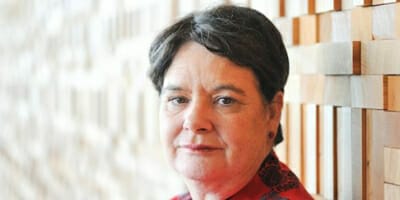
Sharan Burrow (pictured), general secretary of the International Trade Union Confederation (ITUC) says investors need to drive the green investment agenda rather than be passive participants in a status quo dominated by what she calls the “dormant agenda” of the financial sector.

“Serious investors need to look at the sustainability of capital and their responsibility under UNPRI. They are not serious about their ESG commitment, but they have to be. If they don’t drive green investment we won’t meet the challenge of a sustainable future,” she says. “We need to show responsibility for a sustainable future. I would challenge investors to do more.”

It is hands off for institutional investors to blame government policy for their inaction, she says.

“We are seeing the planning that goes to sustainability. South Africa for example has a growth plan which includes a 60 per cent target in green infrastructure and investment. Brazil and Argentina are conscious of green economy investing, and there are a dozen or so more countries I could name. It is no excuse for investors to say government is not capable of managing investments in that,” she says. “Investors also need to talk to governments about kick starting systems in emerging markets with official development assistance, putting money in basic infrastructure.”

“The transformation of the global economy needs to be green,” she says. “There is a moral responsibility for a healthy and sustainable future, but also the principles of the green economy must reflect respect and dignity of human beings.”

Sponsored Content

The ITUC, which represents 175 million workers in 151 countries and territories, has set out an alternative growth model that focuses on stimulating employment through infrastructure and climate related investments and public services.

Burrow says the IMF, World Bank and G20 Governments need to assume leadership and put a halt to destructive economic policies as austerity measures threaten to create several million more job losses, making it even more unlikely deficit targets will be reached.

The recent financial crisis – record low unemployment and in particular youth unemployment that has potential for social catastrophe, low demand and a decline in income share against productivity – is evidence that classical economic models have failed, she says.

“We have to raise global funds through unorthodox methods to rebalance the global economy,” she says.

To this end the ITUC advocates a financial transactions tax, and Burrow believes Europe will “go it alone” in the first instance.

She says a financial transactions tax would pay for job recovery programs and meet development and climate commitments.

“A financial services tax is absolutely feasible. It is short-sighted of industry to object because it will be returned to them in growth and demand through jobs, people, sustainability that underpins their business, it will help their growth. It is extraordinary they are actually sowing the seeds of their own destruction. There is no moral responsibility by the financial sector,” she says. “This time the crisis should provide a wake up call, classical economic models have failed.”

Ahead of the Durban climate summit in December and next year’s United Nations Conference on Sustainable Development, Rio+20, in Brazil, (http://www.uncsd2012.org/rio20/index.php?menu=14) the ITUC is developing research and its position on investment in green infrastructure and the greening of all industry.

In particular it is conducting research into the job growth that could be generated by a simple 2 per cent of GDP being allocated to a green economy.

“There are certain proposals we’ll write regarding an alternative growth model and a green economy. We’re looking at universal social protection and rights for people as well as income led growth and a commitment to a just transition. Investment in new areas of industry must be about green infrastructure.”

The ITUC alongside the European Trade Union Institute, the Trade Union Advisory Council and the Global Union Research Network have created a task force to define the parameters of a new growth model based on a more balanced relationship between government and the economy.

Asset Owner:World Bank

Leave a Comment

Sort content by

Mubadala grows in 2009

Mubadala Development, the strategic investment arm of the Abu Dhabi government, grew its total assets by 75 per cent to AED88.5 billion ($24.1 billion) in 2009. mrec4inarticleinline Sponsored Content scnative1 scnative2 scnative3

Danish ATP on track for 5-year performance

The investment and hedging performance for the first quarter of this year means the DKK 660 billion ($114 billion) Danish ATP is on target to reach its five-year performance objective which will end this year. mrec4inarticleinline Sponsored Content scnative1 scnative2 scnative3

US funds look for more protection offshore

The trend away from US equities and various fixed interest products as interest rates risks increase is expected to continue, according to the latest Global Asset Flows Review from eVestment Alliance and Casey Quirk. mrec4inarticleinline Sponsored Content scnative1 scnative2 scnative3

More beta, fewer managers, improves portfolio efficiency

A truly diversified portfolio will have 15 separate asset class allocations with an emphasis on beta opportunities and little to no reliance on active management, according to a Towers Watson’s model. mrec4inarticleinline Sponsored Content scnative1 scnative2 scnative3

UK election could trigger rating downgrade

UK pension funds should brace themselves for bad news after today’s election – no matter what the result – if the country’s credit rating is downgraded. mrec4inarticleinline Sponsored Content scnative1 scnative2 scnative3

Private equity hurting from the boom

No matter what they say, private equity managers will struggle to deliver stellar returns from the vintages of the global recession. Simon Mumme speaks to Jane Welsh, global head of private markets research at Towers Watson, about why the glut of capital committed to private equity in its heyday could depress future returns. mrec4inarticleinline Sponsored

Previous




