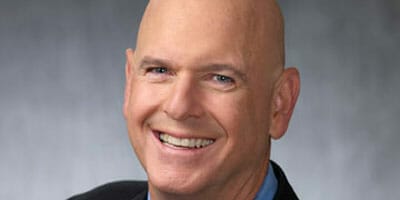

CalSTRS considers
asset risk factors

The $152.5-billion Californian State Teachers Retirement System (CalSTRS) is undertaking an asset-allocation review that will consider the underlying risk factors of assets for the first time.

Chris Ailman, chief investment officer of CalSTRS, says the fund is in the middle of an asset-allocation study, which would likely take six months, and would take a different tack.

In the past the fund has only considered capital-market mean optimisation in making asset-allocation decisions, but now it will look at allocations according to risk factors as well.

“We will look at the drivers of risk – including inflation, interest rates and GDP – and what the fund is willing to include and exclude. We will optimise our allocations from a capital and risk perspective,” he says.

“If it reaffirms that we’re taking the right level of risk and return, then that is enriching the decision-making,” he says.

 Watching its weight

Sponsored Content

Ailman says the fund is adding points of view to the asset-allocation study and, at a recent board meeting, had an “interesting debate” on whether the goal of the portfolio was to make money or not to lose money.

“Capital-market theory and mean optimisation calculates risk by only one-term standard deviation, but it is much more complex than that. We apply so much math to investments because we want it to be a science, but it’s an art, and requires judgement.”

CalSTRS also makes tactical asset-allocation decisions and this week was due to hold a TAA meeting with one decision on the table: whether to go overweight the US.

At the moment the fund is neutral US, underweight Europe and underweight fixed income.

It has an automatic rebalancing process when allocations exceed the ranges, and Ailman says the question becomes when to rebalance and by how much.

“We are trying to build out an overlay portfolio with focus on left-tail risk,” he says.

Acknowledging inflation as a risk

Ailman’s view is that the biggest bubble in investments is fixed income, and acknowledging inflation as a risk is missing in most portfolios.

CalSTRS will look to expand its inflation-hedging portfolio among a basket of investments, including treasury inflation-protected securities and infrastructure.

The fund currently has a lot of growth assets, with 50.7 per cent in global equities and 14.5 per cent in private equity.

It also allocates 18.4 per cent to fixed income, 14.2 per cent to real estate, 1.6 per cent to cash, 0.2 per cent to inflation and 0.4 per cent to an overlay.


Leave a Comment

Sort content by

US property returns forecast to fall

Despite institutional investors predicting that returns for property will fall over the next two years, high-quality, core US real estate remains an attractive investment opportunity, says Greg MacKinnon, the head of research at the Public Real Estate Association.mrec4inarticleinline Sponsored Content scnative1 scnative2 scnative3

Investors punish non-abiding managers

Asset owners are increasingly putting pressure on their asset managers to abide by the CFA asset manager code of professional conduct, with one CIO stating that managers who do not comply could be penalised in the future.

CalPERS warns on pension reforms

CalPERS has raised concerns that California Governor Edmund G. Brown Jr’s plan for a hybrid defined contribution (DC) and defined benefit (DB) public pension system could lead to a more conservative investment strategy and threaten the actuarial soundness of its existing DB scheme. The $225.2 billion fund released a working paper on Governor Brown’s 12-point

Asset managers raise alarm

Popular movements seem more likely to emanate from camped-out protesters than boardrooms, but a new organisation headed by Hermes Fund Managers acting chief executive officer Saker Nusseibeh has the ambitious aim of radically reforming the investment industry.

Florida set to reject governance advice

The Florida State Board of Administration (SBA) looks set to reject substantial governance reforms recommended by its consultant, Crowe Horwath.mrec4inarticleinline Sponsored Content scnative1 scnative2 scnative3

HF investments to reach pre-crisis heights

Despite ongoing uncertainty facing the world economy, institutional investors are planning to increase their allocations to alternative assets, with alternative asset researcher Preqin predicting the hedge fund industry could rebound next year to pre-global financial crisis (GFC) levels.mrec4inarticleinline Sponsored Content scnative1 scnative2 scnative3

Previous




