
CalSTRS considers
asset risk factors

The $152.5-billion Californian State Teachers Retirement System (CalSTRS) is undertaking an asset-allocation review that will consider the underlying risk factors of assets for the first time.

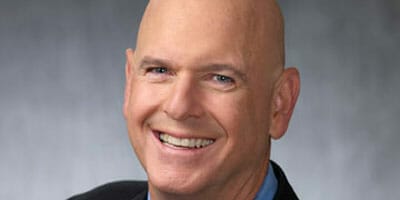
Chris Ailman, chief investment officer of CalSTRS, says the fund is in the middle of an asset-allocation study, which would likely take six months, and would take a different tack.

In the past the fund has only considered capital-market mean optimisation in making asset-allocation decisions, but now it will look at allocations according to risk factors as well.

“We will look at the drivers of risk – including inflation, interest rates and GDP – and what the fund is willing to include and exclude. We will optimise our allocations from a capital and risk perspective,” he says.

“If it reaffirms that we’re taking the right level of risk and return, then that is enriching the decision-making,” he says.

 Watching its weight

Sponsored Content

Ailman says the fund is adding points of view to the asset-allocation study and, at a recent board meeting, had an “interesting debate” on whether the goal of the portfolio was to make money or not to lose money.

“Capital-market theory and mean optimisation calculates risk by only one-term standard deviation, but it is much more complex than that. We apply so much math to investments because we want it to be a science, but it’s an art, and requires judgement.”

CalSTRS also makes tactical asset-allocation decisions and this week was due to hold a TAA meeting with one decision on the table: whether to go overweight the US.

At the moment the fund is neutral US, underweight Europe and underweight fixed income.

It has an automatic rebalancing process when allocations exceed the ranges, and Ailman says the question becomes when to rebalance and by how much.

“We are trying to build out an overlay portfolio with focus on left-tail risk,” he says.

Acknowledging inflation as a risk

Ailman’s view is that the biggest bubble in investments is fixed income, and acknowledging inflation as a risk is missing in most portfolios.

CalSTRS will look to expand its inflation-hedging portfolio among a basket of investments, including treasury inflation-protected securities and infrastructure.

The fund currently has a lot of growth assets, with 50.7 per cent in global equities and 14.5 per cent in private equity.

It also allocates 18.4 per cent to fixed income, 14.2 per cent to real estate, 1.6 per cent to cash, 0.2 per cent to inflation and 0.4 per cent to an overlay.


Leave a Comment

Sort content by

Future Fund takes big step for corporate governance

The A$58 billion ($46 billion) Australian Future Fund has made a number of corporate governance-related decisions, including bringing its proxy voting for domestic shares in-house and the creation of an environmental, social and governance risk management function. mrec4inarticleinline Sponsored Content scnative1 scnative2 scnative3

Carbon risks reduced by good stock selection

Asset managers can dramatically reduce the carbon footprints of their funds through stock selection without the need to alter sector weightings or their overall investment strategy, according to a report by Mercer and Trucost for the WWF, that also found asset owners could encourage the active management of carbon risk in portfolios. mrec4inarticleinline Sponsored Content

Institutional influence shaping hedge fund investments

Janine Baldridge, Russell Investments’ global head of consulting and advisory services, talks to Kristen Paech about the new terms pension funds are demanding from their hedge fund managers – including lower fees and more control – and how managers are responding. mrec4inarticleinline Sponsored Content scnative1 scnative2 scnative3

$38b UN fund to review ALM

The investments committee and committee of actuaries of the $38 billion UN Joint Staff Pension Board will recommend the introduction of new asset classes, including emerging markets equity and debt, real return assets and private equity in a presentation to the board in July. mrec4inarticleinline Sponsored Content scnative1 scnative2 scnative3

CIC to invest 6% in hedge funds by 2010

The $200 billion China Investment Corporation (CIC) will have between $4 and $6 billion invested in hedge funds by the end of this year, and will develop in-house expertise including long/short under Felix Chee, special adviser to the CIO, as part of a wider recruitment drive which includes more than 30 new positions. mrec4inarticleinline Sponsored

Timor’s SWF awards first external mandate, begins global equities search

The $4.7 billion Petroleum Fund of Timor-Leste has diversified its portfolio away from US Treasuries by appointing, for the first time, an external manager to invest $1 billion in high-grade, diversified fixed income, while undertaking a search for global equity managers. mrec4inarticleinline Sponsored Content scnative1 scnative2 scnative3

Previous




