
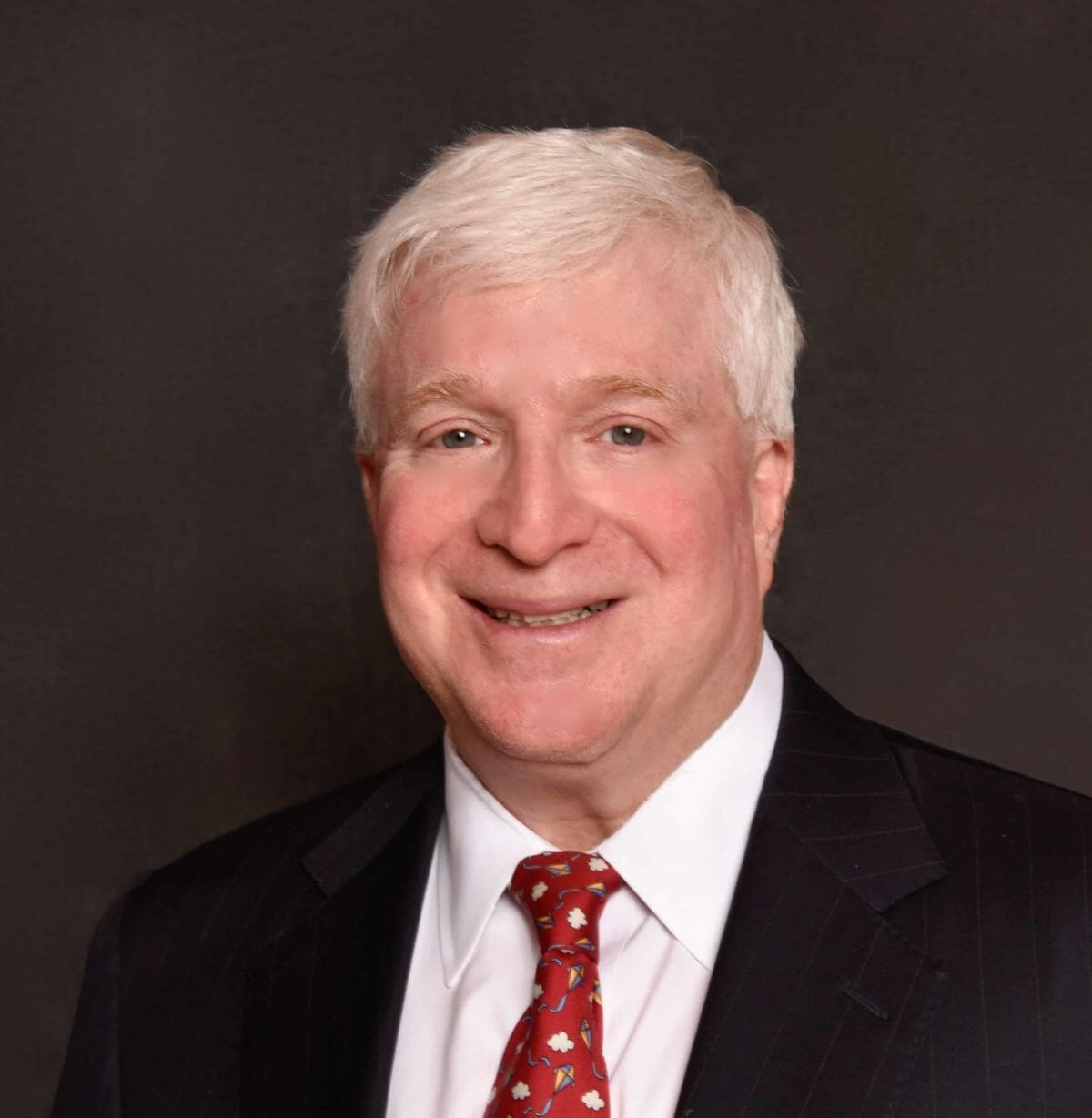

As the director of the Responsible Asset Allocator Initiative (RAAI) at New America, I am pleased to launch the ‘2019 Leaders List: The 25 Most Responsible Asset Allocators.’
The Leaders List report, developed in partnership with the Fletcher School at Tufts University, analysed $21 trillion in sovereign wealth fund and government pension fund assets around the world to identify 25 leaders and 25 finalists that set a global standard of excellence in responsible, sustainable investing. A 1 per cent allocation from this group of investors would unleash $200 billion per annum to finance renewable energy, sustainable infrastructure, clean water, healthcare and education.
The RAAI provides a barometer of how the world’s largest financial actors are changing their behaviour to address the planet’s greatest challenges. The intense competition for inclusion on the 2019 list demonstrates that sophisticated investors are embracing a broader definition of fiduciary duty and, increasingly, adopting environmental, social and governance considerations into their portfolio decision-making.
The world is shifting toward more socially aware and environmentally friendly investment practices and the list highlights a powerful group of investors that are leading the charge. Increasingly, the asset allocator community is recognising that investing responsibly and sustainably is a better way to optimise returns, reduce risks, and identify opportunities for future growth, all while aligning portfolios with broader social and environmental concerns of stakeholders.
Highlights of the 2019 Leaders List from the top 25 include:
- Canada again tops the list with five leaders; Australia/New Zealand, France and the US are next with three leaders each (the US leaders are all from California)
- Europe accounts for 40 per cent of total leaders (including investors from Denmark, France, the Netherlands, Norway, Sweden and the UK)
- Asia has two leaders, one each from Japan and Malaysia
- Africa has one investor on the leaders list.
Further highlights of the Leaders and Finalists from the top 50 include:
- Australia/New Zealand, Canada and the UK dominate the top 50 with seven investors each, followed by the US with six investors, the Netherlands with four and Denmark with three.
- The top 50 is diversified by four investors from Asia, one each from Africa, Central Asia and Latin America, and one multilateral pension fund.
Researchers expanded the scope of coverage in 2019, evaluating 471 asset allocators and rating 197 of them, up from 121 ratings in 2017. The ten core principles for benchmarking funds remained the same, but the number of ranking criteria almost doubled, raising the bar for the 25 highest scoring funds that were selected for inclusion in the list: our 10 core principles span ESG disclosure, integration, implementation, levels of partnership and adoption of global standards.
Funds ranked 26-50 were recognised as finalists and nine new funds were selected for the Leaders List in 2019. AUM of the leaders increased by $1 trillion dollars in 2019, rising to $5.9 trillion from $4.9 trillion in 2017, indicating that an increasing number of the world’s largest and most sophisticated investors are considering social and environmental risks when deploying their capital.
The total assets of the Leaders List funds are larger than the combined GDP of 145 countries and 44 times larger than the total loans and disbursements made by the World Bank Group in 2018.
The Leaders List in alphabetical order is:
Alberta Investment Management Corp. (AIMCo) (Canada)
AP Funds (Sweden)
APG Groep (Netherlands)
Australian Super* (Australia)
British Columbia Investment Management Corp. (Canada)
Caisse de dépôt et placement du Québec (Canada)
Caisse des Dépôts et Consignations (France)
California Public Employees’ Retirement System (CalPERS) (USA)
California State Teachers’ Retirement System (CalSTRS)* (USA)
Canada Pension Plan Investment Board (CPPIB) (Canada)
ERAFP (Etablissement de Retraite Additionnelle de la Fonction Publique) (France)
Fonds de Reserve pour les Retraites* (France)
Government Pension Fund – Global (Norway)
Government Pension Investment Fund* (Japan)
Khazanah Nasional Berhad (Malaysia)
Strathclyde Pension Fund* (UK)
New Zealand Superannuation Fund (New Zealand)
Ontario Teachers’ Pension Plan (Canada)
PensionDanmark* (Denmark)
PGGM (Netherlands)
Public Investment Corp. (South Africa)
RPMI Railpen* (UK)
UC Regents Investment Funds* (USA)
United Nations Joint Staff Pension Fund (Global)
Victoria Funds Management Corp* (Australia)
* New addition to the Leaders List in 2019
Scott Kalb is the founder and director of the Responsible Asset Allocator Initiative at New America. He is chair of the Sovereign Investor Institute, and previously was the CIO of the $130 billion Korea Investment Corporation
.








Leave a Comment
You must be logged in to post a comment.
Login