
Private credit’s pivotal role in low-carbon transition

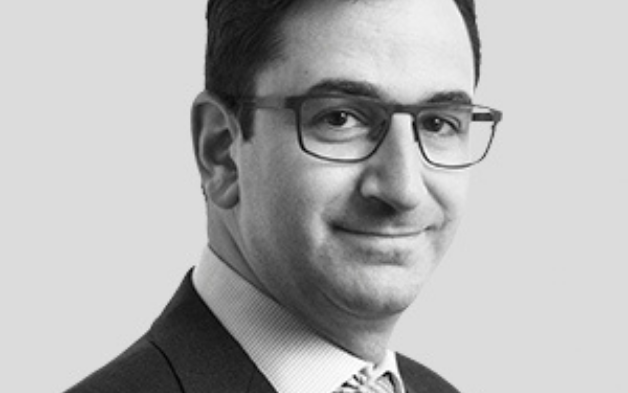
Private credit will play a vital role in accelerating the transition to a low-carbon economy. According to Rob Horn, global head of the Blackstone Credit Sustainable Resources Group, this role is set to get a whole lot bigger. Horn believes that credit will eventually supply as much as 60 per cent of the estimated $100 trillion needed to decarbonise economies around the world providing for a particularly attractive investment opportunity for private credit. An opportunity to drive attractive risk-adjusted returns, while potentially improving societal outcomes. In this exclusive fireside chat with Fiona Reynolds, chief executive of Conexus Financial and former head of the UN-supported Principles for Responsible Investment, Horn outlines Blackstone’s view on energy transition as a key investment theme for the firm; its approach to sustainable finance; and what is needed to encourage more institutional investors into this rapidly evolving space.

Sponsored Content

Leave a Comment

La Caisse’s oil exit pays off as renewables portfolio pulls ahead of fossil fuels

La Caisse’s oil exit pays off as renewables portfolio pulls ahead of fossil fuels

Divesting from the oil sector has been a boon for La Caisse’s performance, as the Canadian pension giant says its energy investments have earned billions in value-add compared to the benchmark since the inception of its climate strategy. Head of sustainability Bertrand Millot unpacks the fund’s approach in an interview with Top1000funds.com.

Sort content by

ESG almost an afterthought

Only 26 of 4300 companies surveyed by Governance Metrics International (GMI) have a specific clause that measures executive compensation against a sustainability metric, and institutional investors play a pivotal role in transforming this behaviour. Kimberly Gladman, director of research and risk analytics at the governance research company GMI, says investors should set the expectations that

African fund invests for returns and development

Returns should not be the sole driver of investment decisions as funds should consider the social, environmental and economic impact their capital can have, a senior official at Africa’s largest pension fund says. John Oliphant, head of actuarial and investments at South Africa’s $130-billion Government Employees Pension Fund (GEPF), says the fund considers high impact

Ethics not returns drive AP7’s ESG policy

Returns are a secondary consideration to the ethical values of members when framing the socially responsible investment policy of Swedish fund AP7. AP7’s head of communications, Johan Floren, says that the fund is less concerned with socially responsible investment (SRI) as a driver of returns rather than as a reflection of the values and ethics

Investors look to clean energy infrastructure

Despite clean energy public equity investments performing poorly in 2011, there are still attractive investing opportunities in the sector and strong investor interest in financing green energy infrastructure, a Deutsche Bank Climate Change Advisors report has revealed. mrec4inarticleinline Sponsored Content scnative1 scnative2 scnative3

Fiduciary duty to push for climate change action: CalPERS CEO

CalPERS chief executive Ann Stausboll told delegates at an investor summit on climate change held in New York this week that the fiduciary duty of pension funds should extend to issues outside the parameters typically understood as being directly related to beneficiaries’ financial interests. Stausboll said it is a fiduciary duty of investors not only

NYC pension funds demand tougher clawback provisions

New York City Comptroller John Liu has rallied NYC pension funds in a call for high profile firms JPMorgan, Goldman Sachs and Morgan Stanley to beef up clawback provisions for senior executives.mrec4inarticleinline Sponsored Content scnative1 scnative2 scnative3

Previous




