
Opportunity for FI to be more impactful

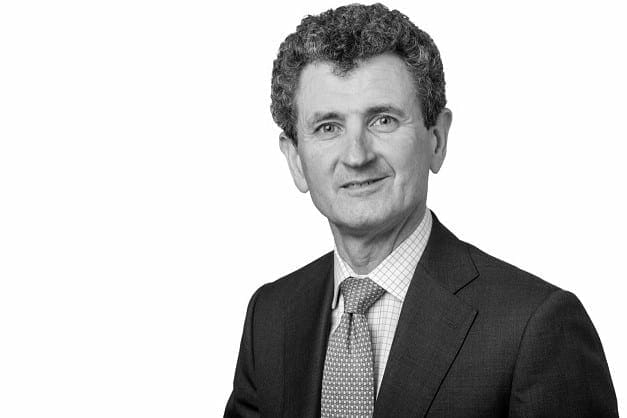
In this Fiduciary Investors Series podcast, Amanda White talks to Andrew Parry, head of sustainable investment at Newton Investment Management about the complexity of sustainable investment, and the role of the finance industry in guiding investors to choose companies that have relevant business models for a changing world.

Now is the time to embrace the Sustainable Development Goals (SDGs), according to head of sustainable investment at Newton Investment Management, Andrew Parry, with the COVID crisis exposing a lot of the frailties in our society and economic system.

“This is very much a social crisis, a human crisis,” he said in a Fiduciary Investors Series podcast. “It has helped galvanised attention on this issue, and brought together a broad range of partners across private and public sector and [the SDGs] present a way of recovering from the crisis if executed well.”

September this year marked the fifth anniversary of the SDGs, a period of time that Parry says represented a very slow take up in the SDGs.

“If anything it was a labelling exercise. But a lot of people have been calling this out and saying it has not been integrated into business plans it or is not being seen as part of the transformation we need in the economy. The COVID crisis brought all of that home. Now there is a chance for restorative, transformative allocation of capital. It’s very exciting.”

In addition the very low levels of interest rates around the world provide a unique opportunity for the finance industry to be innovative to meet the needs outlined by the SDGs.

Sponsored Content

“I think the finance sector has gone beyond a re-mapping of the goals, and is beginning to understand that the SDGs represent an enormous opportunity,” he says.

In particular he says there is an opportunity in the fixed income market to accelerate its participation in achieving the goals.

“In the fixed income market one of the measures of impact is additionality. They can bring additional capital to bare to help tackle and fund these needs. One of the really interesting areas is how do we take the learnings from green bonds and apply it to the SDGs and bring new capital to bare,” he said. “The investment world is crying out for attractive investment opportunities if done with the proper public private partnership it’s a tremendous opportunity for the fixed income market to be impactful investors.”

Parry believes one of the biggest obstacles in aligning portfolios to the SDGs is understanding what it represents.

“If you don’t get beyond the 17 goals you’re not doing your job, you need to have a deep understanding. There is a rich body of understanding coming out of the UN agencies of what the goals and targets represent and how to be accessed. This helps you build your own view and taxonomy.”

Parry, who has worked in funds management for more than 30 years, believes the industry needs to be careful in its nomenclature, citing “non-financial” as a bit of a misnomer.

“It’s just a time scale,” he says. “There’s a tension over the short term between economic and financial returns, social consequences and environmental impact but over the the long term they do come together. We need a well-functioning prosperous society living in a vibrant world to support economic returns which drive financial returns.”

This is where it is important that asset owners look through the lens of systems thinking and long-term thinking so the three concepts of environment, people and financial returns all come together.

“There is a lot of dynamism in this and the world is constantly changing. I ask people if ESG didn’t exist as a concept, would you carry on investing in the way you would today under those labels? I would. They are fantastic ways to look at the way the world is going, it’s expanding your world and frees you from the dead hand of the index, and frees you to look at the world and where it is going.”

Parry says the role of investors is to navigate clients through a changing world and identify relevant business models for that.

“Social norms are unstable over time, which is good because we’re seeing such a dramatic shifts in certain things, like gay marriage. Companies that anchor to the past, or have the arrogance to think they will always be relevant will be marooned.”

By way of example he points to the FTSE index which only has 26 names still in it from the 1980s.

“Businesses need to think about the world as in adaptation. There is a very different construct in the FSTSE in names but also the businesses that reflect society. No business model is designed to last forever because things succumb to changing norms. Being relevant in a changing world is a powerful concept. Darwin didn’t say survival of the fittest, he said survival of the most adaptive.”


Leave a Comment

La Caisse’s oil exit pays off as renewables portfolio pulls ahead of fossil fuels

La Caisse’s oil exit pays off as renewables portfolio pulls ahead of fossil fuels

Divesting from the oil sector has been a boon for La Caisse’s performance, as the Canadian pension giant says its energy investments have earned billions in value-add compared to the benchmark since the inception of its climate strategy. Head of sustainability Bertrand Millot unpacks the fund’s approach in an interview with Top1000funds.com.

Sort content by

CEPB gets tough on climate lobbying

Climate lobbying by powerful trade associations is delaying and diluting the impact of net zero policies and running counter to the effort policy makers, companies and investors are making to reduce their emissions, says Clare Richards, senior engagement manager in the investments team at the £4.3 billion Church of England Pensions Board where she has

Investors target slow climate movers including Berkshire Hathaway

Climate Action 100+ urges investors to apply more pressure for corporate action on climate change this proxy season. Investors such as CalPERS are targeting slow movers on climate like Berkshire Hathaway.

Managers eye Brunel’s private markets push

Brunel Pension Partnership, the £31 billion asset manager for 10 local authority pension funds in the United Kingdom, is in the process of allocating to a new cohort of managers across private equity and debt, infrastructure, and unsecured income.

CalSTRS sets sustainability as strategic priority in 10-year plan

A focus on a sustainable organisation is one of three pillars in the $312 billion CalSTRS’ new five year strategic plan, as it also reveals progress on its net zero plan.

War in Ukraine threatens net zero targets

The UK's BT Pension Scheme's CIO Wyn Francis reflects on the pressure war in Ukraine will put on investors net zero targets.

Carl Icahn’s McDonalds move highlights ESG risks for investors

Many investors will welcome Carl Icahn’s attempt to force the board of McDonalds to change its policy on cruelty in pig farming. Jeremy Coller, founder and chair of the FAIRR Initiative,argues slow movement on gestation crates is as much an investment risk as it is an issue of animal welfare.

Previous




