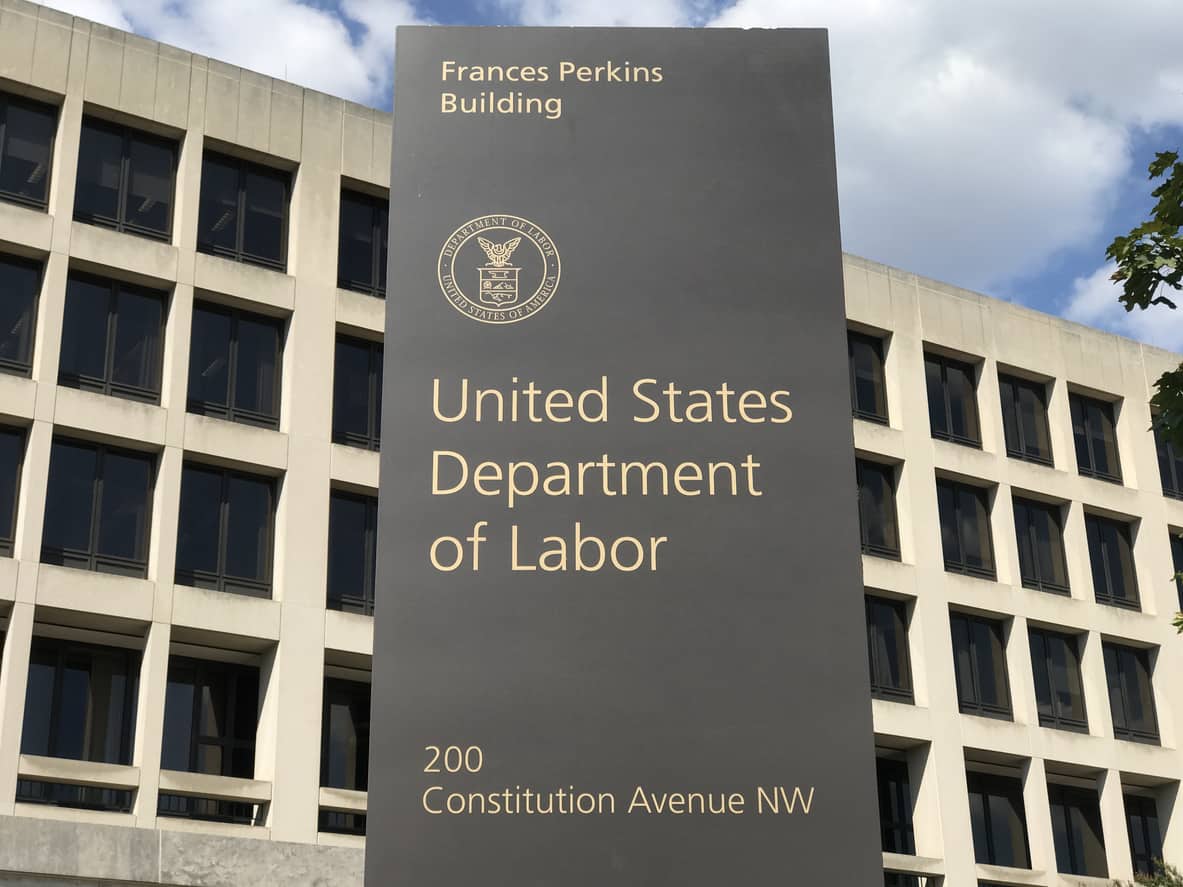

Investors must act on DoL proposal

Investors  have only a few days to comment on the US Department of Labor’s proposed amendment to investment duties regulation and ESG – which many believe is out of step with the market and potentially damaging to retirees’ retirement income – with the window for comment closing on July 30.

The proposed rules would further burden the ability of fiduciaries of private-sector retirement plans to select investments based on ESG factors, but the momentum around ESG integration and the outperformance of sustainable products means the proposal is out of touch with the market reality according to Fiona Reynolds, CEO of PRI.

“In the face of the serious market disruption that COVID-19 has brought about, investors have not reverted to traditional strategies abandoning ESG integration, but instead we’ve seen ESG funds are thriving and in fact out-performing,” she says. “This is one of the reasons the steps that the Department of Labor are taking make little sense; they don’t match the reality of what is happening around the world and I can only assume therefore that they are politically motivated.”

Similarly, David Wood, who heads up the Initiative for Responsible Investment at the Harvard Kennedy School, says fiduciary duty typically follows rather than leads industry practice.

“The proposal is a misguided description of ESG integration and not responsive to any demand from investors,” he says.

In fact, the responses to COVID-19 and the discussions on the need to build back better have put sustainability and ESG issues higher on the agenda of investors, business and many governments than ever before.

Sponsored Content

The proposal reflects the DOL’s continued concern that ESG investment might “subordinate return or increase risk for the purpose of non-pecuniary objectives” when there is evidence to the contrary.

A recent report by Blackrock, Sustainable investing: resilience amid uncertainty, shows that in the first quarter of 2020, there was better risk-adjusted performance across sustainable products, with 94 per cent of a globally-representative selection of sustainable indices outperforming their parent benchmarks

Blackrock goes on to say that “these results are consistent with the research BlackRock has been publishing since mid-2018, demonstrating that sustainable strategies do not require a return trade off and have important resilient properties”.

“If the proposal disincentivises people from using all the tools available that can improve their performance then that is not good. It’s kind of anti-market,” Harvard’s Wood, whose department gave advice to the Obama administration’s Department of Labor rules, says.

“This needs to be understood within the context of the politics back and forth among administrations. But despite that back and forth we have a steady increase in the deployment and management of responsible investment. I would say to trustees, your peers are investors around the world and you have access to these tools and they improve investment outcomes,” he says, also encouraging fund executives and trustees to call on service providers to act.

“If fund managers and other service providers have said they incorporate ESG into their process because it improves investment returns then they should have a voice with regard to this proposal,” he said. “If asset managers have made a claim they believe in these tools then this is one way they can show it.”

A Harvard Law School forum on corporate governance points out that the proposal may be a headache for fund managers which have integrated ESG as they will be required to justify their investments with increased documentation which could increase fees.

“In order to select an investment with an ESG component, the plan fiduciaries would be required to compare investments or strategies on ’pecuniary’ factors such as diversification, liquidity and rate of return. Specific documentation would be required for the tiebreaker justification,” a Harvard corporate law paper says. “The extensive scope of criteria that the DoL considers problematic will also likely result in increased costs and fees as plan fiduciaries seek to filter for these criteria.”

The PRI is calling on signatories to oppose the proposal, as well as extend the comment period from 30 to 90 days.

The proposal puts the US position even further behind global markets, most notably Europe where the European Commission’s European Green Deal sets out a clear roadmap for making the EU’s economy sustainable. It sets out a plan to become carbon-neutral by 2050 and essentially fast-tracks sustainable investments.

“Any of our global signatories who have gone through the process of integrating ESG issues could only be bemused and confused by what is currently proposed by the DoL. As regulators in leading markets around the world move forward with requirements that investment fiduciaries consider ESG factors, the DoL’s proposed rule represents a significant step in the wrong direction, one that is out of sync with markets across the world.”

While this update proposal regarding the US Department of Labor’s investment duties regulation was intended to “provide clear regulatory guideposts for plan fiduciaries” it seems to have done the exact opposite, adding confusion in what is a misunderstood interpretation of ESG integration.

“We need to use our levers of influence as investors – to help create an enabling environment which accelerates, not hinders, our momentum. This DoL proposal does the opposite. It mischaracterises ESG integration,” Reynolds says. “It is our very strong view the Department of Labor’s responsibility is to protect millions of American savers and their retirement incomes which means ensuring 401(k) plans and pension funds consider all material risks, including ESG risks. It’s not its role to make doing so more difficult.”

The PRI’s Reynolds also makes clear that if asset managers and asset owners are signatories to the PRI they would be aware that Principle 1 is a commitment to incorporating ESG issues into investment analysis and decision-making processes.

“Therefore, we can’t accept proposals that stand in the way of investors implementing these commitments. You can’t either and we need your help, we need you to act.”


Leave a Comment

La Caisse’s oil exit pays off as renewables portfolio pulls ahead of fossil fuels

La Caisse’s oil exit pays off as renewables portfolio pulls ahead of fossil fuels

Divesting from the oil sector has been a boon for La Caisse’s performance, as the Canadian pension giant says its energy investments have earned billions in value-add compared to the benchmark since the inception of its climate strategy. Head of sustainability Bertrand Millot unpacks the fund’s approach in an interview with Top1000funds.com.

Sort content by

Investors eye indigenous rights in Canada’s mining sector

As investors continue to demand  more reporting around social impacts, Canada's mining sector grapples with how to provide investors with more transparency on indigenous relationships.

Financial service providers commit to financing net zero

A range of global investment service providers, from stock exchanges to index providers, have signed up to the new Net Zero Financial Services Providers Alliance committing to align their products and services to net zero.

Sustainability and the need for practicality over ideology

Stephen Kotkin, Professor in History and International Affairs, Princeton University warned that the sustainability debate needs to become less ideological and more practical. He added that policy on a carbon price would do more to counter climate change than Biden’s huge infrastructure spend.

Unprecedented opportunity ahead

The climate challenge requires new investment on a staggering scale: new generating capacity, the electrification of everything, emissions-free fuel, carbon capture and sequestration, new supply chains and infrastructure, plus the building of negative emissions technologies. Stanford’s Dr Arun Majumdar explores the opportunities for new investment, the risk return trade-off and how investors should approach the opportunities.

Implementing net zero

What does it really mean to achieve a net zero strategy? As more investors make pledges for net zero, they need to set a strategy to achieve it. Investors leading the pack - ABP, Church Commissioners for England and CalSTRS - discuss the behaviour changes that are needed and how to allocate.

Poor disclosure is now a systemic risk

Poor corporate sustainability disclosure and the absence of global standards is now a systemic risk for investors, said panellists at Sustainability in Practice which included chief governance and compliance officer at Norges Bank, Carine Smith Ihencho.

Previous




