
How good is good enough?

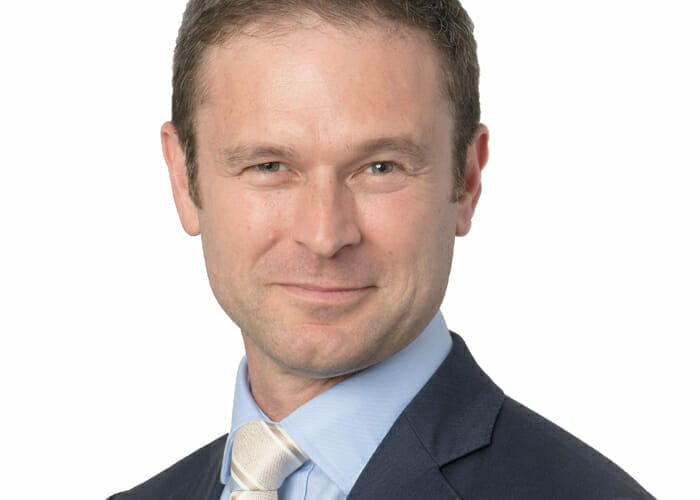
The chair of the newly created EU Platform on Sustainable Finance, PRI’s chief responsible investment officer Nathan Fabian, explains how the platform will support financial markets to steward and allocate their capital to activities that contribute substantially to Europe’s sustainability goals.

In a first-of-its-kind, today the European Commission has launched its new Platform on Sustainable Finance. The platform responds to the urgency of the sustainability transition by establishing a permanent public and private sector expert panel to develop sustainable finance policies and tools. Its mandate includes further development of the technical screening criteria for the EU’s sustainable taxonomy, as well as a review of potential social and significant harm criteria. The platform has two further objectives – to monitor capital flows to sustainable finance and to undertake policy development on sustainable finance. For the first time, we will know how much of our capital is sustainable – and how much is not.

The platform’s 50+ experts include representatives from investment, banking, scientific, industry, environmental groups and civil society. Importantly, the group includes members with direct expertise from many of the economic sectors that must contribute to a sustainable economy. The private sector members are joined by representatives of the European Environment Agency, the European Supervisory Authorities (EBA, EIOPA, ESMA), the European Investment Bank, the European Investment Fund and the European Union Agency for Fundamental Rights.

Reflecting the global importance of Europe’s efforts, the platform will include observers from the Network of Central Banks and Supervisors for Greening the Financial System, the Organisation for Economic Co-operation and Development, the European Financial Reporting Advisory Group, the United Nations Environment Programme Finance Initiative, the European Bank for Reconstruction and Development and the European Stability Mechanism.

The initial two-year mandate of the group includes:

(i) development of technical screening criteria for the EU taxonomy,

Sponsored Content

(ii) review of the taxonomy to potentially include social and significant harm criteria;

(iii) observation of capital flows towards sustainable finance, and

(iv) policy development on sustainable finance.

Critical issues loom for the platform on how taxonomy criteria can inform transitional finance for economies, companies, and financial portfolios to align with – and contribute to – sustainability goals. Of equal importance is monitoring the development of reporting on taxonomy alignment, to ensure that investors with disclosure obligations under the Taxonomy Regulation and companies with obligations under the Non-Financial Reporting Directive can fulfil them in a meaningful way.

Unless we base our understanding of “how good is good enough” on the actual contribution to sustainability goals, rather than solely on good intentions or incremental plans, economic transition will stall and financial markets will struggle to play their full potential role in realising sustainability goals.

The platform’s launch is one way to deliver on European Green Deal. The green deal brings sustainability objectives to the core of Europe’s shared strategy for prosperity. The centrepiece is a goal to reduce greenhouse gas emissions by at least 55 per cent below 1990 levels, in 2030. This deep reduction target establishes a pathway to net zero emissions by 2050 that is consistent with ambitions to limit warming to around 1.5 degrees – the aim of the Paris Agreement.

To achieve the 2030 target in Europe, EUR 350 billion per year of energy-related investment alone will be required. This is before finance for Europe’s other environmental priorities is added, which will include investments in climate adaptation, pollution prevention and control, water system health, bio-diverse eco-systems, and a circular economy.

Financial markets work best when they are free to assess risk and pursue returns. But investment in economic activity which pollutes, wastes and is unresponsive to environmental constraints is shifting costs and building financial risk. Investors and lenders have known this for some time. Now that environmental and social goals are becoming explicit, urgent, and supported in law, financial activity that is careless about sustainability performance becomes one of society’s problems, not part of the solution to greater or shared prosperity.

Recognising the importance of climate goals, 45 institutional investors and over 1000 companies have made their own commitments to net zero emissions by 2050 and reported them as part of the UNFCCC race to zero campaign. Contributing to this is the PRI and UNEPFI convened Net Zero Asset Owner Alliance, which includes 29 investors managing nearly $5 trillion, who have made commitments to align their portfolios with a pathway to net zero by 2050. These investors will transition their portfolios to a sustainable footing and the Taxonomy will inform their decisions.

Without a comprehensive and widely used sustainable taxonomy, fragmentation and differences of view on the environmental performance of our economies threatens to undermine trust and efficiency in financial markets at a time when both matter greatly. Unless we base our understanding of “how good is good enough” on the actual contribution to sustainability goals, rather than solely on good intentions or incremental steps, financial markets will struggle to play their full potential role in realising sustainability goals.

The Platform on Sustainable Finance will support financial markets to steward and allocate their capital to activities that contribute substantially to Europe’s sustainability goals. The taxonomy is the foundation on which these decisions can be based, ensuring that for the first time, we will know how much of our capital is sustainable and how much is not.

The PRI has worked with its responsible investor signatories to ensure that market insights influence the design of Europe’s future financial system. The PRI has been a conduit and facilitator of both technical input and investor experiences into the deliberations of policy makers and on the design of the EU Taxonomy. The PRI is delighted to continue contributing to Europe’s sustainable finance activities by supporting the appointment of Nathan Fabian in the role of Chair of the Platform on Sustainable Finance.


Leave a Comment

La Caisse’s oil exit pays off as renewables portfolio pulls ahead of fossil fuels

La Caisse’s oil exit pays off as renewables portfolio pulls ahead of fossil fuels

Divesting from the oil sector has been a boon for La Caisse’s performance, as the Canadian pension giant says its energy investments have earned billions in value-add compared to the benchmark since the inception of its climate strategy. Head of sustainability Bertrand Millot unpacks the fund’s approach in an interview with Top1000funds.com.

Sort content by

Examining the limits of modern portfolio theory

The definition of what it means to invest is changing, according to Jon Lukomnik and James P. Hawley, which means examining the limitations of the 75-year old legacy of modern portfolio theory.

Impact takes centre stage at Bridgewater

The appointment of Karen Karniol-Tambour and Carsten Stendevad as co-CIOs of Bridgewater’s new sustainability business marks a major milestone in the hedge fund’s business, applying its deep research-driven systematic approach to a new set of problems. Amanda White speaks exclusively to the two CIOs.

Honey, I shrunk the ESG alpha

Research conducted by Scientific Beta looks at the performance of ESG strategies and asks whether non-financial information in ESG scores offers additional performance benefits. The research finds that the effect of risk adjusting the performance of ESG strategies shrinks the apparent alpha to a level where none of the strategies delivers positive alpha.

How CalSTRS’ CEO achieved funded status

The legacy of Jack Ehnes, chief executive of CalSTRS for nearly 20 years, is the embedded long-term view in the culture of the organisation which impacts everything from investments to benefit planning strategy. He talks to Amanda White about managing multiple, complex and competing stakeholders for the good of California's teachers.

12 months of innovation at the CFA

In the past 12 months the CFA Institute has innovated to adapt to meet member and industry needs. CEO Marg Franklin talks to Amanda White about the benefits of computer-based testing, the CFA's standards around ESG and diversity and its upcoming project around the future of work in the investment industry.

Investors need to act now on climate

Last week’s Biden Summit marked an important moment in the global battle to combat climate change and has reset the clock on what can be achieved at COP26 this November. But investors should act now to protect value and back the zero-carbon transition.

Previous




