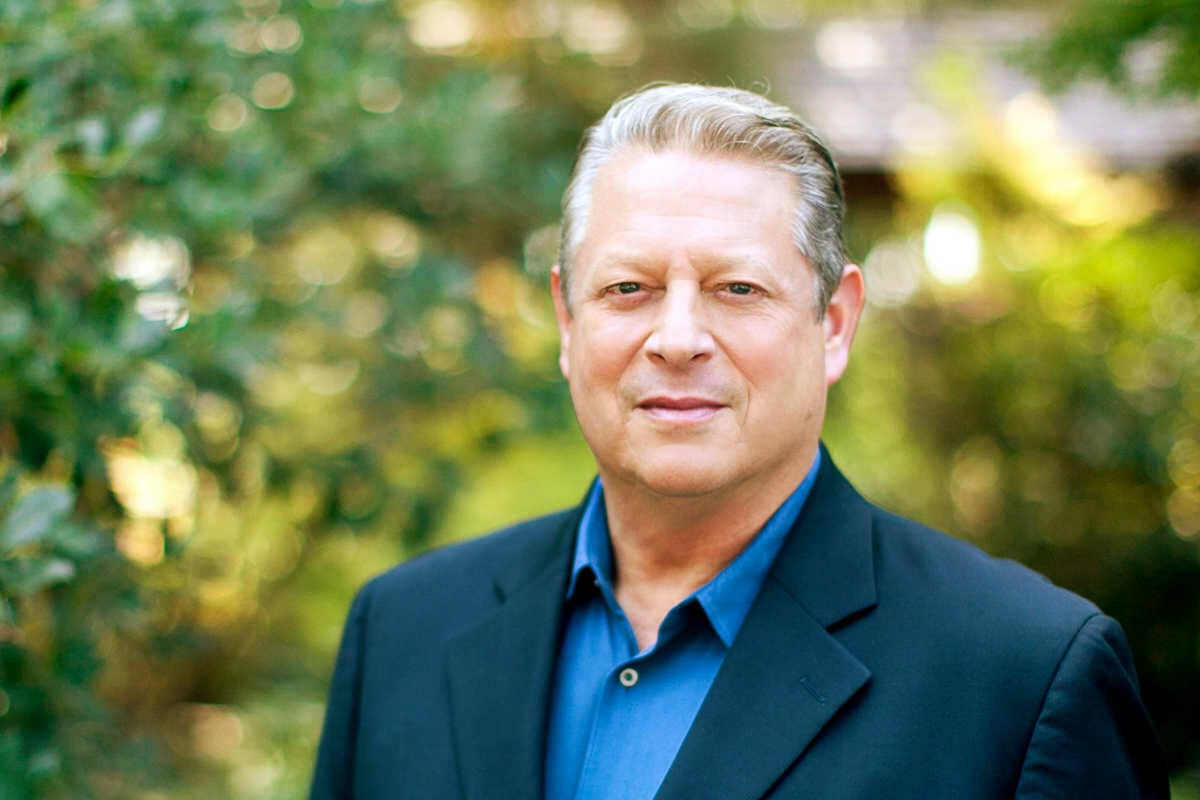

Gore spruiks sustainable investment

Climate change is the number one threat to the global economy but sustainability is the “single largest opportunity in all of history”, former US vice-president Al Gore told delegates at the Milken Institute Global Conference.

“The sustainability revolution is powered by new digital tools,” Gore said. “It has the magnitude of the industrial revolution and the speed of the technology revolution. It’s the single largest opportunity in all of history. The investor community can, and is starting to, play a key role in this.

“We are in a moment of transformation. The global economy is responding to new conditions and the resources we relied on in the past have delivered unanticipated problems. But there are new opportunities in resources. Growth must become sustainable growth.”

Gore called for policy changes to stop subsidising fossil fuels but said institutional investors adopting long-term horizons was the real key to change, as demonstrated by Norges Bank, which has taken a long view on climate.

“The cultural focus on short-term performance distorts the rational allocation of capital,” he said.

Gore told delegates there were still three questions to be answered on the climate: Must we change? Can we change? Will we change?

Sponsored Content

He said that every 24 hours, 100 million tonnes of man-made pollution was released into the air. While oil-production practices such as forest burning, land transport and landfill were all large sources of pollution, the biggest by far, was human reliance on fossil fuels, he said.

“Climate change has been a security issue for the country for some time,” he said. “It is the number one threat to the global economy. So we have to change, but can we?”

He said the US was the only country in the world that persistently denied climate change and pointed out that it cannot legally withdraw from the Paris Agreement until after the 2020 presidential election, alluding to the fact a change in president could alter the country’s stance on the issue.

“In the US, we’ve had 14 1-in-1000 events in the last seven years,” Gore said. “We have to solve this. We have the tools. We don’t have to wait for some research-and-development breakthrough, the answers are here.”

He said a volatile climate also set new conditions for growth and pointed to agriculture and energy as two areas to watch.

“The cost of clean new energy is coming down so dramatically,” he said. “In the US, 62 per cent of new capacity was from solar and wind last year. Chile and India have very large amounts of solar energy under construction and, in the US, solar jobs are growing nine times faster than other jobs.”

The session with Gore was chaired by Jim Yong Kim, president of the World Bank, which has a climate action plan that includes helping countries put a price on carbon, which will create incentives for investments in renewable energy and energy efficiency.

Asset Owner:World Bank

Leave a Comment

La Caisse’s oil exit pays off as renewables portfolio pulls ahead of fossil fuels

La Caisse’s oil exit pays off as renewables portfolio pulls ahead of fossil fuels

Divesting from the oil sector has been a boon for La Caisse’s performance, as the Canadian pension giant says its energy investments have earned billions in value-add compared to the benchmark since the inception of its climate strategy. Head of sustainability Bertrand Millot unpacks the fund’s approach in an interview with Top1000funds.com.

Sort content by

Progress in DEI needs asset owner accountability

Asset allocators should prioritise creating their own accountability system for diversity, equity and inclusion in 2022 according to Jason Lamin founder and chief executive of DEI specialist Lenox Park Solutions.

New PRI chief outlines priorities

In his first interview as the new CEO of the PRI, David Atkin outlines his priorities for the organisation and the areas of urgency for investors focused on sustainability

Impact: ‘Losing the plot’ or better long-term returns?

Giant Dutch pension provider, PGGM, has been a leader in embracing 3D portfolios shaped around risk, return and impact. Top1000funds.com talks to Piet Klop the new head of responsible investment about the journey so far and what is next in linking the portfolio to positive real-world outcomes.

New York State Common engages on political spending

The New York State Common Retirement Fund has ratcheted up pressure on companies in its listed equity portfolio to disclose their political spending in what it calls a “priority issue,” up there with climate, DEI and capital management. Liz Gordon, executive director of corporate governance, explains.

FCLTGlobal: Climate risk visible in all transactions

Investors should allocate more to emerging markets to solve the climate emergency and consider climate risk in every transaction. Quebec's CDPQ now aligns a portion of its variable employee compensation to achieving climate targets at the asset owner.

The roads from Glasgow stretch out in front of us

COP26 has had many critiques and Roger Urwin's review, in this article, gives it just over half marks. The phrase ‘good COP, bad COP’ summarises it well and how to view it depends on framing and context.

Previous




