
Path to sustainable infrastructure

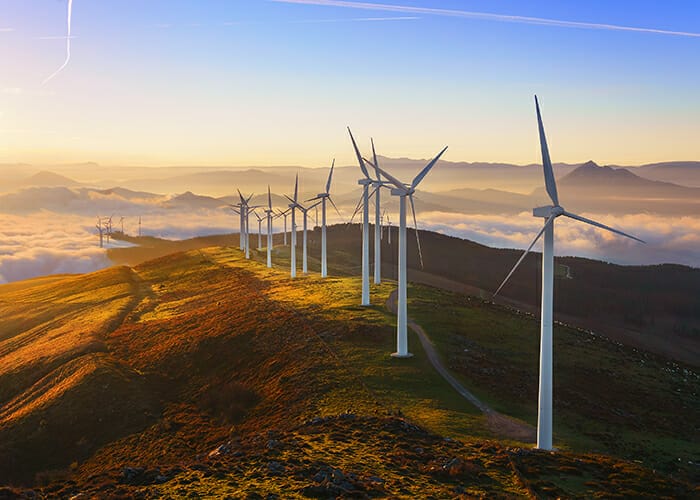
wind turbines in the Oiz eolic park

“Investing in sustainable infrastructure is the growth story of the future.”
• Global Commission on the Economy and Climate, 2016

The world needs more infrastructure, particularly in developing countries. But not just any infrastructure. To achieve the economic, social and environmental objectives embodied by the Paris Agreement and the Sustainable Development Goals (SDGs), this infrastructure must be sustainable, low-carbon and climate resilient. The New Climate Economy’s 2014 report, Better Growth Better Climate, estimates that from 2015 to 2030, the global requirement for new infrastructure assets will be $90 trillion, more than the value of the world’s existing infrastructure stock.

To meet these needs, annual investment in infrastructure will need to increase from current levels, about $3 trillion, to $6 trillion. At the same time, data from the Organisation for Economic Co-operation and Development and alternative assets researcher Preqin shows investors’ allocations to infrastructure are gradually increasing, driven by a combination of factors (such as low yields in traditional asset classes and inflation protection).

Together, these should be positively reinforcing developments. But are they? The Inter-American Development Bank (IDB) commissioned Mercer to assess the extent to which infrastructure investors – and other stakeholders, including governments, multilateral development banks (MDBs) and infrastructure industry initiatives – are focusing and collaborating on sustainable infrastructure. Our findings are somewhat mixed: the positive momentum of new initiatives focused on sustainable infrastructure is countered by the fact that sustainability concerns struggle to enter the core allocation strategies of mainstream investors.

Our initial report, published in November 2016, Building a Bridge to Sustainable Infrastructure, outlined the effort underway to raise awareness of sustainable infrastructure investment opportunities and develop tools to foster related investment analysis and monitoring. However, as outlined in the companion paper, Crossing the Bridge to Sustainable Infrastructure, we find that the level of investor awareness and engagement with these developments seems relatively limited. In addition, current allocations to infrastructure fall short of the levels required to support economic development, The New Climate Economy found in 2016. To overcome these barriers, we set out a call to action for investors, governments, MDBs and industry initiatives (see infographic).

What is sustainable infrastructure?

Sponsored Content

In a broad sense, sustainable infrastructure is socially, economically and environmentally sustainable. The specific application of this concept will depend on the relevant geographical and sector contexts. But ultimately, sustainable infrastructure is that which will enable the world collectively to meet the SDGs and the Paris Agreement.

Some investors have the misconception that sustainable infrastructure simply means more renewable energy infrastructure. Indeed, investment flows into renewable energy have been increasing; for example, in 2016, more than 40 per cent of new infrastructure investment went into renewables, data from Preqin shows. Although this is positive, sustainable infrastructure needs are broader. The New Climate Economy’s Better Growth Better Climate outlines in detail the change that is required across three critical economic systems: cities, land use and energy.

In addition, infrastructure needs to be resilient in the face of a changing climate. A 2016 study of public-private partnerships (PPPs) by Acclimatise found that “Among the sample of 16 national PPP policy frameworks examined, not a single one was found to mention a changing climate, climate resilience or adaptation.”

Investor interviews show lack of progress

As part of our research, we spoke with a number of infrastructure investors about the extent to which they consider sustainability in their decision-making. Despite growing attention to ESG considerations within investment organisations, we found that many infrastructure teams are just now developing a formal approach to sustainability in investment and, further, that such considerations are generally applied at the deal level. There is little top-down thinking about the transformational change and investment pathways that must accompany successful implementation of the Paris Agreement and the Sustainable Development Goals (SDGs), and the opportunities that they offer to investors. When considering the reasons for the lack of progress, we identify the following factors:

Lack of familiarity with the sustainable infrastructure business case and a related lack of experience in considering what might qualify

Limited standardisation of tools and approaches, with barriers to entry for investors

Lack of co-ordinated policy commitments across regions and sectors consistent with the Paris Agreement and the SDGs, which dampens investors’ focus on energy transition risk (that is, the risk associated with swift action to mitigate climate change)

Lack of tools and focus on climate resilience (that is, adaptation), which has seen little prioritisation to date. 

Investors noted an interest in learning more about the merits of a sustainable infrastructure approach and in gaining the know-how to achieve it. To date, industry initiatives have not been successful in providing such knowledge and would benefit from greater clarity about what constitutes sustainable infrastructure and its business case.

Call to action

Despite some high-level commitments to sustainable development by policymakers, and the significant efforts underway to leverage private-sector finance, there is still a lack of engagement from many infrastructure investors. Thus, a call to action is essential. We highlight three key initiatives, as outlined in the following graphic:


If you invest in infrastructure, we encourage you to review Crossing the Bridge to Sustainable Infrastructure and develop an approach that enables your organisation to optimise risk and return considerations for the long term, while being cognisant of the role your investments play in the transition to a low-carbon and sustainable economy.

Jane Ambachtsheer is partner and chair, responsible investment, at Mercer. Amal-Lee Amin is climate change division chief at Inter-American Development Bank.


Leave a Comment

The future belongs to investors who can adapt

The future belongs to investors who can adapt

Canada's HOOPP has officially adopted the total portfolio approach since the start of 2026. Unpacking the move, the fund's managing director and head of total portfolio group Jacky Lee writes that while the approach doesn't magically make the return better, the fact that it frees the investment team from outdated processes and gives investment leaders the flexibility to act is what gives it an edge.

Sort content by

The efficiency trap

Will the relentless pursuit of efficiency undermine our ability to build a resilient and sustainable future? Andrea Caloisi, a researcher at the Thinking Ahead Institute at WTW, explores how complex systems, driven by short-term optimisation, may be fuelling long-term fragility.

Data ‘slop’ and disinformation emerge as systemic risks for investors

Will AI-fuelled misinformation overwhelm investors’ ability to make sound decisions? The Thinking Ahead Institute’s Tim Hodgson examines the systemic risks of 'data slop' and why data provenance should be a strategic priority.

Asset managers can’t have it both ways on sustainability

Asset managers have recently been trying to show that they could cater to all sides, from asset owners that have spent years integrating sustainability into their investment strategies to anti-ESG elected officials in states like Texas. But Hugues Létourneau writes that they can't have it all.

Why investors must engage on the growing threat of antimicrobial resistance

Will antimicrobial resistance derail decades of medical and economic progress, or can coordinated action avert a global crisis? Anastassia Johnson, researcher at the Thinking Ahead Institute, examines the growing threat of drug-resistant infections and the role investors can play in driving sustainable solutions.

Reconciling ethics and returns in pursuit of a sustainable economy

Can investors and governments balance financial returns with social equity, or will short-term gains prevail? Anastassia Johnson, researcher at the Thinking Ahead Institute, tackles the complex debate about what makes a just transition.

Why adaptation alone won’t solve the climate change conundrum

Is a narrowly defined transition likely to fail? The Thinking Ahead Institute’s climate transition working group has been exploring this thesis, writes the Institute’s co-founder Tim Hodgson.

Previous



