
High-stakes succession at US Fed brings investors to crossroads

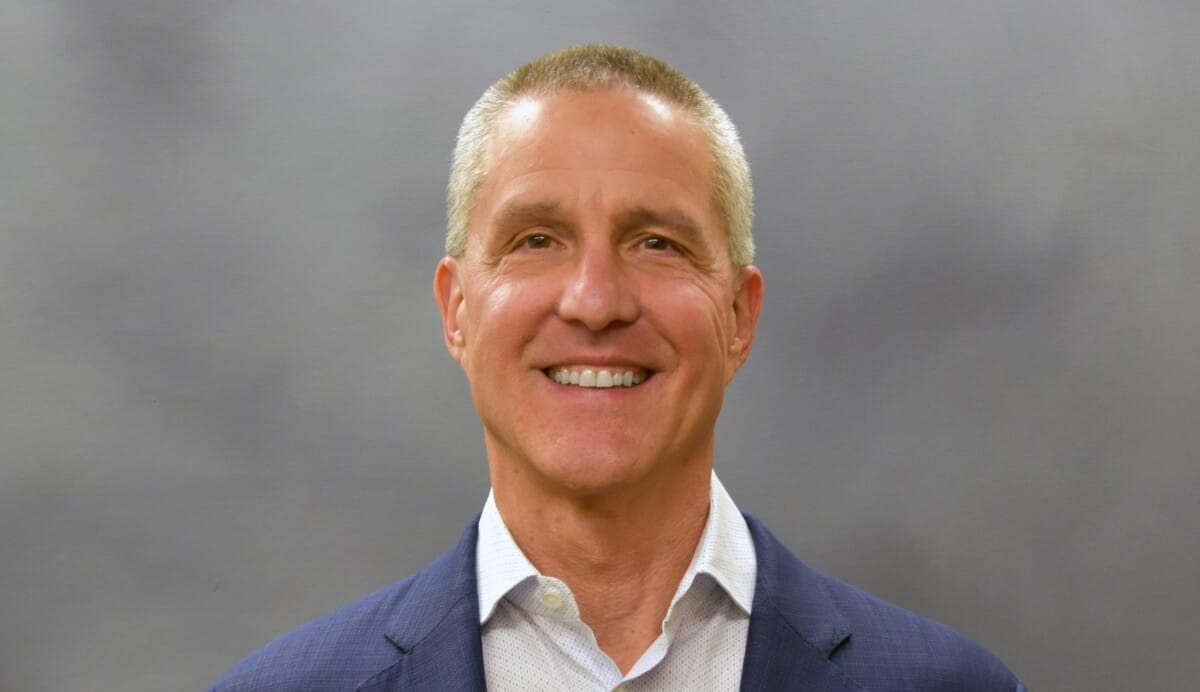
Ross Levine. Photo: Hoover Institution

Donald Trump’s next appointee as the Federal Reserve chair will be a defining moment for global investors, potentially escalating current market caution into a widespread exit from US assets, warns leading Stanford economist and finance academic Ross Levine. 

Levine, who is senior fellow at the Hoover Institution and co-director of its Financial Regulation Working Group, is concerned about how investors’ view of the next Fed chair – and their potential actions – would impact the US debt and the US dollar.  

All eyes are on Jackson Hole, Wyoming where the Fed chair Jerome Powell will deliver his annual speech this week and the market will be paying close attention to any signs that the world’s most powerful central bank might lower interest rates.   

Trump has hammered the institution and Powell personally for holding rates steady over the last eight months and with Powell’s term wrapping up in May next year, Trump has made it clear that the next Fed chair has to support interest rate cuts.  

“If I think somebody’s going to keep the rates where they are or whatever, I’m not going to put them in,” he said in an Oval Office media briefing in June, putting a significant question mark on future Fed independence. 

Levine says the choice of Powell’s successor will be “very consequential”. Front-running candidates include former Fed governor Kevin Warsh (who is set to speak at the Top1000funds.com Fiduciary Investors Symposium next month), National Economic Council chair Kevin Hassett and incumbent Fed governor Christopher Waller.  

Sponsored Content

“If President Trump appoints somebody that is seen as his agent at the Fed, markets are unlikely to respond well, and that’s both domestic and international markets, because they will anticipate inflation and potentially financial fragility,” Levine tells Top1000funds.com in an interview.

He says that credibility risk is not just a monetary policy issue, with the fact that the Fed is the regulator of banks and major financial institutions collectively holding about $150 trillion in assets an often overlooked function. 

“To the extent that the President has control over the supervision and regulation of institutions with $150 trillion, that gives one human being enormous discretionary power over the allocation of credit throughout society. One can also think about the allocation of credit as the allocation of opportunities,” he says. 

“The central banks were made independent based on experience, meaning that when central banks are controlled by politicians, economies were more likely to experience much higher and more volatile inflation and more financial crises. So, if the Federal Reserve were now to become more politicised, the risks of macroeconomic instability would rise and people might also lose faith in the very political institutions that exist in a society.” 

Levine’s best-case scenario for the Fed succession is that Trump appoints a candidate who will keep inflation low, buoy investor confidence, and thereby foster long-run economic growth and financial stability. 

“I have some confidence that he’s going to go that route,” Levine predicts.  

“The alternative could be very damaging politically, to the extent that markets respond violently to a Fed chair that they don’t view as credible.” 

On the flip side, this worst-case scenario – a chair who would immediately reduce interest rates at Trump’s discretion – would have enormous flow-on effects for the ballooning US debt and whipsawing US dollar.  

The burgeoning problem of US debt 

What worries Levine most about the US debt is not the sheer level of it – currently standing at around 120 per cent of its economic output – but the unfunded liabilities including social security and healthcare promises which are projected to amount to $78 trillion over the next 75 years. 

The US dollar’s reserve currency status has been a great advantage for the country to borrow at low rates and keep the debt situation under control, but he notes that the US dollar dominance is “a privilege, not a birthright”.  

“The thing that would make it go away is if the world starts to lose faith that the US can pay its debt, or that the US will have excessively low interest rates that trigger high inflation rates,” he says, adding that having a Fed chair who can be seen to keep inflation under control is essential.  

“The recent budget suggests that the political system in the US seems unable at this point to deal with this [debt] challenge. My guess is that things will have to get worse before it becomes politically advantageous to deal with it, because right now, it seems to be politically expedient to ignore it.” 

With that said, Levine acknowledges that the trust in the US economy has been built over an extremely long period of steady growth, which may explain why investors are relentlessly directing their capital into the nation despite risks. 

“When you graph this [real per capita GDP] over time – and reasonable data started to become available after the US Civil War in the 1860s – what you see is remarkably steady growth over five-year periods and over decades,” he says. 

“You had wars, you had women entering the labour force like never before, you had the introduction of federal income taxes for the first time, you had fiscal debts, you had fiscal surpluses. [But still], 2 per cent per year real per capita GDP growth for 150 years. 

“This suggests that economists should be something that they are innately not – and that is humble, because there have been remarkable policy changes, and growth has stayed remarkably constant.” 

But investors can do themselves a favour by not underestimating the political risks.  

“There’s something about the resilience of the entire US political system, such that when policies get out of whack… there’s an adjustment. That doesn’t mean that there will be an adjustment [this time].” 

Leave a Comment

Temasek likely to miss 2030 climate target dragged by aviation, energy investments

Temasek likely to miss 2030 climate target dragged by aviation, energy investments

Temasek chief executive Dilhan Pillay says the sovereign investor is likely to miss its 2030 interim climate target, as exposures to the aviation and power generation sectors are crimping the investor’s ability to reduce portfolio target emissions. But the $339 billion fund is sticking to its net zero by 2050 goal, stressing the slower decarbonisation pace "reflects the realities of the broader global economy."

Sort content by

US sovereign wealth fund could be a game-changer – if it’s well governed

The proposed US sovereign wealth fund remains shrouded in uncertainty as the deadline to release a plan for it quietly passed without announcements from the White House. Debates about the need for it continue, but Stanford academic Ashby Monk argues clear purpose and sound governance are what truly matter.

Behind China’s ‘nation team’: The sovereign investors holding up the market

As aggressive US “Liberation Day” tariffs weighed on China’s stock market, Beijing rallied its most reliable financial market troops to stop its domestic equities from nosediving. This is the “national team”, a term loosely used to refer to government-affiliated funds including SWFs and state investment arms.

Investors brace for volatility as tariffs spark global reckoning

The investors which will do well in times of market volatility will have the ability to do extensive, forward-looking scenario analysis, move assets tactically and dynamically and have liquidity. Top1000funds.com looks at investor reactions to tariff-induced market volatility.

CalPERS: Why investments in oil and gas groups are also climate solutions

CalPERS explains why some of its climate solution investments include allocations to oil and gas groups.

CDPQ balances equity gains with real estate woes

Equity and infrastructure drove gains at C$473 billion ($329 billion) Caisse de Depot et Placement du Quebec, but “persistent headwinds” in real estate allocation given the fund’s above benchmark exposure to US offices in poorly performing cities New York and Chicago dragged down performance in 2024.

South Korea’s NPS pivots to sustainability, dials up risks in the portfolio

After smashing the return record again in 2024, South Korea’s state pension fund National Pension Service is gearing up to reduce coal investments to promote sustainability in the portfolio, and target riskier assets to ensure sustainability in funding.

Previous



