
Veritas plans equity boost as Finland rewrites pension rules

Laura Wickström

Finland’s €5 billion ($5.8 billion) Veritas Pension Insurance Company is preparing to increase its public equity allocation by 15 per cent in line with new regulations, in a bid to boost returns and mitigate demographic changes which are threatening the sustainability of its pension system.

It means total public and private equity at the institution, which provides statutory pension provision for Finland’s private sector employees, will account for 70 per cent of assets under management, triggering a reappraisal of diversification and portfolio construction at the fund, alongside preparation for much more volatility in returns ahead.

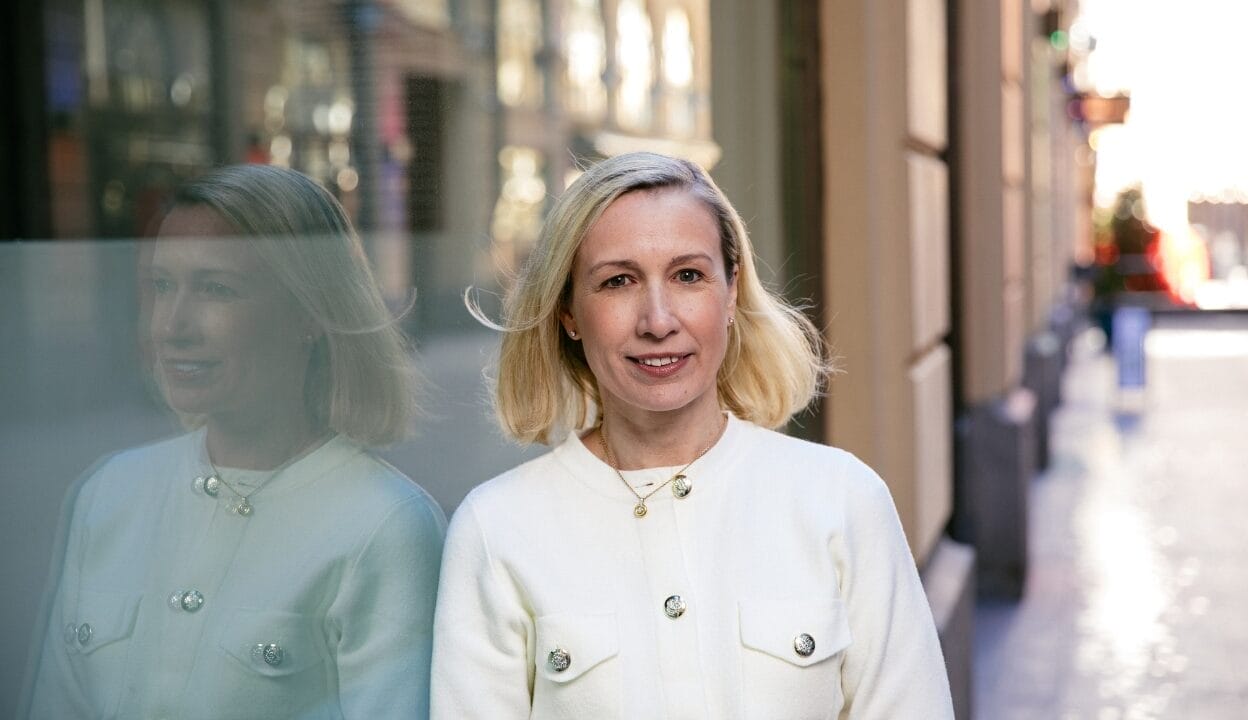
“There isn’t a magic bullet that allows us to maintain the same diversification and increase equity,” chief investment officer Laura Wickström tells Top1000funds.com in an interview from the city of Turku in the southwest of Finland.

Fixed income and alternatives will be relied on even more as sources of diversification and the allocation to hedge funds will be stripped of all equity risk or anything that correlates to equity, and favour quality and idiosyncratic strategies instead.

The reform was agreed in principle late in 2025; draft legislation is expected before Parliament in 2026 and changes could start as early as 2027. A key part of this reform focuses on unlocking higher returns by allowing greater risk-taking — particularly through higher equity exposure.

As she plans how best to build up the equity allocation challenged by high valuations, one strategy that has already proved its worth in helping manage a steadily increasing allocation to US stocks – which will inevitably grow larger still – includes an internally managed currency hedging position.

Sponsored Content

It has shielded the portfolio from the impact of the dollar weakening against the euro, particularly in the first quarter of 2025, and has also allowed the investor to maintain an equity exposure on which Wickström remains positive, mindful that the growth profile of many US-based companies is not easily replicated in a European equity portfolio.

“Our decision to hedge the currency had a bigger impact on the portfolio this year than our small reduction in the allocation to US equities did during Liberation Day. Our US listed equity exposure remains relatively unchanged – but what is different is our decision to hedge the US dollar.”

Given the inherent costs of hedging the dollar, investors typically have some kind of forecast of where the dollar will move. But she says the team don’t have a clear view on whether the dollar will weaken further against the euro going forward since it has already experienced a big move. The most important thing, she says, is to acknowledge that US assets are a larger part of the portfolio compared to the past and that any dollar moves will have a big impact on the portfolio.

The increased allocation to equity will be accompanied by more in-house management not only of the currency position and derivatives, but also the investor’s direct allocation to Finnish, Nordic and European equity. She notes that despite the expectation at the beginning of 2025 that European equities would have a bumper year, recent poor earnings continue to drag on returns.

“We’ll have to see what next year brings,” she reflects.

Moreover, sectors set to benefit like defence where Veritas invests in the defence sectors of NATO countries have not proved a particularly rich source of returns. She describes more hype around the sector than actual opportunities, although opportunistically tapping defence innovation by investing in early-stage venture companies is a priority.

“It’s a responsible thing to invest in something that provides the means to protect independence and freedom in Europe.”

Under the reforms, Veritas will also be able to integrate leverage into its indirect real estate allocation for the first time. It will enable the fund to free up capital without having to sell real estate assets, to invest more in equity. Veritas will apply 50 per cent (or lower) leverage to the portfolio, says Wickström.

She concludes that although applying leverage will magnify returns on the upside and downside, Veritas has the in-house skill to efficiently manage the risk.

Leave a Comment

How CPP is evolving risk management for a faster, more interconnected world

How CPP is evolving risk management for a faster, more interconnected world

In an environment where multiple risks are emerging and their effects are compounding on the portfolio, CPP Investments' chief risk officer Priti Singh says the $572 billion fund is rethinking risk management from the ground up, shifting from reaction to preparation and embedding risk thinking earlier in investment decisions. She speaks to Amanda White about the fund's risk approach.

Sort content by

Railpen talks risks and opportunities in trade upheaval

Investing in currencies and long short equity strategies are two of the opportunities that the UK’s £34 billion Railpen has been exploring in the current volatile environment.

Dutch insurer NN flags loose lending and copious capital in private credit

Marieke van Kamp, head of private markets at Dutch insurer NN, flags growing risks in private credit. In an interview with Top1000funds.com, she also outlines NN's partnership model with managers and argues the case for sustainable real estate.

Cashed-up CalSTRS positions for opportunities in volatile markets

CalSTRS has plenty of cash as it positions for opportunities emerging out of the current economic volatility. In the longer term, the fund’s asset allocation will continue to move away from global equities into private markets as the dust settles and makes way for more US opportunities.

Norway’s new small cap Nordic-focused SWF keeps capital at home

The Norwegian Parliament has approved $1.4 billion in seed funding for a specialist Nordic small-cap equity fund. It will be overseen by the domestic pension fund, Government Pension Fund Norway, whose CEO Kjetil Houg said its birth chimes with the trend of investors putting more capital to work at home.

Austria’s VBV strives to give young savers more risk exposure

Günther Schiendl, chair of Austria's VBV Pension Fund board explains how he's enabling younger savers to access more equity investment. However, despite long-held plans to develop the allocation to private equity, US tariff and trade policy has halted the strategy for now.

Maryland’s Andrew Palmer reflects on 40 years in investment industry

After a decade in the top investment job at the $69 billion Maryland State Retirement Fund, Andrew Palmer will retire at the end of June. He speaks to Amanda White about his achievements and reflections on an industry where he has worked for 40 years.

Previous



