
UTIMCO telegraphs opportunities in small caps ahead

University of Texas Investment Management Co (UTIMCO) the $75.5 billion asset manager and one of the largest public endowments in the US, believes a rise in small cap valuations could be on the horizon.

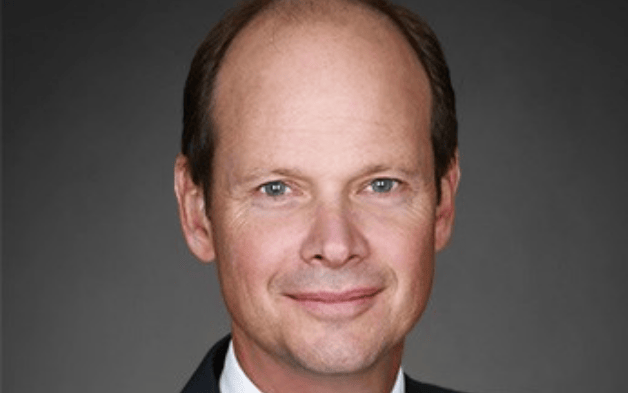
History tells us that equity markets always do well after a rate cut, said Richard Hall, UTIMCO’s president, chief executive and chief investment officer speaking to the investment committee in the September board meeting at the fund’s Austin headquarters.

But he flagged a noticeable lag in small caps relative to the rise in the S&P500, up roughly 50 per cent of the main index.

“We are starting to see some research that small caps have lagged,” said Hall. He suggested this could be an area of opportunity for investors going forward, particularly because small caps might rally off the back of positive earnings expectations.

“S&P500 earnings are expected to grow by about 11 per cent in 2025 over 2024, but small caps in the S&P500 are expected to grow at double that rate.”

He linked this to the fact small caps are heavily impacted by moves in interest rates – for example, when rates fell in 2022, small caps noticeably underperformed compared to large caps.

Sponsored Content

He said that rate cuts flow through to small cap profits to drive investor returns because small caps have a much higher portion of floating rate debt. It means when rates climb, it is punishing but when they fall it provides welcome relief.

“As rates go down small caps rally, we saw this in early 2020 and the flow through to free cash flow is extensive. It’s why the market is talking about small caps.”

Despite his positive telegraphing of a spike in returns for smaller companies, Hall cautioned that small cap valuations have not spiked following September’s rate cut.

Hall also flagged risks in the wider equity landscape despite the prospect of more rate cuts. On average, the year coming up to rate cuts shows equity markets typically climb 9 per cent. Last year the S&P500 was up 21 per cent, raising the prospect that markets and investors have pulled returns forward, and offset returns over the next couple of years.

Returns look bright in public equity, but he warned that private equity remains challenged.

Capital calls from private equity managers have dropped off, and the lower quality companies in UTIMCO’s buyout allocation are struggling, resulting in longer hold periods. Although this degrades the IRR, he said it probably wouldn’t degrade the multiple of return over time.

On the venture side the landscape is even more challenging.

“Things have slowed down a lot,” he said.

However, he forecast that strong venture businesses will increasingly emerge, promising the “next crop” of winners. For investors, this involves staying the course and continuing to plant new seeds in venture today to harvest tomorrow.

He said the big risk in private equity remains ensuring enough liquidity on hand to meet distributions. UTIMCO revisits its commitment models and proactively looks at how any extension on the average hold period of a company from three-to-four years to five-to-six years flows back through the system. This ensures the investor doesn’t get out of its bounds on unfunded commitments relative to the total endowment value.

Asset allocation at the endowment is neutral relative to targets, apart from a 1 per cent overweight to equities. The fund has 29.1 per cent in public equity, 6.1 per cent in directional hedge funds and 26.2 per cent in private equity. Cash, long treasurers and stable value hedge funds account for around 17 per cent. Inflation linked bonds (0.2 per cent) natural resources (3.3. per cent) infrastructure (4.5 per cent) and real estate (8.4 per cent) make up the rest.

Hall said returns have been driven by public markets with public equity providing the standout performance by returning 21 per cent with a 2.2 per cent outperformance. The hedge fund allocation has been a “consistent performer,” but private equity has been challenged by venture and real estate has also struggled.

He said UTIMCO is the “envy of peers” because it is supported by oil and gas royalties. The fund received $1.9 billion from oil and gas royalties last year.

Leave a Comment

NZ Super cuts benchmark return expectation on US valuation concerns

NZ Super cuts benchmark return expectation on US valuation concerns

A view that the US stock market is overvalued and equity risk premia will be lower over the long term has driven New Zealand Super to lower the return expectations for its reference portfolio following its recent five-yearly review of the benchmark. Co-chief investment officer Brad Dunstan also flags underweight commodity exposure as an area to address and explains why the fund remains sceptical of illiquidity premia despite seeing a growing case for private markets.

Sort content by

Portable alpha slashes pension deficit

The $15 billion International Paper corporate pension fund may be on a de-risking glide path, but vice president of investments Robert Hunkeler proves there is still plenty of room for innovation, including portable alpha. All investments are outsourced.

AP2’s relationships in China

In the next of this new regular series, we examine the relationships that evolved as Sweden’s AP2 decided to invest with local managers in China. The story examines the process for choosing and monitoring Chinese managers, and the burgeoning focus on sustainability in that market.

Tough times greet new CalPERS CIO

Ben Meng isn’t easing into his role. The new CIO of CalPERS faces three new board members, a stressed private equity program and executive turnover, all under the pressure of a 70 per cent funded status and a maturing membership at the $340 billion fund.

Value lies where precious data is stored

Organisations across the globe are collecting data, analysing and re-analysing it more and more every day. As this trend continues, data infrastructure – tangible or intangible – becomes increasingly attractive. Canada’s OPTrust cites this reality as the rationale behind the EdgeCore partnership. It thinks data is its own asset class.

Northern LGPS forges own pooling path

The UK’s £45 billion Northern LGPS pool has eschewed creating a separate FCA-regulated entity, seeing it as an unnecessary expense. Moves in infrastructure and private equity have also reflected the asset pool’s laser-like focus on keeping costs down.

LUCRF’s member profile drives strategy

Leigh Gavin, CIO at Australian industry-fund pioneer LUCRF Super, takes care to match portfolios and costs with the needs of the fund’s low-balance membership. In recent years, this has meant taking on additional risk and questioning fee models in private equity.

Previous




