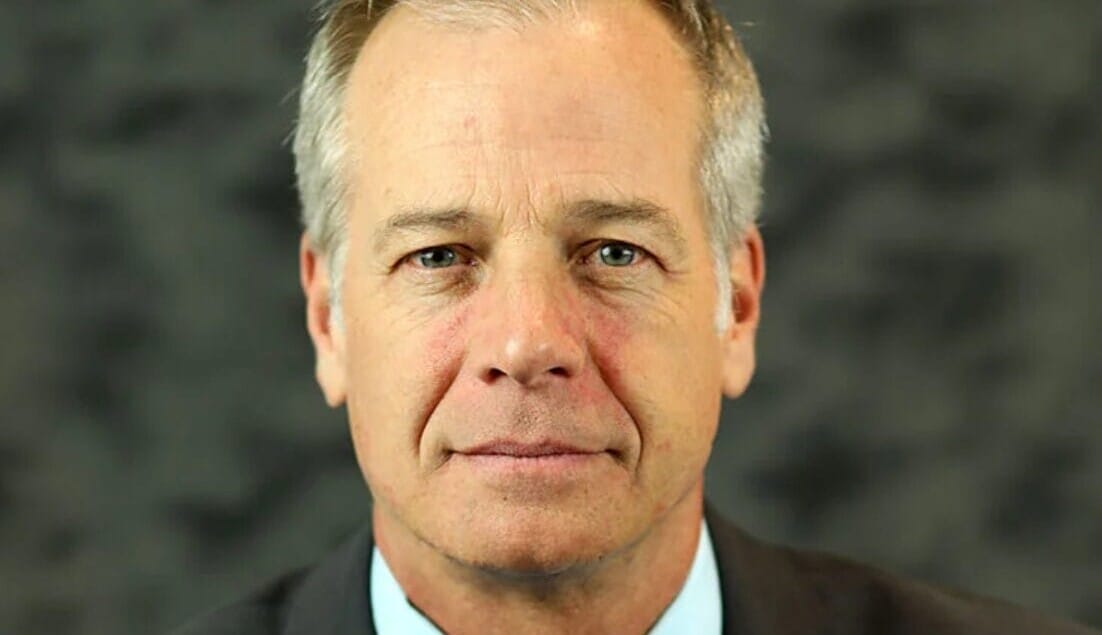

Utah’s URS: Why fossil fuels and alt energy hold key to climate crisis

John Skjervem

US public pension funds should stop wasting precious time on thinly veiled political activism like vilifying the oil giant Exxon, ditch the ESG conference circuit, a sanctimonious echo chamber that does little to address the looming climate emergency, and repurpose most of their sustainability staff, says John Skjervem, CIO of Utah Retirement Systems (URS) which oversees $55 billion of assets on behalf of the US state’s public sector employees.

They should instead focus on putting capital to work in proven energy investments that generate returns to pay current retiree benefits and finance new transition technologies.

These new technologies will then power future returns for beneficiaries, decarbonize the world economy and hopefully stave off catastrophic global warming, Skjervem says.

The URS alternative energy portfolio

URS is building a portfolio of alternative energy investments with the dual focus of hedging its commitments in oil and gas while also positioning the fund to support and profit from a decarbonized future.

“We know decarbonization will happen, but we aren’t smart enough to predict with any precision exactly how or when,” says Skjervem, speaking to Top1000funds.com from the fund’s Salt Lake City office, explaining how URS is assembling a diversified basket of alternative energy investments so it has exposure across multiple transition scenarios.

“We started with fusion which of course is the holy grail, but are now working backwards, filling in the transition spectrum with intermediate to nearer-term strategies that utilize hydrogen, ammonia, and fission-based technologies.”

Sponsored Content

Rather than participate in ESG conferences, the URS investment team attends events sponsored by the US Government’s Advanced Research Projects Agency-Energy (ARPA-E) where it gleans insight into potentially breakthrough energy transition strategies. These events are more important than ever, says Skjervem, now that financial support from the Biden administration’s Inflation Reduction Act is available.

“If institutional fiduciaries are serious about climate change as a threat to securing future retirement benefits, why aren’t they here?” he asks, adding that for the third year in a row, URS was the only large, institutional asset owner attending a recent ARPA-E event.

Utah’s commitments to alternative energy are often in the form of direct investments, a higher-risk approach that makes up a small but growing portion of the fund’s 5 per cent real assets allocation.

“The incubation and development period for these transition technologies might be measured in decades,” says Skjervem, “so the investments don’t always comport well with a typical closed end fund structure.”

Importantly, 60-70 per cent of the fund’s real assets allocation is currently comprised of oil and gas holdings, many of which URS acquired in the wake of other investors’ retreat from fossil fuels. Moreover, several of these stakes are held independent of private equity funds enabling URS to retain long-term ownership in high-yielding assets at reduced fee levels.

“My predecessor, Bruce Cundick and the rest of the URS team adroitly capitalized on the oil patch exodus by investing consistently through the financing void that began in 2015” he says.

Both/And

As an alternative to the either/or paradigm that forces investors to divest from fossil fuels (bad) in favour of renewables (good), Skjervem’s guiding mantra is both/and which allows fossil fuels to jostle alongside renewables and alternative energy strategies like fusion.

“As investors, and as a society, we won’t be successful if we remain anchored in either/or thinking. If we can make a profitable investment that moves energy production from coal to oil, that’s good. If we can make a profitable investment that replaces oil with natural gas, that’s better. And if we can make a profitable investment that displaces Russian gas with domestic renewables, that’s terrific! But too often we see activists, politicians and even some high-profile institutional investors reject profitable, environmentally sensible investments due to the tyranny of either/or thinking.”

Skjervem offers methane as an example.

“In terms of total greenhouse gases, methane is much worse than CO2,” he says, arguing that in stark contrast to production in countries like Russia, Venezuela, Iran and Turkmenistan, home to the notorious Darvaza gas crater, US oil and gas production has among the world’s lowest methane emissions due to increasingly stringent regulation by the Environmental Protection Agency.

“Why wouldn’t you ‘Drill Baby Drill’ when US methane emissions are lower than other producers? Do you think Vladimir Putin or the Ayatollahs give a you-know-what about their respective methane emissions?”

It leads him to reflect on the paradox that finding solutions to complex problems requires both/and thinking but the political dynamic now affecting many funds’ governance encourages either/or decision making. Yet by supporting domestic oil and gas production he says “we can create jobs, fortify US geopolitical security and, at the margin, reduce aggregate, global methane levels. It’s a trifecta!”

Do Something Useful

Skjervem knows it’s possible one, more, or perhaps all these transition technologies won’t work and accepts that he and his team will make mistakes in the still nascent alternative energy sector. But he also views the URS alternative energy allocation as a responsible and rational hedge against inevitable decarbonization.

“With a big chunk of our real assets portfolio in the ground in Texas, our alternative energy efforts are just portfolio construction 101.”

He also says these efforts symbolise everything he believes investors should be doing to tackle “the biggest challenge facing mankind.” Specifically, he’d rather do the hard work of “committing time, energy, and real money to decarbonization strategies” than add “yet another vapid voice” to what he calls the already shrill and counterproductive ESG cacophony.

This approach also reflects his belief that adverse climate change outcomes should be addressed separately from today’s myriad of sustainability initiatives. A self-proclaimed sustainability O.G., Skjervem joined the Investor Advisory Group (IAG) of the Sustainability Accounting Standards Board (SASB) over a decade ago, and still serves in that role for SASB’s successor organization, the International Sustainability Standards Board (ISSB).

Under founder Dr. Jean Rogers, SASB pioneered the idea of evolving modern accounting practices to better measure and assess the materiality of corporate externalities. ISSB continues that effort by promulgating accounting and reporting standards that capture and present sustainability factors in a decision-useful framework.

“I’m proud of my long tenure in sustainability and convinced the empirical approach developed by SASB and continued forcefully under ISSB auspices will advance capitalism by improving corporate accountability across an expanded list of operating and impact criteria,” he says. “But climate change is a 5-alarm fire that requires immediate action separate and apart from the methodological approach needed to evolve global accounting standards.”

Skjervem has other advice too. Investing in energy transition technologies is difficult and will require new and different skills. Successful investors will need more engineers who understand energy physics and fewer of the political science majors he says now populate the ESG scene.

He urges other institutions to invest in these technical skillsets rather than continue to pour resources into still more ESG grandstanding.

“You only need one, maybe two sustainability analysts to engage effectively with ISSB and help keep its good momentum going. You sure don’t need 12.”


See also 

Utah Retirement Systems: Why ESG is a waste of time

One response to “Utah’s URS: Why fossil fuels and alt energy hold key to climate crisis”

  1. Rob Bauer

    Hi John, agree with your advice to institutional investors to redirect some of their ESG-related resources to activities that really contribute to (potential) future solutions (and be ware this is not just about climate change but also about labour rights, human rights, and of course biodiversity and nature in general). However, this also holds for redeploying many other resources such as the large number of portfolio managers and financial analysts that still play the relative game in public markets (without any systematic success as proven by dozens of academic papers). Most likely, this will free up way more capital to solve global challenges than firing a few people with good intentions….

Leave a Comment

Aware Super maps AI exposure as it sharpens whole-of-portfolio risk focus

Aware Super maps AI exposure as it sharpens whole-of-portfolio risk focus

Australia’s third-largest pension fund Aware Super is taking stock of its investment exposure to AI and the initial analysis suggests at least 15 per cent of the fund’s assets are exposed to the thematic. In a project deep dive, head of investment strategy Michael Winchester says finding the portfolio's true concentration around AI will require looking beyond simple dollar aggregation.

Sort content by

How is the Tesco fund faring aged one?

According to the latest figures, an ambitious turnaround plan at the United Kingdom’s biggest supermarket chain, Tesco, has helped reverse falling profits. Last year the retailer, one of Britain’s largest private sector employers and a landmark in every town since founder Jack Cohen opened his first store in North London in 1929, also changed strategy

Finnish fund diversifies out of Europe

Over the past five years, Finland’s 5.4 million people have watched with alarm as the eurozone they joined as founder members has descended into financial turmoil. So it is no surprise that Keva, which manages €34.4 billion ($47.1 billion) on behalf of Finland’s municipalities, as well as administering state and Evangelical Lutheran Church of Finland

Vita Sammelstiftung puts bond holdings under microscope

Samuel Lisse, chief executive of Switzerland’s Vita Sammelstiftung (Vita), is currently in the process of hiring a new head of investment. The new appointee will have plenty resting in the in-tray, it appears, as she starts to assist the investment committee that governs the strategy of the 8.5-billion-Swiss-franc ($9.1-billion) joint foundation. That is not because

ATP reunites alpha and beta after 6 years

Alpha and beta rely to a large extent on exposures to systematic risk factors, so goes the “2013 thinking” of ATP in reversing the decision to separate alpha and beta in its investment portfolio six years ago. ATP has separate hedging and investment portfolios, with the hedging portfolio significantly larger at around DKK 670 billion

Environment Agency fund: a natural progression

It’s hardly surprising that a pension fund for employees working for an organisation charged with reducing climate change and its consequences invests according to strict green criteria. Yet the investment strategy of the United Kingdom’s £2.1-billion ($3.29 billion) Environment Agency Pension Fund (EAPF) definitely has the capacity to surprise. The EAPF posted a total return

Methodist morality delivers mainstream returns

When John Wesley, the 18th century Anglican cleric, preached that business practices should not harm one’s neighbour, he never imagined that his principles would guide the global investment strategy of an $18.4-billion pension fund. Today, the General Board of Pension and Health Benefits of the United Methodist Church, based in Chicago, ranks as one of

Previous



