
UK’s Brunel ready to pool assets

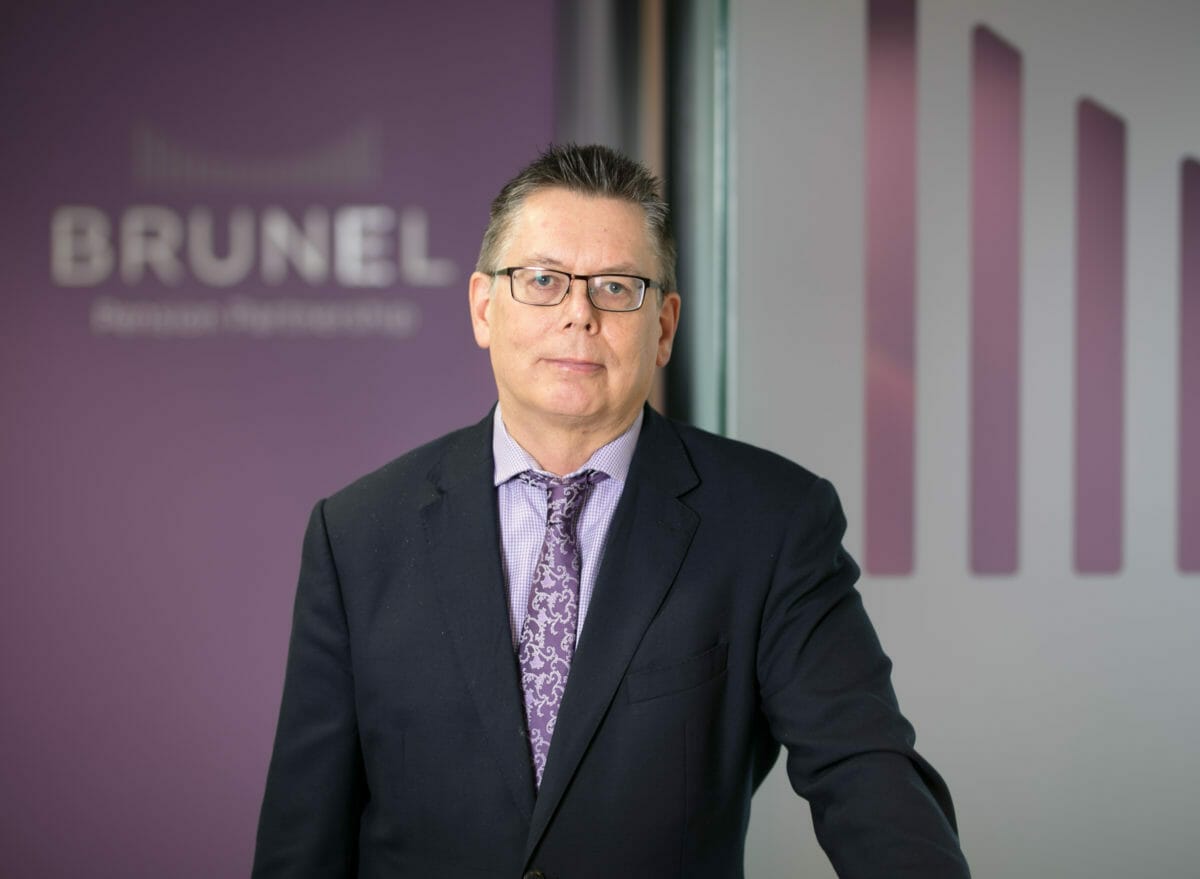
It’s a busy time for Mark Mansley, chief investment officer of the Brunel Pension Partnership, one of the eight new mega funds to emerge as England and Wales’ 91 local government pension schemes pool their assets. The government fires the starting gun on portfolio transition in April, meaning new asset manager Brunel must begin transferring into its single pool the combined £28 billion ($39 billion) worth of investments from the 10 local authority schemes it now manages.

“We’re expecting to receive FCA [Financial Conduct Authority] authorisation any day now,” says Mansley, who has joined Brunel from the Environment Agency Pension Fund, one of the 10 entities now heading into the pool. There he led an award-winning responsible investment strategy known for its leadership and innovation; it included allocations to real assets, smart beta and active managers with high-conviction approaches. Brunel, structured so that its 10 member funds are also shareholders with a 10 per cent stake each, will carry on that mantle.

Transitioning assets is complicated and time-consuming. It takes two to six months for each portfolio, in a process that involves three stages: preparation; manager selection and appointment; and finally asset transition. The process for the entire portfolio will take about two years and will be completed in an order agreed upon with Brunel’s shareholder client funds.

“It is based around pragmatism, ease, benefit and our client funds’ greatest need in relationship to their changing investment strategies,” Mansley says.

First up is the £7 billion ($9.8 billion) passive portfolio, where equity allocations will include developed and emerging markets, smart beta and low-carbon stocks, and fixed income investment, mostly in gilts (UK government bonds). That portfolio will be followed by active equity, active fixed interest and liquid alternatives. Mansley anticipates that “a couple” of the seven portfolios covering a total of £8 billion ($11.2 billion) of active equity will be safely transitioned by the end of this year.

Re-tendering the entire portfolio is triggering a clamouring among asset managers, and the 10 member funds have delegated all decisions around manager selection to Brunel. It’s still early days, the asset manager is only in the “evaluation phase” of awarding mandates for the passive allocation. Much more lies ahead.

Sponsored Content

“We are inviting incumbent managers to tender as part of this process but will not be limiting this to just the incumbent managers,” Mansley says. “However, using incumbent managers may well mean lower transition costs, which will be an advantage when we are evaluating our manager options.”

New possibilities for asset allocation

The portfolio will also include new options for asset allocation for client funds, such as private markets, where Mansley says he is planning mandates to a secured income allocation and to legacy assets. The private market portfolio will be about £5 billion ($7 billion) and investment strategy will also focus on direct and co-investment, partnership and collaborations with other investors.

Mansley is considering using consultants to help ease the burden of manager selection.

“We have a large agenda to get through and we may be going into particularly technical areas where the consultant’s expertise is worth bringing to the table,” he says.

As examples of where consultants could help, he highlights operational due diligence, preparing shortlists of quality managers, and evaluating the expertise of managers in markets where Brunel hasn’t researched as much as it would like.

“It will help to ensure we find the best managers for the job and garner the best investment results for our clients,” he says.

But it will also have an impact on costs. Spiralling operational and transition expenses are a risk he is wary of, and he doesn’t expect the cost savings and economies of scale from pooling to appear for a while.

“We expect to see £27.8 million ($38.9 billion, 8.9 basis points) of fee savings, while maintaining investment performance, by 2025, and savings before performance growth of £550 million [$769 million] by 2036,” he predicts. “There are clear economies of scale to be gained by pooling, as well as added value through centralising expertise.”

Navigating the fund through Brexit uncertainty is another risk on Mansley’s radar.

“Brexit naturally creates a risk, especially in a hard Brexit scenario, with local equities affected,” he says. “Market dislocation could affect more complicated transitions. We need to be nimble in our investment thinking, and Brunel is particularly adept at that. We’re making good progress and are prepared for the challenges ahead.”

Ultimately, Brunel will run about 24 portfolios, from which clients set their own asset allocation.

A careful evolution

“We have done this to provide a reasonable level of consolidation but, at the same time, to give our clients more choice about how they allocate their assets, rather than just thinking in terms of bonds, equities and alternatives, or something similar.”

The process will evolve carefully as Brunel gains greater insight into each investment strategy’s requirements and performance.

“There will be greater opportunities to optimise the portfolios,” Mansley says.

All management will be outsourced for now, with each portfolio allocating to up to five managers. Brunel’s investment team is nearly in place, including important hires such as new head of private markets, Richard Fanshawe.

“Five more members of staff are joining in the coming weeks, and we have one more role still to fill,” Mansley says.

He stresses that transparency and communication with the 10 member funds must lie at the heart of successful transitioning. An oversight board reports back to the individual funds and meets quarterly, and he oversees monthly meetings with the client group.

“Our 10 shareholder client funds all have an equal vote, and there are a number of special reserve matters that require 100 per cent agreement,” Mansley explains. “In this sense, they are in control of their own fair treatment. We also have dedicated client relations teams that keep the information flow going in a timely, open and transparent way.”

Leave a Comment

Beyond asset classes: Active credit becomes the test case for Florida’s portfolio evolution

Beyond asset classes: Active credit becomes the test case for Florida’s portfolio evolution

Florida State Board of Administration has built an active credit portfolio spanning public and private markets, CIO Lamar Taylor says the initiative could be the first step in a broader shift away from traditional asset-class investing towards a framework centred on return drivers and risk exposures.

Sort content by

PGGM: Impact begins at home

PGGM is preparing to build out the third element to its impact strategy targeting biodiversity. By focusing on food and the circular economy, PGGM aims to create most impact at home. Top1000funds.com looks at the fund's impact journey.

Finland’s Elo: Larger equity allocations promise new media scrutiny

As Finland's pension funds prepare to increase their equity allocations to unprecedented levels compared to global peers, they must also navigate a new and unfamiliar risk. Elo's chief investment officer Jonna Ryhänen explains the fund's investment approach going forward and how it will manage stakeholder and media scrutiny as they react to swinging volatility and returns.

PMT talks infra equity and how to balance stock concentration risk

Scenario testing has put inflation risk front and centre at PMT, the Netherlands’ third largest pension fund, and it's driving the investor to take stock of the inflation protection it gets from infrastructure. In an interview with Top1000funds.com, chief investment officer Hartwig Liersch unpacks the risk, as well as another initiative where it's balancing concentration risk in the equity allocation without hurting returns.

NZ Super cuts benchmark return expectation on US valuation concerns

A view that the US stock market is overvalued and equity risk premia will be lower over the long term has driven New Zealand Super to lower the return expectations for its reference portfolio following its recent five-yearly review of the benchmark. Co-chief investment officer Brad Dunstan also flags underweight commodity exposure as an area to address and explains why the fund remains sceptical of illiquidity premia despite seeing a growing case for private markets.

Sampension: Why there are many reasons to be optimistic

Now is not the time to reduce risk, argues Henrik Olejasz Larsen, chief investment officer of Sampension, Denmark’s $50 billion pension fund for public and private sector employees. In an interview with Top1000funds.com, he says corporate profits have not deteriorated, and although the market has been tested from multiple directions, the underlying optimism driving equities is strong enough to overrule the negative impact of geopolitical risk.

France’s Banque des Territoires looks for data centre opportunities

France’s Banque des Territoires, a subsidiary of Caisse des Dépôts, the country’s €323 billion state-owned financial institution, plans to invest more in data centres in France. The push is in line with government policy to build out AI infrastructure off the back of the country's access to cheap, green, nuclear energy that uniquely positions France to provide power to the AI industry while maintaining net zero credentials.



