
Swiss powerhouse: the Sulzer pension fund

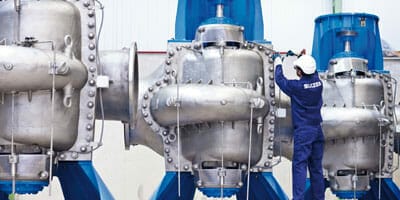
Sulzer is a Swiss manufacturer with a proud past. From pioneering the diesel engine to making the specialist pumps that drive power production around the world, it has been around for 178 years.

Perhaps leveraging off such a rich history, the company’s pension scheme is very much looking into the future thanks to solid returns so far in 2012.

The 3.6-billion Swiss franc ($3.8-billion) Sulzer Vorsorgeeinrichtung has seen returns of 6.1 per cent up until the end of October, almost a full percentage point over the fund’s benchmark.

Dr Urs Schaffner, who heads the fund, says the good showing is the result of intelligent investment picks by the inhouse investors, who manage 90 per cent of bond and equity assets.

Schaffner says he is “positively surprised. Investing in an interest-rate safe haven like Switzerland and assuming normal risk premiums, our expected returns for the next few years amount to between an annual 2 and 3 per cent.

“Given this expectation, combined with the many risk factors currently connected with the US and European debt situation, we hadn’t expected performance to be so good.”

Sponsored Content

Buoyant equity markets have helped things, with a 14.57-per-cent return in the fund’s overseas equity holdings assisting a 13.28-per-cent return in domestic equities based on “good picks”, according to Schaffner.

Schaffner explains that the Sulzer Vorsorgeeinrichtung has also been able to navigate the European sovereign debt crisis well.

The fund withdrew from peripheral bond holdings before their yields spiked and has acted quickly to shed poorly or even negatively returning safe-haven government bonds in favor of corporate debt.

Keeping it simple

While picking winners within asset classes seems to be paying off, Schaffner says the investment strategy on the whole at Sulzer Vorsorgeeinrichtung has been defined by continuity.

The fund has a conservative investment mix principally because a large proportion of its members are claiming benefits.

Some 70 per cent of the liabilities are linked to pensioners as a consequence of major restructuring at the sponsoring company in the 1990s.

This leads to a “rather rigid investment risk budgeting process” says Schaffner, with the risk appetite staying on the conservative side for a good number of years.

A declining pensioner pool may see some change for this in the years ahead.

For its beta, Schaffner explains that the fund has established target allocations in each asset class, and a bandwidth allocation range designed to avoid over or underexposure.

The bandwidths and target allocations were designed with the help of a consultancy, PPC Metrics, which completes an asset and liability study for the fund every three years.

Choosing where to pitch the asset allocation within that bandwidth is where alpha can be won or lost.

In 2011 the Sulzer fund made the wrong call in underweighting domestic bonds, going for a 29-per-cent holding, with the long-term target being 35 per cent.

This saw the fund miss out a little on a debt boom and miss its benchmark that year.

Schaffner explains that the fund has gone for fairly narrow bandwidths “to limit the alpha risk” but at the same time ensured they are wide enough “to allow the flexibility needed to absorb some natural market fluctuation”.

For instance, the domestic bond holdings are currently permitted to fluctuate between 27 and 40 per cent, while domestic equity is limited to 5 to 7 per cent.

No-nonsense investing

Overall bond holdings at the fund are now at 48 per cent after recent increases, with equities making up 21 per cent.

Those equity holdings are outsized by a 23-per-cent stake in real estate – not an unusual amount in Switzerland and a reinforcement of the fund’s conservative outlook.

Real estate continues to perform well for Sulzer Vorsorgeeinrichtung, with indirect real estate allocations increasing by over 7 per cent in the first nine months of 2012.

Further, Sulzer co-owns a real-estate asset-management firm with about 70 experts, allowing it to retain control over its direct real estate investments that comprise about 90 per cent of its total real estate investments.

The 4-per-cent alternatives holding is divided down the middle between private equity and commodity investments.

Schaffner says the conservative identity of the fund is reinforced by its avoidance of “complicated instruments”, such as structured products.

Hedge funds are no longer in the portfolio, with Schaffner saying that the fund’s investment committee “lacks confidence” in the ability of hedge funds to perform over the next few years. He adds that “hedge funds really are tactical investments rather than the strategic investments we are looking for”.

Emerging market bonds and infrastructure are asset classes that the Sulzer fund has an interest in acquiring, with others also on the ‘watch list’.

Schaffner says that even though these are being evaluated, “it will take a long time to work these through to the investment strategy”.

Discussions between the fund’s investment team, investment committee and management board are usually protracted when concerning a significant new investment venture.

Entering into new asset classes would also change the risk dynamics that the fund prioritises and likely require adjustments in existing asset classes.

No room for complacency

Funding is good at Sulzer Vorsorgeeinrichtung, with a $214-million surplus on the accounts at the end of 2011.

Schaffner says this “does not take any pressure off investment at all”.

“You just need to look at the numbers behind that to see that there is no room for complacency”, he suggests, indicating that the official discount rate in Switzerland inflates funding ratios.

The Swiss discount rate for pensions is 3 per cent, significantly higher than a 10-year government bond yield of 0.4 per cent.

The fund is aiming for a 17-per-cent surplus, which equates to around $636 million at the fund’s current size.

As the benefit level of the Sulzer fund exceeds the legally required minimum contributions considerably, it has a release valve in the form of its hybrid status.

Thus, it aims – but does not guarantee – to credit the legal minimum interest rate to the retirement savings of all active members.

Anything beyond that is usually the subject of intense negotiation.

Leave a Comment

How CPP is evolving risk management for a faster, more interconnected world

How CPP is evolving risk management for a faster, more interconnected world

In an environment where multiple risks are emerging and their effects are compounding on the portfolio, CPP Investments' chief risk officer Priti Singh says the $572 billion fund is rethinking risk management from the ground up, shifting from reaction to preparation and embedding risk thinking earlier in investment decisions. She speaks to Amanda White about the fund's risk approach.

Sort content by

GPIF positions its alternatives database as first gate in manager selection

Japan’s Government Pension Investment Fund will soon look to expand its alternatives database project, which evaluates the performance of private markets GPs, to cover more funds. Director of research and analytics speaks with Top1000funds.com on how the $2 trillion pension giant will position the system as its first point of reference for private market manager due diligence.

‘We are way ahead’: How Fairfax County bagged staggering crypto returns

Fairfax County Employees’ Retirement System says its allocation to digital assets has become the best-performing investment in the fund’s history. The $6.3 billion pension plan first invested in blockchain infrastructure and digital assets through venture funds in 2019, and early distributions are now beginning to arrive.

Germany’s largest pension fund VBL ups diversification; invests more abroad

Germany’s €70 billion pension provider VBL is increasing its diversification, notably investing in overseas real estate outside Germany for the first time. It's also increasing its tilt to international equities over European stocks, enabled by an organisational and investment process overhaul.

UTIMCO flags AI overweight; tweaks equity as US exceptionalism wanes

UTIMCO measures its AI exposure via analysis of how investee companies have integrated the technology. It reveals a 5 per cent overweight to AI thanks mostly to hedge fund strategies and infrastructure. Meanwhile, the investor pointed to history to flag a likely reversal to the mean in global equity markets.

Why Lothian is ready to lead on LGPS pooling – if it comes to Scotland

Scotland's Lothian Pension Fund's celebrated inhouse management affords active management at the price of passive and the ability to shape specific mandates with managers. It also positions the fund to lead on pooling - if pooling comes to Scotland's LGPS funds.

Sweden’s FTN focuses on fees and returns in latest procurement

Lower management fees and higher returns defined the latest selection process at the Swedish Fund Selection Agency in its latest awarding of active global equity mandates to 12 managers, its largest and most ambitious €20 billion ($23 billion) procurement so far.

Previous



