
Postcard from Japan

For many years Japan has been an insurance-market behemoth and Japan Post Insurance Company is one of the giants with $1.13 trillion.

But the industry has not been immune to change. Between 1997 and 2001 seven life insurance companies became insolvent, and there is a question mark over whether it was a low interest-rate environment that caused this fallout.

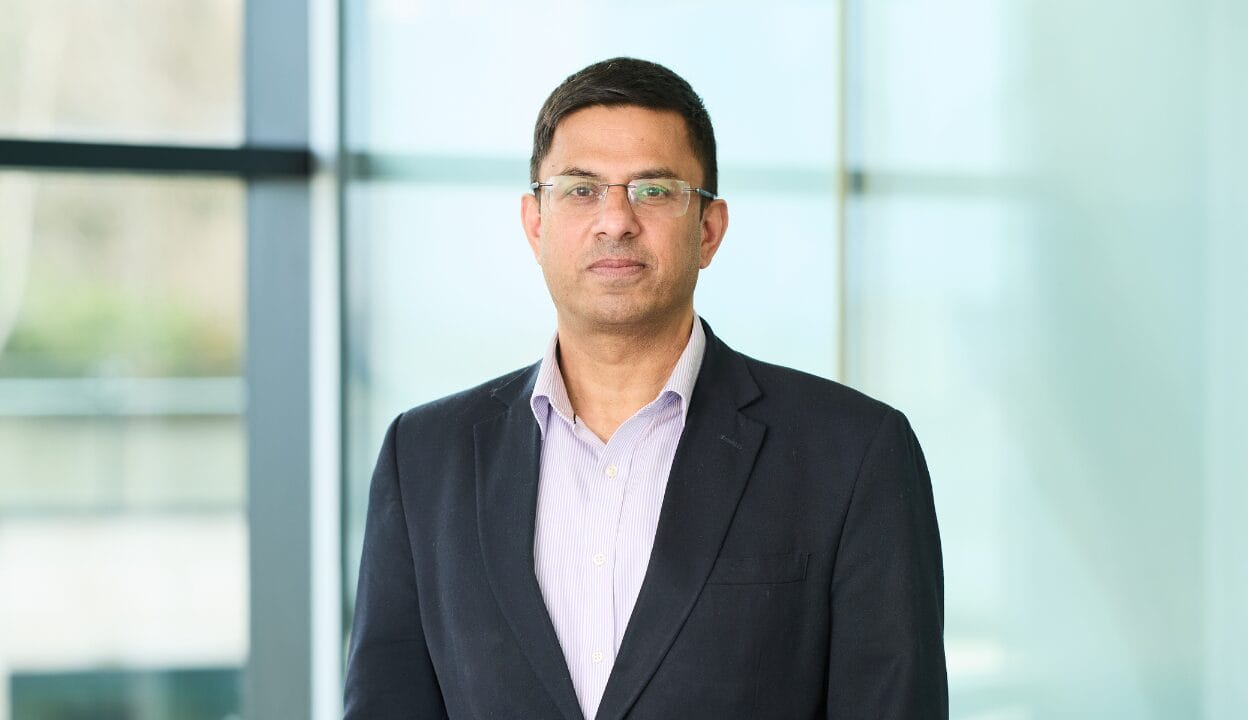
Given that history and the current low interest-rate environment, investment risk manager at Japan Post Insurance Company Ryujiro Miki, who will speak at the Conexus Financial Fiduciary Investors Symposium, says it is worth exploring the potential effects on the insurance industry.


Mixed messages

The economic statistics in Japan are grim: the official government bond rate is 0.8 per cent, having peaked at about 8 per cent in 1980. Similarly, the Nikkei peaked at ¥39,000 in the 1990s and now it’s at ¥8000.

However, the bond market in Japan is unique in that 92 per cent of the nation’s debt is domestically owned. Furthermore, the Japanese government owns 40 per cent of the banking system directly, and about half of government bonds are held by government-owned institutions.

Sponsored Content

“Japan owns the bond market, external debt is very tiny; we are self sufficient,” Miki says.

“Since the peak of interest rates the Japanese industry has been trying to get rid of excess capacity so inflation has not been an issue but deflation has been… The debt-to-GDP ratio is 200 per cent – much worse than Greece – but the net-debt position is half that.”

The Japan Post Group is 100-per-cent owned by government. It is made up of two gigantic institutions, both of which are the largest in the world: Japan Post Insurance, which has $0.8 trillion of US-dollar-denominated Japanese government bonds (JGB), and Japan Post Bank, which has $1.8 trillion of them.

“We hold roughly 30 per cent of JGB,” Miki says.

The Japanese government is looking to sell the stock of a number of holdings in order to recapitalise after the earthquake, most recently the airline, and Japan Post Group is on its list.


Lesson from the 1980s

The potential listing has great consequences for the market more widely. If it lists and diversifies its asset allocation away from domestic bonds, it could have an effect on interest rates.

Back in the 1980s interest rates were deregulating but there were also a number of structural issues that contributed to the demise of the seven insurance companies, worth about $120 billion. These included financial deregulation and globalisation, a maturation of the death-coverage market and fierce competition for private insurers to raise assumed interest rates to struggle against public insurers.

In the 1980s insurance coverage was meeting its limit, according to Miki. While interest rates were deregulating, investment-style products were becoming more popular.

“Investors wanted high-return products and insurance companies were competing against the mutual-fund industry,” he says.

But really, Miki says, it was the absence of risk management, and asset-liability modelling, that led to the failures in the 1980s, not low interest rates per se.

“Under the circumstances, there was too much rapid expansion and concentration on risky assets, but there was a lack of corporate governance, an absence of risk culture and good management,” says Miki, who at the time was in the investment-planning department at one of Japan’s private insurance companies.

One of the main lessons from that time is that asset-liability modelling is the key to hedging interest-rate risk, Miki says, but he believed enterprise risk management, or lack of it, was the real cause of the insurance companies’ demise.

“It wasn’t the bubble bursting alone, but bad management also,” he says.

Leave a Comment

How CPP is evolving risk management for a faster, more interconnected world

How CPP is evolving risk management for a faster, more interconnected world

In an environment where multiple risks are emerging and their effects are compounding on the portfolio, CPP Investments' chief risk officer Priti Singh says the $572 billion fund is rethinking risk management from the ground up, shifting from reaction to preparation and embedding risk thinking earlier in investment decisions. She speaks to Amanda White about the fund's risk approach.

Sort content by

New York State Common’s CIO on Russia, PE and diversity

Investments at New York State Common Retirement Fund, one of the largest pension funds in the US that also boasts a near fully-funded status is run by Anastasia Titarchuk. In an interview with Top1000funds.com she shares her investment outlook, thoughts on private equity and the importance of diversity.

CDPQ’s infrastructure portfolio forges ahead with bet on Middle East growth

CDPQ’s large and growing infrastructure portfolio deliberately hunts large, direct investments in new geographies where returns come from generating growth in the underlying companies. Top1000funds.com talks to Emmanuel Jaclot, executive vice-president, and head of infrastructure in an interview from CDPQ’s Montreal headquarters.

Temasek drops exposure to China on pandemic and property headwinds

Singapore's Temasek pares back on China in favour of local assets as pandemic restrictions bite. Temasek has been investing in China for 20 years and for the last decade it has been its best performing market, but CIO Rohit Sipahimalani thinks China may face challenges achieving its 2022 growth target.

San Bernardino tilts to US equity; informed rebalancing reaps rewards

San Bernardino County Employees’ Retirement Association, SBCERA, plans to increase its exposure to US equity in preparation for de-globalization trends. Sarah Rundell talks to CIO, Donald Pierce about asset allocation and the fund’s ‘informed rebalancing’ program.

KLP applies legal expertise to responsible investment

Last June, Norway’s KLP excluded 18 companies due to links with Israeli settlements in the occupied West Bank. A few months later, Kiran Aziz, took the helm as the head of RI stepping into a contentious ESG debate that captures the divide between US and European shareholders.

ARR vs funded status: North Carolina’s rock and a hard place

North Carolina Retirement Systems' Dale Folwell discusses the Herculean challenge of maintaining the pension funds funded status while lowering the assumed rate of return.

Previous