
PKA ups the risk; builds out infrastructure

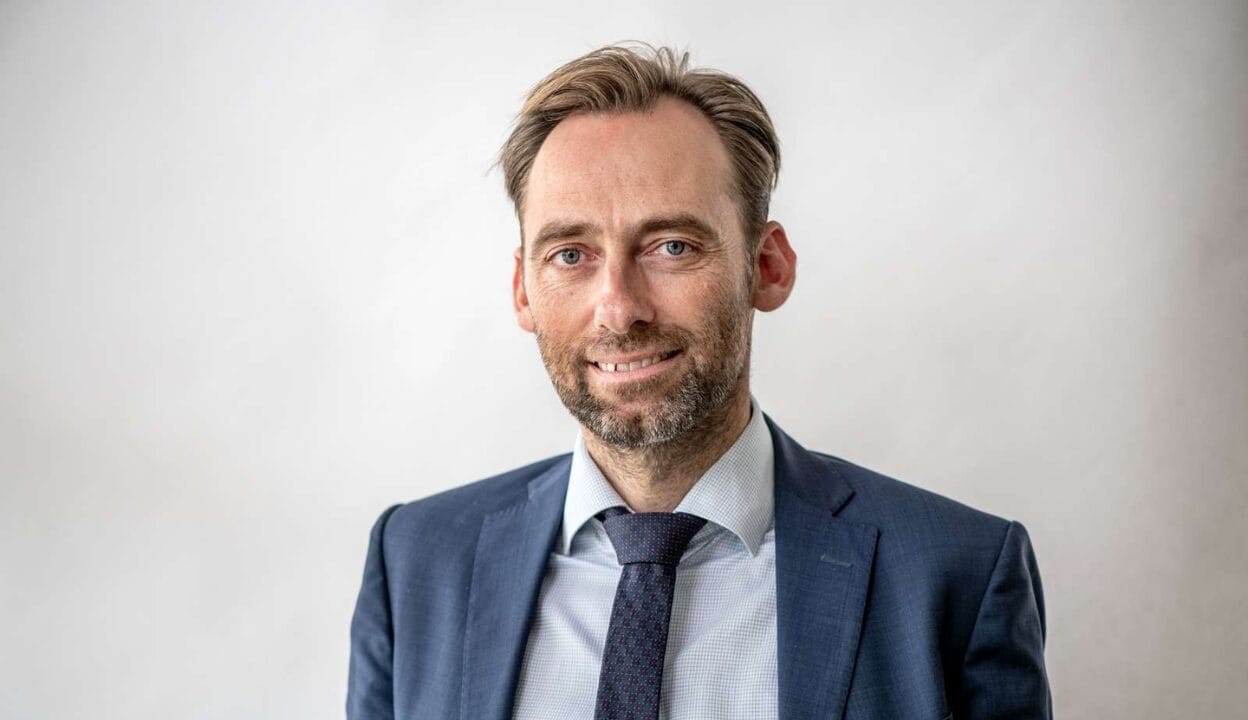
Michael Flycht

PKA, one of Denmark’s largest pension service providers, is exploring whether to increase its risk budget by 10 per cent to boost returns. The increase will primarily be added via levered (futures and equity swaps) passive exposure to the MSCI All World Index, meaning the investor won’t have to reduce another allocation to add risk.

“Time in the market is better than timing the market,” Michael Flycht, deputy director of equities and liquid alternatives, tells Top1000funds.com. “The way to make money is to take as much risk as possible and not to derisk when things go down. When markets drop and the risk premia widens, you should stay invested.”

Moreover, unlike some Danish pension funds which recently announced plans to reduce their allocation to the US, PKA remains firmly committed to investing in US stocks. In fact, Flycht argues that being underweight the US and Magnificent 7 amounts to a bet against AI in a strategy that is tantamount to a “bad trade” given the extreme returns that have been on offer.

“Listed US equity is the last place I would underweight significantly because of the potential upside.”

He is also convinced that passive equity investment remains the best strategy. “Being passive has been the right choice. A lot of people have had active equity strategies and have underweighted the tech sector, but this has been a losing game for some time.”

PKA has policy constraints on leverage and increasing the allocation to equities via derivatives will take leverage closer to that ceiling. However, Flycht notes that choosing the exact leverage level is difficult, particularly because the hedge fund allocation is heavily levered.

Sponsored Content

“How you measure leverage is not the easiest question to answer. The problem with leverage is that it’s everywhere. For example, buying a simple cash stock often involves leverage because companies have debt.”

hedge funds

Over time, PKA has steadily increased its allocation to hedge funds to just over 5 per cent today. Flycht likes the allocation for its low-risk return due to the fact that it supports diversification for the rest of the portfolio. In contrast, equity exposure and risk are in lock step.

“Adding one unit of hedge fund exposure only marginally increases the risk in the portfolio. In contrast, adding one unit of equity exposure also increases the risk by one unit.”

Meanwhile, the high absolute return from hedge funds continues to shine, producing a double-digit return for the last five years.

“In 2022 when everything was down including bonds, hedge funds still delivered significant returns.”

The allocation is split between two internal mandates and 12 external mandates and is particularly suited to today’s turbulent environment. Although hedge funds would suffer in a financial crisis, in volatile markets, fund managers can buy the dips, take advantage of spreads widening, and tap “good ideas.”

One of the best (internally managed) strategies that plays to PKA’s own relationships and niche market knowledge is a leveraged spread trade using Danish mortgage bonds, which hedges the duration, and is financed cheaply through repo. “It’s a really good strategy. We earned more than €100 million ($117 million) last year on that.”

Adding value in infrastructure

In another change, PKA plans to build out its infrastructure allocation focused particularly on emerging market transition infrastructure. The investor recently committed to Stepstone and Partners Group, and Flycht says the fund plans to invest around DKK 5 billion ($783 million) per year to asset managers outside AIP Management, its own infrastructure investment platform.

Set up with other pension funds, AIP focuses on core European and US infrastructure rather than value add, where Flycht says he now wants to re-engage.

The investor targets around 8-9 per cent of the portfolio in infrastructure, and because the fund has recently received money back from capital invested ten years ago, without re-investment, the allocation will fall.

“We want to make sure we keep a diversified allocation of around 8-9 per cent. We will be adding lots of infrastructure exposure to the portfolio in the coming years,” he says. “We want to invest with the best managers out there and we are trying to find the managers leaning towards this space.”

PKA will overweight Europe versus the US and target exposure to the transition in Asia by working with global managers with an Asian presence rather than local GPs.

Finding managers who combine expertise on the ground but also share PKA’s cultural and language references is challenging but important, given how PKA relies on its managers to guide them through unknowns.

In India, for example, a knowledgeable partner is essential to navigate risks like the impact of AI on India’s software and IT sector. Many US and European companies outsourced their back office to India rather than use developers in their own country, but now AI offers an alternative to this strategy for many companies. “With AI, there might be some headwind to this,” he predicts.

The allocation to private credit sits in the same bucket as listed loans and high yield and real estate debt. He predicts the allocation will make around 2 per cent on an annual basis above listed assets. “So far, we haven’t seen any defaults. We are not lending out to software companies, and the portfolio looks pretty good.”

hunting for a European venture manager

The fund is also eyeing European innovation.

In another seam to strategy, PKA is seeking out European ventures. Mindful that the team don’t have internal expertise in the area, Flycht says he is looking for an experienced venture manager to build exposure.

“In Europe, when companies get to a certain scale they look to IPO in the US, or get bought by big US corporations. We want to try and keep these companies in Europe or Scandinavia.”

He hopes to increase the allocation to venture by 50 per cent in the next three years and equally weight it between Europe and the US. It means most of the new investment will flow into Europe.

This will include opportunities in defence where he is hunting for interesting funds that have a defence vertical to give a clear view of the kind of companies in the fund. PKA can’t invest in controversial weapons but can in companies that supply tanks and fighter jets manufacturing and drones without tripping ESG guidelines.

“It’s not easy because defence was out of favour for so long because of ESG policies, but we now need to ramp it up.”

Asset Owner:PKA Pension Fund

Leave a Comment

How CPP is evolving risk management for a faster, more interconnected world

How CPP is evolving risk management for a faster, more interconnected world

In an environment where multiple risks are emerging and their effects are compounding on the portfolio, CPP Investments' chief risk officer Priti Singh says the $572 billion fund is rethinking risk management from the ground up, shifting from reaction to preparation and embedding risk thinking earlier in investment decisions. She speaks to Amanda White about the fund's risk approach.

Sort content by

CPP Investments, NBIM reflect on lessons from a 5-year transparency journey

The Global Pension Transparency Benchmark has been a driving force in improved transparency of disclosures and reporting among global asset owners. As the project comes to its close after five years, two leading funds reflect on why transparency has been a clear focus for their organisations. 

NEST’s private markets strategic review includes manager scrutiny

NEST is conducting a strategic review of its private markets allocation to ensure the program – launched in 2020 – is still capturing a liquidity premium for its young member base. Its private market head explains the key seams including no performance fees and evergreen structures to monitor deployment.

UK corporate DB consolidation: TPT throws its hat in the ring

Trustees and employers overseeing the UK’s 5,000 corporate pension plans, which hold an estimated £1.2 trillion ($1.6 trillion), have another option to help manage their defined benefit assets following TPT Retirement Solutions' proposal for a new superfund that will access managers through a fund-of-funds structure.

Fordham University dials up growth equity, cools on private credit

Fordham University CIO Geeta Kapadia is cutting back on private credit, calling it an asset class “less able to financially engineer returns” in a higher-rate world. She’s instead redirecting the $1.1 billion endowment to venture and growth equity and entrusting larger mandates to a smaller roster of high-conviction managers.

‘So far so good’: Sweden’s FTN bags 150bps equity fund return improvement

In an endorsement of its hard work over the last year, Sweden’s Fund Selection Agency, which procures and monitors the funds on offer on the country’s premium pension platform, is already starting to see improved returns and lower fees from the wave of new equity funds it mandated.

NZ Super co-CIOs chart TPA vision; hunt for new alpha sources

As NZ Super nuts out growing pains in processes and technology, it has made some recent decisions to change its governance route including appointing two co-CIOs, Brad Dunstan and Will Goodwin, last year. In an interview, they discuss the co-delegation model, the evolution of TPA, and new alpha sources.

Previous



