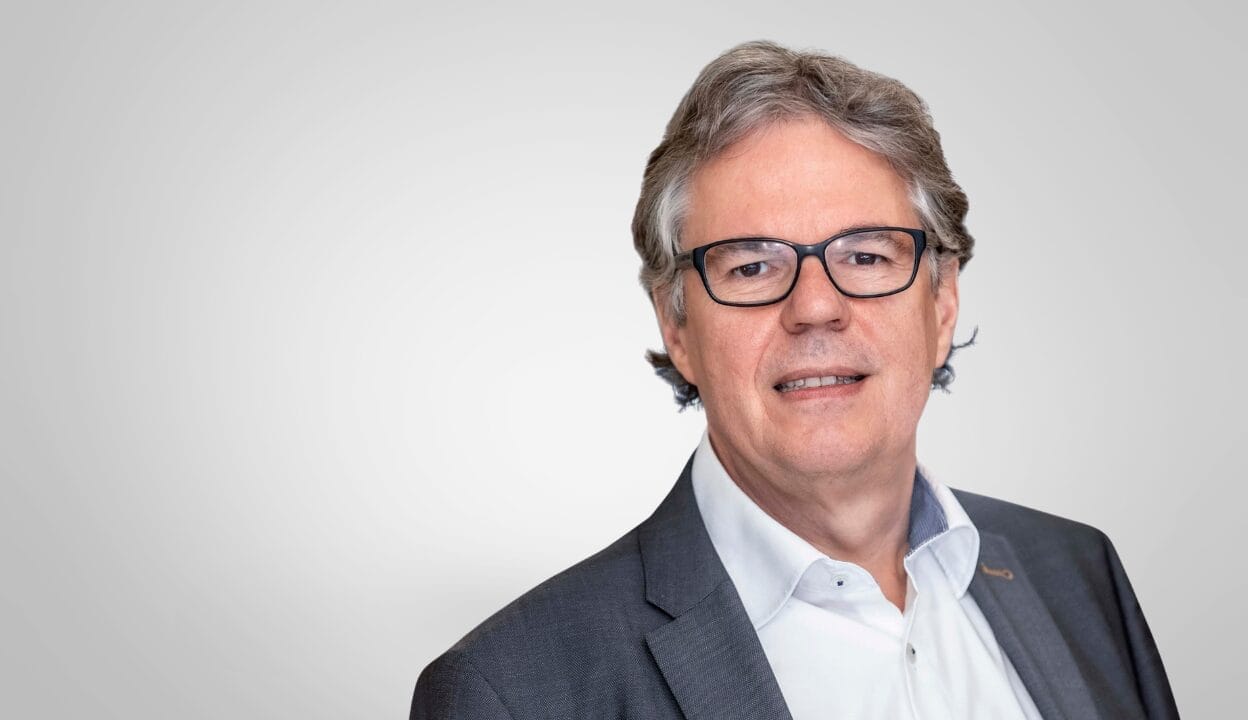

PFZW’s IC chair explains why cutting equity names hones impact

Pensioenfonds Zorg en Welzijn (PFZW) the €250 billion Dutch healthcare fund, has just published the 800 names that have made it into its reduced equity portfolio. The final list, steadily cut over recent years from a high of 3,500, enables the investor to better lean into its celebrated reputation in sustainable investment which is integrated not just in equities, but across the entire portfolio.

“Reducing the portfolio is the best way to really understand what companies are doing and know what we own,” Professor Dirk Schoenmaker, chair of the investment committee, said in an interview with Top1000funds.com.

BlackRock and Legal & General Investment Management, which managed multi-billion dollar mandates, have lost mandates alongside AQR Capital Management. And Robeco, Man Numeric, Acadian, UBS, Schroders, M&G and Lazard will now manage PFZW’s equity portfolio, alongside the internal team at its asset manager PGGM. 

Schoenmaker, who teaches banking and finance at Erasmus University, is a research fellow at the Centre for European Policy Research and used to work at the Dutch Ministry of Finance and the Bank of England. His experience and expertise was sought by PFZW to help shape its key strategic goals and investment policy which is implemented by its asset manager PGGM.

As part of a multi-year journey, PGGM has changed its investment approach to focus on risk, return and impact. In April, chief fiduciary officer of PGGM, Arjen Pasma, flagged to Top1000funds.com that there would be a change to the manager roster in public equities this year, and other asset classes would be impacted as it rolls out its impact journey to 2030.

Among those strategic goals sits PFZW’s ambition to apply fundamental research to each individual company in the portfolio, digging into financials, strategy, risk and industry trends to go much further than “one or two ESG metrics” to reveal the sustainability of corporate business models.

Sponsored Content

Rather than being “unpleasantly surprised” by incidents at companies because they were part of an index of thousands, the benchmark is consciously built based on balanced return, risk, and sustainability.

This will also allow PFZW to put more to work in impact where it currently invests around €50 billion in transition themes like climate, healthcare, biodiversity and the circular economy.

It’s an approach that Schoenmaker compares to Warren Buffett’s fundamental approach. “Fundamental investors like Warren Buffet don’t invest if they don’t understand the business model, and at PFZW we can now also really get to know the company and make a conscious decision whether we want to invest or not.”

It also has echoes of another Buffett missive: skilled investors should build concentrated portfolios because, in Buffett’s words, over diversification “makes little sense if you know what you’re doing” and when it comes to sustainability, PFZW and PGGM are global leaders in the field.

The reduced equity portfolio has a 1.5 per cent tracking error and Schoenmaker says it is designed to deliver a return closely aligned with the broader market. “We are not trying to beat our benchmark,” he says. “Impact investment has a neutral effect on ten-year returns. We are not promising higher returns but want to protect the purchasing power of pensions. Impact is about long-term value creation.”

With that said, in real estate he notices that a positive feedback loop has started to emerge.

“Energy-efficient residential and commercial buildings have increased rental and property values. We are starting to get to the exciting bit,” he says. It means that when the PGGM team spots poor energy efficiency in real estate holdings they will invest to improve that part of portfolio in keeping with value investment.

He believes the same thing will happen in infrastructure whereby “making the right decisions around water, electricity and transport” will secure long-term value. “The infrastructure we build today locks in the energy mix for the next twenty years,” he says.

Portfolio construction

One segment of the 800 equity names comprises “sustainability neutral” companies that don’t have a big impact either way, he continues. These companies ensure the portfolio is diversified and balanced across different sectors and strategies, and that the fund doesn’t miss out on market trends – PFZW still has exposure to mega-cap tech stocks that have dominated the US equity market, but the allocation is “a bit smaller.”

Portfolio construction also involves divestment based on PFZW’s exclusion preferences drawn from its 3 million plan beneficiaries over the years.

Tobacco was excluded years ago, but in June last year PFZW sold approximately €600 million in gambling stocks following a member survey indicating concerns. The pension fund has also completed divestment from a total of 310 oil and gas firms because they lacked credible climate strategies. It has sold stakes worth a combined €2.8 billion, retaining only seven frontrunners committed to transitioning to low-carbon energy.

Schoenmaker says the decision was a consequence of “years of collecting information” and engagement with fossil fuel groups to produce verifiable transition plans to limit temperature rises, that ultimately came to nothing.

“It was very disappointing because we walked away from a large group of companies, although if they reform we will be back in. Engagement doesn’t work unless you divest,” he says.

Despite the failure of engagement with fossil fuel groups, he believes that corporates welcome PFZW’s engagement. Mostly because the positive effect of engagement soon appears in their bottom line.

“We try to be an informed investor and always listen before we start asking the questions. Engagement makes us an interesting partner for companies. We see things happening they might have missed, and we can give advice.”

Like his believe that corporate stories become much more compelling when the annual report begins by outlining what a company does, or is trying to achieve, than stats on the share price or dividends.

Still, engagement with private equity GPs to integrate impact, an important component of PFZW’s balanced portfolio and which accounts for around €23 billion, has been slow. “Only some [GPs] have started to move, and most of those are in Europe,” he reflects.

But he notices more pension funds are putting pressure on GPs to do more to integrate impact, and the co-investment pipeline is growing.

“We are actively discussing impact with our GPs but it is a long-term process that requires patience. If we can achieve change regarding impact in private equity, we will have achieved a lot.”

Navigating anti-ESG sentiment

Part of Schoenmaker’s job is to ensure PFZW reflects plan beneficiaries in its investment strategy. It’s an engagement process that reveals the investor practices what it preaches.

PFZW keeps abreast of beneficiary sentiment by regularly surveying participants and the board reports quarterly to an accountability body peopled by employers and retirees. He says participants continue to “applaud” a strategy that combines sustainability with returns despite the Netherlands also experiencing a backlash in ESG sentiment.

He is confident members “truly understand” how impact aligns with long-term value creation. But he also believes anti-ESG sentiment is best viewed through the lens of any other business cycle.

“It is true that people are pessimistic about sustainability and companies and governments have taken back commitments. There was a lot of interest in sustainability, and now that has partly fallen away, but this is the business cycle of sustainability, and we look through it for the long haul.”

Schoenmaker, who returns to his students this week after the summer break, concludes: “I always tell my students it’s not a question of making finance sustainable, it’s about using finance to help solve problems. Finance is not the culprit – it is the means to achieve returns and help create a liveable planet and transition to a new world that will happen in their lifetime.”

Asset Owner:PGGM / PFZW

One response to “PFZW’s IC chair explains why cutting equity names hones impact”

  1. Mike Clark

    Just excellent from these guys. Financing the economic activity their beneficiairies want. And avoiding the other stuff. Pension funds globally are moving this way, though too slowly…

Leave a Comment

Finland’s Elo: Larger equity allocations promise new media scrutiny

Finland’s Elo: Larger equity allocations promise new media scrutiny

As Finland's pension funds prepare to increase their equity allocations to unprecedented levels compared to global peers, they must also navigate a new and unfamiliar risk. Elo's chief investment officer Jonna Ryhänen explains the fund's investment approach going forward and how it will manage stakeholder and media scrutiny as they react to swinging volatility and returns.

Sort content by

Why NYC pensions CIO hasn’t drunk the ‘TPA Kool-Aid’

Three decades of investing have given Monte Tarbox sharp eyes for recognising risk and opportunities, and he’s putting it to use as the new permanent chief investment officer of the $306 billion NYC Bureau of Asset Management. In an interview with Top1000funds.com, Tarbox outlines his vision for the fund, why he’s bullish on infrastructure but “nervous” on PE, and why he hasn’t drunk the TPA “Kool-Aid”.

How CPP is evolving risk management for a faster, more interconnected world

In an environment where multiple risks are emerging and their effects are compounding on the portfolio, CPP Investments' chief risk officer Priti Singh says the $572 billion fund is rethinking risk management from the ground up, shifting from reaction to preparation and embedding risk thinking earlier in investment decisions. She speaks to Amanda White about the fund's risk approach.

URS bets on nuclear to power AI and lower emissions

Next-generation nuclear energy, and the money pouring into it, will truly change the world, according to CIO of Utah Retirement System John Skjervem. It’s a lonely position as the CIO of a public pension fund but one Utah is embracing as it builds out early-stage investments in nuclear energy as part of its alternative energy portfolio. He speaks to Sarah Rundell in an exclusive interview about how investing in transformational energy technologies can be part of prudent investment management.

Managing volatility and inflation: Constant rebalancing shores up UK’s lifeboat fund

A keen focus on rebalancing, and best in class systems, allows the UK’s £31.2 billion Pension Protection Fund to effectively implement a dynamic hedging strategy for one of the UK's biggest LDI portfolios. Sarah Rundell reports.

Velliv reset: More Danish funds lean into low cost DC model

In Denmark’s fiercely competitive commercial pension industry, Velliv was quick to take action with a root-and-branch overhaul of its pension provision when it experienced a drop in returns in the first half of 2024. It sacked its active equity managers, scaling up internal active strategies and low-cost, index-based investments instead, and stopped allocating to its $4.3 billion alternatives allocation. Thor Schultz Christensen, deputy chief investment officer at Velliv, unpacks the change.

Ohio sounds warning bells on PE liquidity logjam

Farouki Majeed, chief investment officer of the $23 billion Ohio School Employees Retirement System, has highlighted worrying signs in private equity that resulted from a backlog of exits, including industry murmurs that some GPs are having to borrow money to operate their business because LP fees are drying up. In an interview with Top1000funds.com, Majeed unpacks why its 12 per cent PE allocation is shielded from the rout.



