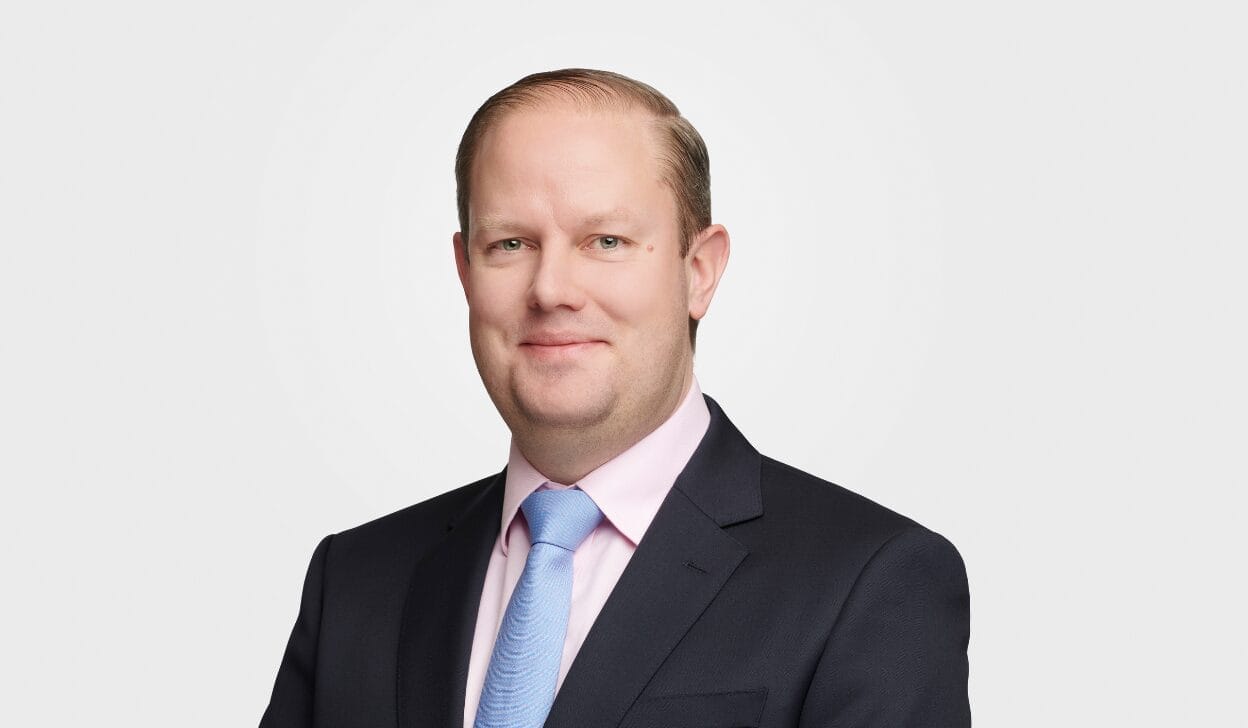

PE downturn offers chance for Ontario’s newcomer UPP to cosy up to new GPs

While many institutional investors find themselves overweight private markets, struggling to price and exit illiquid investments in the current market, C$11 billion University Pension Plan Ontario is aggressively building out its 20 per cent allocation to private assets.

UPP was only established in 2021 following the culmination of a decade-long process by three founding universities to amalgamate their existing pension schemes into one umbrella organization.

But the private markets team led by Peter Martin Larsen has already committed or invested CAD$900 million, most of which has gone into inflation-proof infrastructure assets.  Now their focus is turning to return-enhancing private debt and private equity with new partners in close relationships that will open the door to co-investment and direct participation down the line.

“The return enhancing element of the portfolio is gathering steam. We have been very busy adding to it and are looking to do a lot more. Our private markets target allocation is significantly higher than the current 20 per cent,” says Larsen in an interview with Top1000Funds.com.

Moreover, the current market is allowing UPP to get a foot in the door with sought-after and specialist mid-market managers by offering meaningful ticket sizes. Many asset owners lack dry power in the current environment but newcomer UPP still in the foothills of building its allocation can fill a gap as an attractive partner while other Limited Partners remain strapped for cash.

“We are in the fortunate position of expanding our exposure and are focused on making new investments, not trying to realise existing ones. It’s been great timing for us to create partnerships in this market,” he says.

Sponsored Content

Bold ticket sizes and portfolio exposure within the mid-market space also mean UPP can ensure a seat on Limited Partner Advisory Committee boards, where LP investors in a fund can take an oversight role and offers another way to cosy up to GPs.

“In addition to creating close partnerships around co-investments and achieving the long-term benefits of that approach for our members, we are also focused on governance in our fund investments. We typically target the mid-market, where we can be meaningful, and every fund investment we have done so far has included an LPAC seat. In fund investments this is one way to increase ongoing due diligence and governance and be close to our partners.”

Partnerships pay off

As he expands the portfolio, Larsen has turned his focus beyond fund investment to co-investment opportunities. He says UPP is targeting a selective, smaller group of GPs to develop strategic co-investment partnerships that will enhance returns, lower fees, and offer greater control and governance oversight, allowing UPP to align investments with its own risk tolerance and sustainability goals.

Co-investments will also allow UPP to develop shared best practice and a consistent approach to risk-return assessments including accessing opportunities at the intersection of asset classes, he continues.

“Co-investments are a critical part of our strategy. They really are the core of what we are trying to do.”

He adds: “Our focus is on finding partners for value creation and outperformance through our people who are market leaders in their fields. We are also very focused on being an attractive partner ourselves. The key words for us are in-house expertise and a cohesive approach across our four private asset classes, which enable deeper partnerships.”

The skills of UPPs diverse 12-person internal team span asset class expertise and an ability to draw on their own networks to source opportunities in funds, co-investment and direct private market investment.

“We have an amazing and experienced team who have been around the block and invested through cycles,” he says. “We have people who have invested in funds, co-investments and direct with global relationships who can originate opportunities.”

Larsen says his own move from institutional investment in Denmark to join UPP in Canada has been made easy by similarities between the two regions that include a deep institutional investment ecosystem and talent pool. “The investment approach in pension funds in Canada and Denmark are similar, inspiration in Denmark come from Canada.”

He says the skills of the team is already born fruit. Like UPP’s recent €150 million investment in offshore wind veterans Copenhagen Infrastructure Partners’ latest fund, and stake in Angel Trains, the UK rolling stock company.  “We have a team with global relationships that can originate these opportunities.”

With its focus on people and partnerships, UPP’s strategy is typical of the Canadian Maple Eight. He began by building in-house expertise focused on accessing opportunities, executing; building partnerships and monitoring the portfolio. Now he’s developing partnerships that will transition into co-investment and direct participation. He also wants to integrate sustainability and diversification, tapping long-term, secular trends that are robust in any interest rate or inflation environment.

“Coming out of COVID, diversification was one of the biggest learnings”

Sustainability is incorporated into the screening and underwriting process, overseen by the internal team.

“Besides being a key way in which we seek to invest responsibly on behalf of our members, integrating material ESG factors across all investment processes is the right commercial thing to do to avoid undue risks such as stranded assets. There must be a buyer in 15–20-years time when we may look to sell the asset.

We want to partner with GPs with a track record in responsible investing (RI) and we actively engage with GPs to influence their investment decision and management practices. ESG is integrated into our portfolio construction.”

As Larsen builds out the allocation, today’s overweight LPs is a reminder of the risk and long-term nature of private investments. He says UPP has a five-year strategy to reach its (undisclosed) target allocation and won’t rush – despite the opportunity – to ensure vintage diversification.

“We will invest for the long term and target value creation over 10-15 years. All the data shows consistent out performance from private markets over a 10-15 year period v public markets. But you need to be patient and accept and embrace the illiquidity. You don’t want to be a forced seller of private assets.”

Peter Martin Larsen will speak at the Fiduciary Investors Symposium in Toronto from May 29-31. Click here for more information.


Leave a Comment

How CPP is evolving risk management for a faster, more interconnected world

How CPP is evolving risk management for a faster, more interconnected world

In an environment where multiple risks are emerging and their effects are compounding on the portfolio, CPP Investments' chief risk officer Priti Singh says the $572 billion fund is rethinking risk management from the ground up, shifting from reaction to preparation and embedding risk thinking earlier in investment decisions. She speaks to Amanda White about the fund's risk approach.

Sort content by

China’s SSF – defence making way for attack with investments

China is the world’s biggest new frontier since wild-west America in the mid 19th century. For instance, it controls four of the top 10 sovereign wealth funds by size, as just one of many examples of its nascent power. And China is changing, becoming much more of a global corporate citizen and less of the

OMERS’ new CIO to focus on in-house management

Bringing externally managed funds under the guidance of the internal investment team is a key component of OMERS’ growth plans, with the fund moving to having more direct control over its investments, according to new chief investment officer, Michael Latimer. mrec4inarticleinline Sponsored Content scnative1 scnative2 scnative3

San Francisco’s mission to expand and upgrade

The new executive director of the San Francisco Employees’ Retirement System (SFERS), Gary A. Amelio, has come equipped with experience and ideas for the defined benefit pension plan that is managed by SFERS. With an aggressive investment strategy firmly in place, he spoke with Amanda White about the long-term vision, now being implemented. mrec4inarticleinline Sponsored

After bumper year, Ilmarinen turns to Asia

Surging equity markets generated a double-digit return for the 26 billion ($35.5 billion) Ilmarinen of Finland last year. Now the fund aims to boost its exposure to emerging markets at the expense of “old Europe” equities, says Timo Ritakallio, deputy CEO and investments chief at the pensions company, and further globalise its real estate and

Ohio Police & Fire’s risk/return tradeoff

The Ohio Police and Fire Pension Fund has overhauled its asset allocation, more than doubling fixed income and controversially introducing leverage at a policy level. As part of this new asset allocation, private market investments will double. Amanda White reports. mrec4inarticleinline Sponsored Content scnative1 scnative2 scnative3

How a sovereign fund decided to take the road less travelled

New Zealand’s sovereign wealth fund made a big brave decision in the eye of the storm early last year and introduced a new dynamic asset allocation strategy. The strategy, driven by in-house analysis, involved several large bets on global markets. As Greg Bright reports, the decision seems to have paid off. mrec4inarticleinline Sponsored Content scnative1

Previous



