
Missouri PSRS/PEERS develops cost cutting private markets strategy

The Public School and Education Employee Retirement Systems of Missouri (PSRS/PEERS) is increasing its private equity co-investment programme and boosting its direct lending to private companies in the hunt for cost-saving opportunities in private markets.

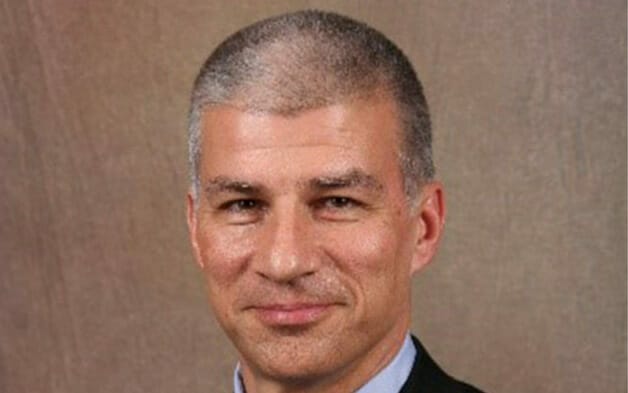
“Combined, we expect these programmes to save over $1 billion in fees over the next ten years,” says Craig Husting, CIO of PSRS/PEERS. “Private equity co-investment and private credit direct lending have become major portfolios for us, and we believe they have already and will continue to offer significant value.

We like the no fees no carry aspect of the co-investment and credit direct lending strategies, and right now we are seeing great deal flow. The performance is as good if not better than performance in our broader private markets portfolios.”

The strategy is the latest seam within Missouri’s bold push into private markets where the fund now targets a 40 per cent allocation (up from 35 per cent) split between private equity (21 per cent) real estate (11 per cent) and private credit.

Long-term, Husting expects approximately half of the private credit allocation to be in the direct-lending programme. Private equity co-investment currently represents approximately 15 per cent of the private equity portfolio but this is also set to grow.  “Long-term, we expect this to grow to approximately 25 per cent of the total private equity portfolio,” he says.

Indeed, private markets now play an essential role in Missouri’s ability to hit a high 7.3 per cent target return. “We expect our private markets program to strongly supplement the long-term investment returns of our System.”

Sponsored Content

The five-year annualized return for the period ending June 30, 2022 was 8.63 per cent or 8.44 per cent net of all fees and expenses. This exceeded 80 per cent of peer group funds as defined by the Wilshire TUCS universe of public pension plans with assets in excess of $1 billion while Missouri also took less risk than approximately two-thirds of comparable public funds.

Team spirit

Off the back of the co investment and direct lending programme, the in-house private markets team has now grown to ten people. “It’s a much more labour-intensive process than picking GPs,” says Husting who describes how the in-house team conduct deep dive analysis of the deal flow where being able to turn down investments is just as important as seizing opportunities. Missouri’s back-office team have also grown, responsible for monitoring co-investment cash flows coming in and out of the portfolio as well as tracking valuations on a quarterly basis. “Co-investment/direct lending as part of private markets has been a major growth area for our team,” he says.

Private credit

PSRS/PEERS first began investing in private credit direct lending in 2019 in opportunities developed through private equity relationships. “As our GPs purchased companies and financed debt on those companies, we were able to get a slice of the debt,” he says, adding the benefits of the allocation come via shorter duration investments and less risk that private equity. “In private equity, we look for returns in the high teens compared to high single digits in private credit.  We primarily invest in first line debt within our direct lending program with no leverage.”  Moreover, it remains a less crowded investment space since banks exited in the wake of the GFC and fewer public pension funds compete for assets.

Risks

The decision to increase the allocation to private markets was preceded by a detailed liquidity study. This involved stress testing the portfolio based on a number of market scenarios to ensure the pension fund could meet its benefit payments and capital calls in all environments. “The results of the study supported an increase in private markets,” says Husting. “The Board, staff and our external consultant were fully aligned in the decision.”

Board buy-in has been a particularly vital part of the process, nurtured by education around private investments, transparency and the gradual building of confidence. Given the amount of money ploughing into private markets he admits concerns about demand pushing prices up. But counters that opportunities in private markets are also growing compared to ten years ago.

Diversification within the portfolios is also essential. In private equity PSRS/PEERS won’t allocate small dollars to small funds and large dollars to large funds. Instead, each manager, from buyout to growth or venture, has the same bite size, typically around $60 million. Although it would be easier to give large allocations to bigger teams, he says some of the small private equity firms can produce as good if not better returns over the long term. “Our priority is the best manager,” he says.

PSRS/PEERS has been with the majority of its managers (94 in private equity) for ten years in a selection process that is based around GP funding cycles – in public markets manager selection can take up to 18 months. It’s a longevity that is also mirrored in PSRS/PEERS’ own investment team. Husting has been CIO for 23 years and six of the investment team have been in their roles for 15 years, anchored by PSRS/PEERS strong mission and culture, and incentivised by the  opportunity to invest boldly with limited  constraints. “We have the ability to invest in  relatively innovative structures which keeps the team energised. ”

Hedge funds

Alongside direct lending and private equity co-investment, Husting also voices his enthusiasm in the current investment climate for Missouri’s hedge fund allocation. It sits in the 60 per cent allocation to liquid public markets and is currently overweight at 9 per cent of total AUM compared to a target allocation of 6 per cent. In today’s volatile market of rising inflation and interest rates he has no plans to pare back.

In the year ending June 30th PSRS/PEERS hedge fund allocation returned zero while Treasury bonds declined 9 per cent and global equity declined almost 16 per cent. Husting was happy with the result. “We were pleased that our hedge fund portfolio protected on the downside in a difficult market, ”he says. “As market volatility continues to increase, we think it’s a good environment for hedge funds to offer value.”

PSRS/PEERS has an in-house staff that selects and monitors external managers in a stand-alone program with no fund-of-fund managers. This comprises around 16 managers in 21 assignments targeting a a beta of approximately .35. A second hedge fund portfolio, established in 2006, is an alpha overlay on the S&P 500 comprising 11 mandates with 9 managers.


Leave a Comment

How CPP is evolving risk management for a faster, more interconnected world

How CPP is evolving risk management for a faster, more interconnected world

In an environment where multiple risks are emerging and their effects are compounding on the portfolio, CPP Investments' chief risk officer Priti Singh says the $572 billion fund is rethinking risk management from the ground up, shifting from reaction to preparation and embedding risk thinking earlier in investment decisions. She speaks to Amanda White about the fund's risk approach.

Sort content by

San Francisco’s Alison Romano makes her mark

Over a year into her role as executive director and CIO at SFERS Alison Romano gives the low down on how she approached her new role, how she is reviewing the absolute return allocation and how leadership involves more listening and asking questions than speaking.

NBIM: Listed and private real estate is all the same in the long run

The differentiating characteristics of unlisted and listed real estate diminish over time according to new research by Norges Bank Investment Management, supporting the sovereign wealth funds’ unique combined strategy for real estate that sees both private and listed sit in the same team.

CalSTRS looks at big picture with total portfolio function

The $315 billion CalSTRS is looking to build a top-down portfolio function to better incorporate liquidity management alongside portfolio construction and to consider how it can better deal with often lumpy cashflows to maximise returns, while continuing to keep a tight rein on risk.

Future Fund jolts out of ‘set and forget’ mode

Australia’s sovereign wealth fund has handed mandates to external active managers and built a dedicated treasury management function, six years after going all-in on passive index strategies. It is is also on the hunt for early stage venture opportunities as it continues to forecast challenging conditions and higher persistent inflation.

What drives success at CPP Investments’ giant PE portfolio

Size and scale are not always advantages. Against the backdrop of tougher market conditions, CPP Investments' global head of private equity Suyi Kim says successfully managing what could be the world’s largest private equity allocation a program will depend on successfully managing the large team.

Finnish fund Elo’s CIO reveals portfolio plans

Hanna Hiidenpalo, Elo’s CIO discusses progress around internal management, the impact of Finnish equities on the portfolio, and the fund’s sustainability program which includes a target of carbon-neutral energy use in direct real estate by 2027. 

Previous



