
Managing volatility and inflation: Constant rebalancing shores up UK’s lifeboat fund

The £31.2 billion Pension Protection Fund runs one of the UK’s biggest LDI portfolios shaped around a highly sophisticated, internally run strategy, more adjacent to a bank’s trading book than a pension fund.

The lifeboat fund, which was set up in 2005 to manage private sector defined benefit pension funds of insolvent employers, splits its portfolio roughly 50/50 between liability hedging and growth allocations. In the hedging allocation, it actively hedges 100 per cent of its interest rate and inflation risk so that its exposure is continuously rebalanced and the fund effectively re-states its liabilities on a weekly basis.

It is a level of control that has proved essential during recent gilt and inflation volatility because of the conflict in the Middle East and now political instability in the UK, allowing the fund to manage the markets in real-time and adjust the portfolio accordingly.

The team has focused most on managing inflation volatility that is being driven by the sudden shortage of the supply of key commodities, rebalancing the hedge to sell when inflation rises, and buy when it falls to better monetise its position.

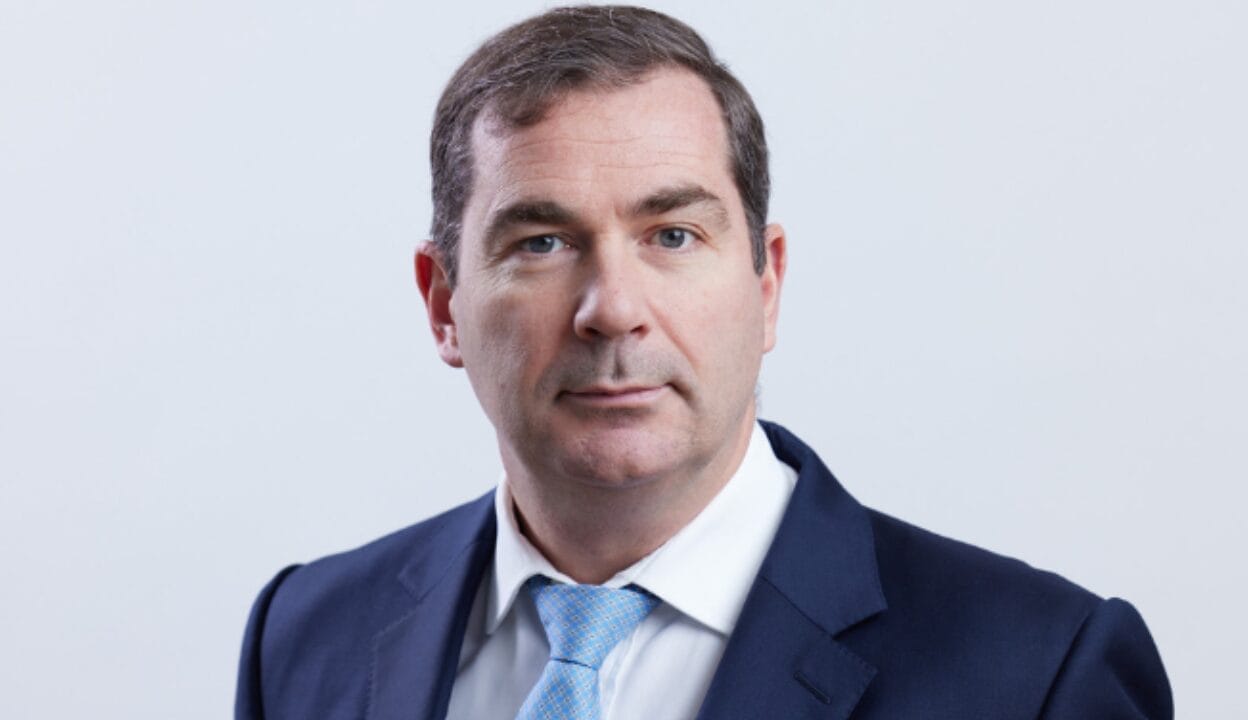
“The key area of interest has been our inflation hedging strategy,” says chief investment officer, Barry Kenneth, who says the ability to rebalance dynamically is a result of having a dedicated in-house team managing the strategy and best-in-class systems to support it. “Relative to other insurers and pension schemes, we run quite a dynamic hedging strategy, rebalancing on a weekly basis.”

However, he says recently the pension fund has rebalanced more frequently than that as markets gyrate on every news story or tweet.

Sponsored Content

The market’s sensitivity to each twist and turn has made it challenging to hold any views with a strong conviction so strategy is “close to home.”

However, with the prospect of a full-scale regional war fading, the team believes the range of possible outcomes is seemingly narrowing. As such, Kenneth says market volatility should ease over time, and managing the LDI portfolio will gradually turn back towards focusing on the impact of higher energy prices alongside more domestic matters.

Here he has a particular eye on the potential for inflationary wage settlements but believes that on balance, the softening in the UK labour market over the past 18 months suggests that wage settlements this year are likely to be more muted.

It’s one of the forecasts that is feeding into the team’s belief that, like other investors, the Bank of England is unlikely to aggressively hike rates and opens up a path for monetary policy makers to resume rate cuts in late 2026 or 2027.

“Market pricing for policy rates at the end of 2027 of around 4 per cent looks too high to us.”

Although less volatile than inflation, gilts have also experienced a level of volatility unseen since the mini Budget crisis in 2022. However, Kenneth says current levels haven’t matched that period when many LDI investors in swaps scrambled to secure enough eligible collateral to cover margin call.

There is no such risk today, he says.

Gilt yields have risen sharply since the start of March, but the largest moves have been in shorter maturities most sensitive to changes in interest rate expectations. Twenty-year yields (which are a better approximation of LDI holdings) have risen by around 0.50 per cent and remain below the last peak.

“This helps to explain why there are no signs of market strain in terms of repo markets or availability of collateral for margin calls: the moves are well below the sizes that either the pensions regulator and Bank of England use for stress scenarios which are between 2.50-3 per cent.”

The strategic asset allocation of the matching portfolio is liability hedging instruments (70 per cent) and long-dated credit (30 per cent).

Investment performance

In the 50 per cent allocation to growth, the PPF is actively looking for opportunities in short duration fixed income where Kenneth believes there is an opportunity to buy at attractive yields.

The team also continues to hold a positive view towards risk assets and is currently marginally overweight the 8 per cent strategic allocation to equity.

“This is a theme that we believe will remain key in the next years, as investors navigate changes in geopolitical trends and new macroeconomic policies, looking for pockets of dispersion in geographies and asset classes where active security selection might add value.”

Still, Kenneth acknowledges that conditions are very different today, primarily because economic activity is weaker, wage growth lower and the labour market a lot looser. It’s an outlook that feeds into the house view that central banks are unlikely to embark on another hiking cycle and the belief that major adjustments to the portfolio are unwarranted.

inflation linkage in alternatives

Around half the growth allocation is invested in alternatives spanning private equity, infrastructure, farmland and agriculture via single transactions and co-investments as well as funds. Infrastructure and timberland provide another important inflation hedge because their value, and inflation linked income streams, are directly linked to real world economic activity.

“Real assets have historically shown a positive correlation with inflation and low correlation with traditional equities and bonds, making them an effective hedge and a stabilising diversifier in an investment portfolio,” he says.

Infrastructure, housing, and growth equity also count as investment in UK productive finance at a time the country’s pension funds are under pressure to invest more at home. The Mansion House Accords ask that at least 5 per cent of pension fund assets be allocated to UK private markets in an initiative the government hopes will push billions into UK companies, infrastructure and property. 

Elsewhere it has set up a new investor-led partnership between 20 of the UK’s largest pension funds and insurers called Sterling 20. A more prescriptive initiative, the Pensions Schemes Bill, currently working through Parliament, also lays the groundwork to allow regulators to force DC schemes to invest in specific assets like private equity and debt or property.

Kenneth sees particular opportunities in transition infrastructure, arguing that the conflict in Iran reinforces the long-term case for alternative energy systems that are domestically produced, electrified and less geopolitically exposed in a convergence of security, cost and climate objectives.

“Renewed threats to critical infrastructure and maritime chokepoints, notably the Strait of Hormuz, once again expose the strategic vulnerability associated with fossil fuel dependence,” Kenneth says.

That said, he believes that the energy transition will suffer the short-term impact from higher costs across energy-intensive value chains, including aluminium and other critical materials used in renewables, grids and transmission. Moreover he notices that  some countries have responded to supply stress by extending or reverting to coal generation to preserve affordability and security.

“Rather than accelerating deployment immediately, these combined effects risk slowing parts of the transition by weakening project economics, tightening financing conditions and complicating supply chains,” he concludes.

Leave a Comment

How CPP is evolving risk management for a faster, more interconnected world

How CPP is evolving risk management for a faster, more interconnected world

In an environment where multiple risks are emerging and their effects are compounding on the portfolio, CPP Investments' chief risk officer Priti Singh says the $572 billion fund is rethinking risk management from the ground up, shifting from reaction to preparation and embedding risk thinking earlier in investment decisions. She speaks to Amanda White about the fund's risk approach.

Sort content by

PFZW’s IC chair explains why cutting equity names hones impact

Professor Dirk Schoenmaker, investment committee chair of the €250 billion ($291 billion) Dutch healthcare pension fund Pensioenfonds Zorg en Welzijn (PFZW), whose expertise has helped inform its "3D" investment strategy, explains why less is more in an equity allocation with fewer stocks.

NBIM on AI cultural and organisational integration

By the evening of August 7, the same day GPT-5 was launched by Open AI, NBIM had it available to the entire organisation in a secure and scalable way. Joined on stage by CEO Nicolai Tangen at this year's Arendalsuka, the team behind AI integration explains their aggressive approach.

Dynamic allocation earns alpha: CalSTRS’ one fund approach pays off

In an interview with Top1000funds.com, CalSTRS chief investment officer Scott Chan says the one fund approach has already started to produce alpha. Sarah Rundell looks at the drivers of success including the ability to move more dynamically and cross-asset class collaboration to take advantage of opportunities.

SWIB: Why real estate investors are still talking about the pandemic

The State of Wisconsin Investment Board's head of real estate Jason Rothenberg shares his views on how to address the enduring challenges for office investors. It involves a building-by-building investment approach to avoid assets at risk of conversion or demolition.

APG’s infra ramp-up: APAC markets in focus

APG Asset Management, Europe’s largest pension investor, is set to double its global infrastructure allocation in the next five years and is stepping up its push into infrastructure assets in the Asia Pacific with a focus on Australia, India and Southeast Asia and opportunistic investments in Japan and Korea.

BCI: A masterclass in private debt

British Columbia Investment Management Corporation has been investing in private debt since 2018. Global head of public markets Daniel Garant, whose team oversees private debt, articulates the secrets of success at a time of fierce competition for returns as more investors pile into the asset class, tightening credit spreads.

Previous



