
Inside NEST’s ‘serendipitous’ deal for IFM stake

Faced with the problem of deploying the £500 million ($645 million) of contributions that pours into its funds every month, the UK’s NEST did something that few asset owners have done: buy a stake in an external asset manager.

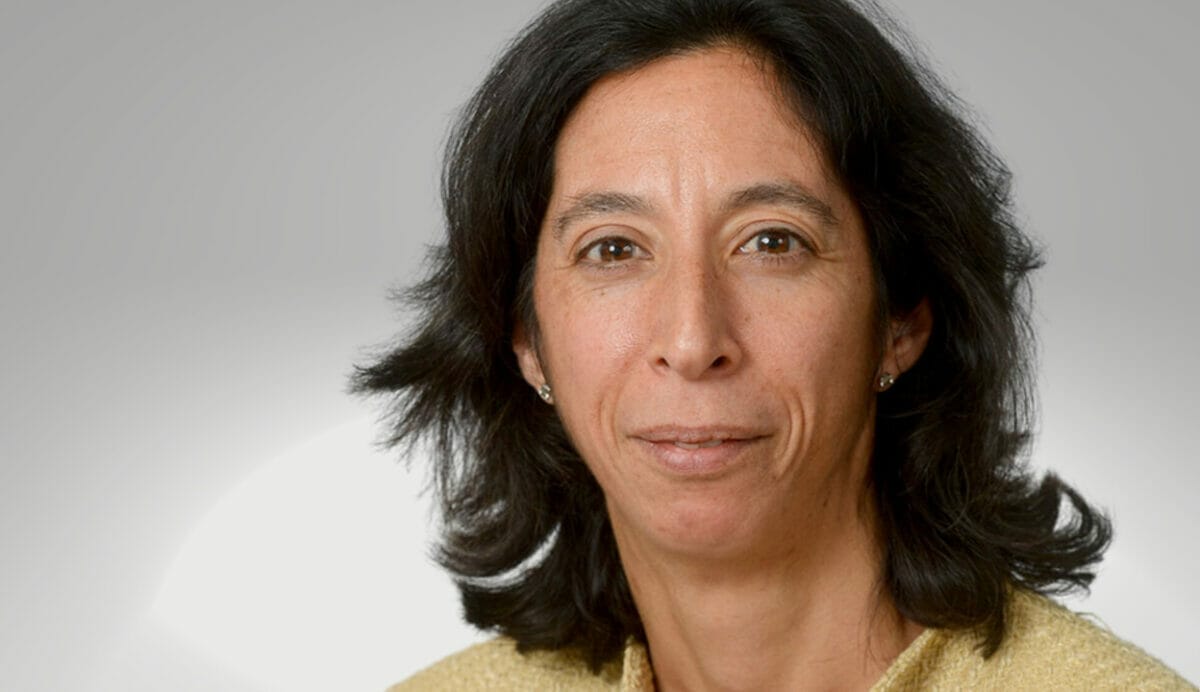
IFM Investors was established by a consortium of 16 Australian industry superannuation funds in 2004, and now manages circa $145 billion in private and public market investments on behalf of more than 700 institutional investors around the world. The deal was “serendipitous”, says chief investment officer Liz Fernando.

“Given the rate of growth we’re seeing we’re having to run really hard just to stand still,” Fernando tells Top1000funds.com. “So it was pretty obvious that we needed other mechanisms to help us get deployment capacity increased in a thoughtful and high-quality way.”

The strategic partnership is multi-faceted and allows NEST a unique vehicle to act on  its private investment ambitions. With the aim of increasing allocations to private markets to 30 per cent of the total fund, NEST has said it will allocate £5 billion through IFM by 2030 across infrastructure, debt and private equity. It is expected the assets of the fund will more than double to £100 billion by 2030.As a large shareholder, NEST gets to co-design products and will receive “founder’s rates” on new products.

Preferential fee structures are a feature of the institutional investment management landscape. But while NEST declined to comment on its fee arrangements, sources say that it can expect an even steeper discount on the global infrastructure debt fund it’s currently developing with IFM  than most managers would bring to even the biggest pension funds – though for new products in areas of the market where fees have already come down to a few basis points they’ll get the rack rate.

Other founding shareholders receive heavy discounts on IFM’s flagship global and Australian infrastructure products, paying less than 50 basis points with no performance fee (given NEST was not involved in seeding or designing these products, it will pay the rack rate).

Sponsored Content

The founder’s rates on these products are so attractive that a consideration in several of the Australian superannuation fund mergers that have taken place over the past few years has been whether they would pass on to the successor fund (Top1000funds.com understands the rates are generally transferable).

For NEST, the stake in IFM is held in its private equity portfolio and it will receive a dividend if IFM elects to pay one. Recent history has seen other owners encourage IFM to reinvest capital in the business to accelerate future growth rather than paying it out as dividends, which NEST is “supportive” of.

It’s another instance of the growing trend of big pension funds taking stakes in asset managers. The Oxford endowment and Commonwealth Superannuation Corporation (CSC) recently bought into a new sustainable credit business launched by Osmosis IM, after previously investing in Osmosis’ funds. In September 2024, West Yorkshire Pension Fund bought a 25 per cent stake in boutique natural capital manager Rebalance Earth, while the California State Teachers’ Retirement System invested with and took a strategic stake in “climate-as-an-asset-class” manager Just Climate as part of its collaborative model – which prioritises insourcing of asset classes like equities and fixed income, and partnering with external managers for co-investments –  in 2023. And back in 2021, Temasek took a minority stake in natural capital manager Leapfrog.

“Taking an equity stake is a long-term commitment and not one we took lightly,” Fernando said in an email response to a follow-up question. “As you’d expect, we considered multiple aspects of the investment as part of our due diligence – financial, regulatory, reputational, alignment on the ongoing management and stewardship of assets. Ultimately, particularly given the nature of IFM and our shared values, we were comfortable to proceed.”

Fernando believes that NEST fits neatly into the IFM shareholder register because it looks pretty much like everybody else there: defined contribution, profit-to-member, with a long investment horizon and a burning need to deploy more money. Other IFM shareholders include the $230 billion AustralianSuper, Australia’s largest superannuation fund, the $189 billion Australian Retirement Trust and the $63 billion Hostplus.

“We weren’t competing with other suitors because IFM was quite specific about what they were looking for,” Fernando said. “They were interested in adding a shareholder, but they wanted a like-minded shareholder and there’s not that many NESTs out there. It’s quite unique; it sits in the UK but it looks like a superannuation fund, for all intents and purposes, more than any other institution in the world.”

With a big global presence, and 13 offices around the world, IFM, which is headed by David Neal, former boss of the Future Fund, was already growing its UK presence. It will likely get a boost from its new shareholder as Fernando believes that the products IFM co-develops with NEST will be of interest to other DC plans and improve its distribution in the UK.
NEST sees the move as an extension of the strategic partnership model that it has pursued with other managers – though that pursuit has not, in the past, extended to buying a stake in them.

“We have few managers and we see them as partners,” said Rachel Farrell, NEST head of public and private markets. “We stick with them and they grow with us. If a manager isn’t particularly capital constrained, that’s a very useful way of having long-term capital that’s going to grow, because we tend to set up evergreen structures where we continue to put capital into that structure and it allows them to potentially fund multiple years of investments.”

Leave a Comment

How CPP is evolving risk management for a faster, more interconnected world

How CPP is evolving risk management for a faster, more interconnected world

In an environment where multiple risks are emerging and their effects are compounding on the portfolio, CPP Investments' chief risk officer Priti Singh says the $572 billion fund is rethinking risk management from the ground up, shifting from reaction to preparation and embedding risk thinking earlier in investment decisions. She speaks to Amanda White about the fund's risk approach.

Sort content by

BCI: A masterclass in private debt

British Columbia Investment Management Corporation has been investing in private debt since 2018. Global head of public markets Daniel Garant, whose team oversees private debt, articulates the secrets of success at a time of fierce competition for returns as more investors pile into the asset class, tightening credit spreads.

A rock and a hard place: GEPF on the challenges of transitioning coal

Reducing exposure to the risk in coal is particularly challenging for South Africa’s $122 billion Government Employees Pension Fund. ESG manager Belaina Negash explains the complexities due to the industry's tie with the economy and the fund's transition framework.

Mid-market, asset-backed private credit shines for growing Asian allocators

Asia's growing investors, including university endowments and family offices, are hunting for returns in lower-middle market and asset-backed private credit. In an interview with Top1000funds.com, head of Asian clients at the $92 billion OCIO Cambridge Associates, Prabhat Ojha, talks manager selection and Asian allocators' rising appetite for alternatives.

France’s FRR ups risk in line with longer term investment horizon

Fonds de reserve pour les retraites (FRR), France’s €21 billion ($24 billion) pension reserve fund, has increased its weighting to equity in line with a new strategic asset allocation to reflect the investor's longer return horizon. It is also eyeing more unlisted assets including private equity, private debt and infrastructure.

AP4: Why a dynamic, shorter term allocation is paying off

Volatile markets have provided a rich hunting ground and opportunistic best ideas have come thick and fast for AP4’s new five-pronged global allocation made up of systematic equity, currency and rates, asset allocation, hedge funds/external mandates and analysis. Magdalena Högberg explains the risks and opportunities of the best ideas allocation.

University of California: Less is more and simple is better in investing

Jagdeep Singh Bachher, the CIO who oversees the University of California's $198 billion in pension and endowment assets, says that he wants to keep investment simple as the fund removed its hedge fund allocation completely, conceding "it’s not one of the things we are good at doing".

Previous



