
How NBIM spots portfolio managers’ biases using AI

Norges Bank Investment Management (NBIM) is using an internally developed engine powered by AI to monitor and measure its portfolio managers’ skills, aiming to identify behavioural biases, improve decision making, efficiency of trades and save costs.

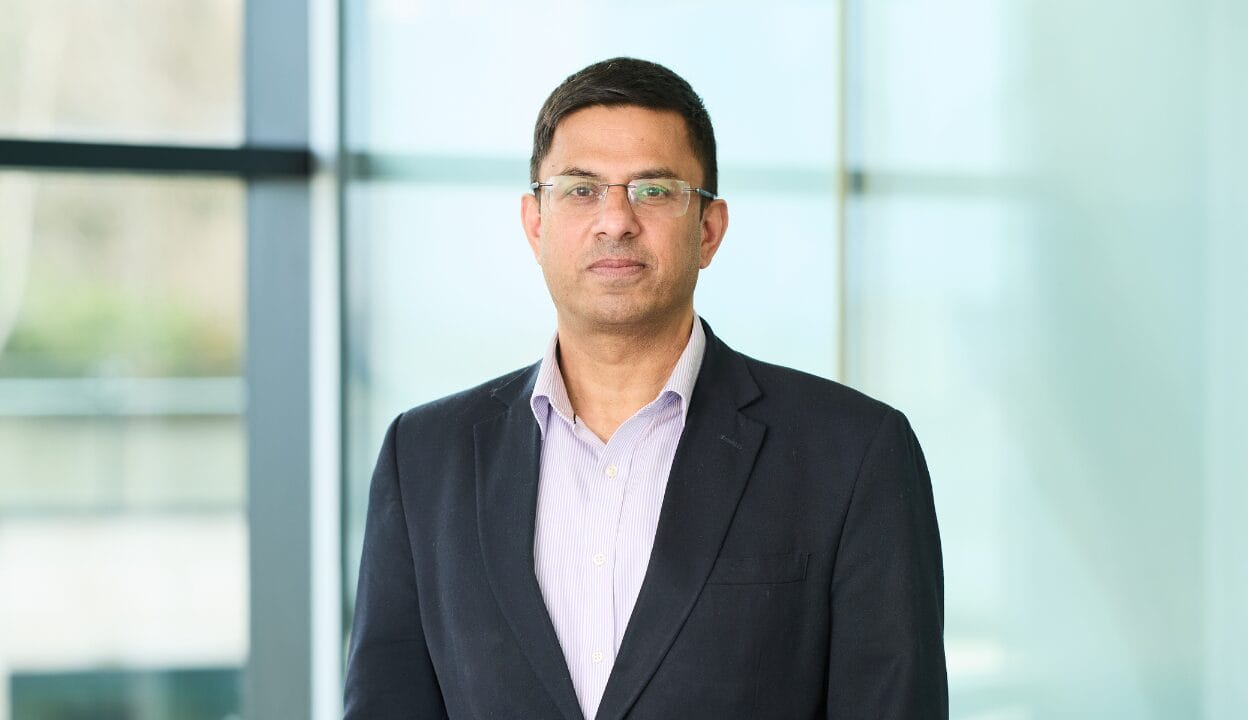
The system, called the Investment Simulator, currently covers all internal active portfolio managers in NBIM’s sector strategies as well as external fund managers of the $1.8 trillion investor. The result is information that helps them reflect on their trading patterns and identify strengths and weaknesses, according to NBIM head of Singapore and co-head of equity trading Sumer Dewan.

As the world’s largest investor, the fund makes around 49 million transactions per year, trading around the clock with its Singapore, Oslo, London, and New York offices’ coverage.

NBIM started expanding the tool’s usage in equity trading as a part of its three-year company plan which began in 2023. It stated at the time that the goal is to “promote psychological safety so that our portfolio managers dare to be contrarian and avoid herd behaviour”.

The tool provides a behavioural score of stock pickers based on historical order records. While Dewan declined to identify specific factors the scorecard tracks, one basic example is whether a portfolio manager holds onto their losing companies for too long, or their winners for too short.

Eventually, the fund wants the tool to become “agentic”, giving more real-time feedback and suggestions, instead of just after-the-fact.

Sponsored Content

“[The Investment Simulator] will be there soon… the speed at which this can be made [happen] is just incredible,” Dewan tells Top1000funds in an interview.

“Even where I sit, when a new trade comes in, I see who has sent it – let’s get a behavioural analysis of them.

“[It can also] tell me everything I need to know about this company very quickly, discuss current market conditions, and make recommendations of the best way to transact.”

There is also another version of the scorecard for NBIM’s traders and index portfolio managers, who have shorter trading time horizons compared to portfolio managers in sector strategies.

“But both scorecards are multidimensional in nature – timing, sizing, positioning, trading around and responding to events,” Dewan said.

“Traders also have tremendous discretion about how they trade so there are lots of variables we can look into.”

AI integration fund-wide

NBIM is well-advanced in its integration of AI in investment processes. The fund’s chief executive, ex-hedge fund manager Nicolai Tangen, is leading from the top with a clear message that using AI is not an option, but a must.

The fund has “AI ambassadors” scattered in different offices who Dewan says are volunteers spreading knowledge about the technology and helping people “unlock the door”. Departments and investment units in the firm are also encouraged to conduct their own AI projects with the ambassadors’ help.

Claude, a family of AI models and assistant developed by US firm Anthropic, is the main AI tool at NBIM, with the chatbot integrated across all devices in the organisation.

Dewan says that through the help of the internal ambassadors, he has transformed how he uses the tools and the information they provide, with tailored reporting and enhanced project management including recommendations.

There is the obvious cost-saving benefit of AI, too. For example, the technology can reduce unnecessarily trades by predicting future orders and opportunities to transact internally.

As the world’s largest sovereign wealth fund with 71.4 per cent of its AUM invested in equities, NBIM has a significant passive exposure and hence the need for constant rebalancing.

Tangen previously touted that the AI tool is already shaving $100 million off the fund’s trading costs every year and the ultimate target is to save $400 million, but Dewan says he “wouldn’t be surprised if we went beyond that number”.

“[With] the size of the fund and the holdings, there is a significant amount of internal crossing… that can be done – that itself is cost free,” he says.

“So right then and there, you are able to – by bringing your left and right hand talking together – fully analyse, anticipate and predict how your inventory looks and how it will look.”

These tools are still a “work-in-progress” but being able to test their effectiveness in a risk-controlled environment helps.

“We don’t just think our way forward, we build our way forward. We prototype, and that is very much in the DNA of the firm,” Dewan said.

Leave a Comment

NZ Super cuts benchmark return expectation on US valuation concerns

NZ Super cuts benchmark return expectation on US valuation concerns

A view that the US stock market is overvalued and equity risk premia will be lower over the long term has driven New Zealand Super to lower the return expectations for its reference portfolio following its recent five-yearly review of the benchmark. Co-chief investment officer Brad Dunstan also flags underweight commodity exposure as an area to address and explains why the fund remains sceptical of illiquidity premia despite seeing a growing case for private markets.

Sort content by

Outward bound from the Finnish

Finnish pension investor Ilmarinen is exploring whether to send a representative to South America as it intensifies its emerging market operations. Timo Ritakallio, who heads investment at the €29-billion ($39-billion) fund, says it is looking to access “more and more emerging market opportunities”. In January Ilmarinen sent a senior portfolio manager to run a “one-man

Super, apart from the REST

Jo Townsend, the chief investment officer at REST Industry Super, says the fund is not only investing according to a long-term horizon, but is also willing to depart from the pack when making investment decisions. “Our fundamental investment belief is that it is possible to add value through active investment management, and we do that

Danica maneuvers towards infrastructure

Danish pension provider Danica is upping the alternatives portion in its roughly $57-billion portfolio as it looks to boost returns within the country’s strict solvency framework. Alternatives already make up over 4 per cent of the $33-billion Traditional Fund, Danica’s largest and most conventional pension pool, double the proportion the asset class took at the

Billion-dollar beef-up at Barclays’ OPAM

If Tony Broccardo, head of Oak Pensions Asset Management, the investment arm of the £23-billion ($35.6-billion) pension fund for employees of London-headquartered bank, Barclays, wasn’t a fund manager he would have been an architect. But Broccardo has applied similar skills of stress testing, planning and making something structurally secure to the return-seeking fund, one of

Dutch fund bolsters bonds, chills on bricks

Things are suddenly looking cheerful again in the world of Dutch pensions. The country’s famous tulip fields might not be set to bloom until April, but investors already have a harvest to delight at from a good year of investing. For instance, Hans de Ruiter, chief investment officer of the €2.5-billion ($3.36-billion) TNO pension fund

How is the Tesco fund faring aged one?

According to the latest figures, an ambitious turnaround plan at the United Kingdom’s biggest supermarket chain, Tesco, has helped reverse falling profits. Last year the retailer, one of Britain’s largest private sector employers and a landmark in every town since founder Jack Cohen opened his first store in North London in 1929, also changed strategy

Previous