Hermes’ message: don’t be investment banker ‘wannabes’

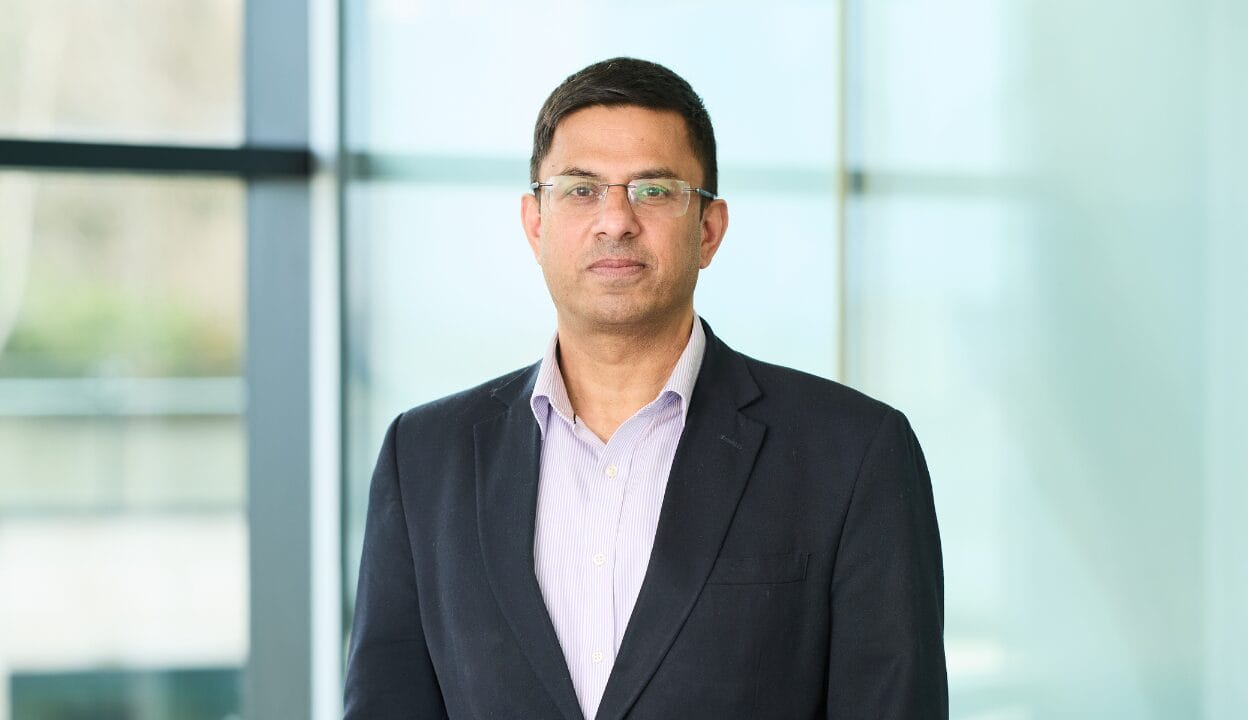
Funds managers should get back to their roots, says Saker Nusseibeh (pictured), the investments chief of the £32 billion ($50.3 billion) BT Pensions Scheme’s funds management arm, and renew their long-term aim of delivering risk-adjusted alpha and stop being “investment banker wannabes”.

Nusseibeh, who oversees the investment strategies run by Hermes Fund Managers, which is fully owned by BT Pensions, says the pensions industry should focus on the more realistic aim of generating sustainable risk-adjusted returns, rather than aiming to shoot the lights out, time after time.

He says the ability to generate risk-adjusted returns is not rare and usually available to discerning investors, and that investors should demand their active managers show more conviction.

The average information ratio across the industry was 0.5, he says, and “if you’re taking active fees, you need between 0.5 and one, and I’d like it to be near one”.

With the exception of its quantitative-plus team, Hermes aims to be a house of active managers consistently delivering risk-adjusted, “sustainable” alpha across its equities, alternatives, unlisted assets and engagement services.

In doing so, the manager is working to bring back an older style of institutional asset manager and client relationships.

Sponsored Content

Nusseibeh says: “20 years ago, when I started in the business, (managers) said they looked after people’s pensions. If you talk to funds managers today, they talk about highly specialised products.

“If you look at the crisis of 2008, sub-prime and easy credit were not the reasons why [it happened]: the crisis happened because funds managers abrogated their fiduciary responsibility to clients.

“Funds managers knew that credit default swaps were reinsurance. Any funds manager worth their salt knows reinsurance needs an asset base. Even when investment banks were selling this rubbish, why didn’t (managers) speak out?”

Over the years, managers’ sense of responsibility has been lost, so that “if you sell a client a product, then it is ‘buyer beware’.”

He says the “crusading” nature of these comments is justified: “Funds management is an honourable profession – you’re looking after people’s retirement money. Not rich, but hard-working people,” he said, adding the payout to many of the BT Pension Scheme’s defined benefit members is about £8,000 each year.

“Somehow the industry got sucked into becoming investment banker wannabes.”

When institutional appetite for high returns overpower the aim to deliver risk-adjusted return, it often originates within clients and is then encouraged by managers, he says.

“But if clients forget what long-term returns mean, it is our job to remind them.

“If I believe that an asset class is over-valued, and you want to invest in it, I should say: ‘This is the wrong time – you should take money out’.”

It’s not difficult for Hermes to operate this way. It has to. Its owner, which supplies £18 billion of its £25 billion in funds under management, demands this feedback and long-term view.

With a stable pension fund owner and little pressure to raise assets or deliver big returns quarter-in, quarter-out, Hermes is able to replicate this relationship with other investors.

Nusseibeh also believes the role of the funds management CIO should change from a manager of investment staff or asset allocator to an internal consultant to clients.

“That is the future – running an investment office that is there to understand risk and to help managers produce repeatable alpha. This is what CIOs should become.”

To this end, Hermes has built an internal risk system to quantitatively dissect portfolios, and understand returns on a fundamental basis. Its risk management staff monitor portfolios to judge whether expected returns will stray outside forecasts as the market environment evolves.

Their aim is to look for “unintended consequences” of changes in markets, such as interest rate rises, across portfolios, Nusseibeh says. They aim to go further than mean-variance optimisation models, which Nusseibeh views as flawed because the historical data they draw on is too limited.

“In the last 12 years – which is where the data takes you – you get big overweights to hedge funds, which provided a correlation of 0.85 in the crisis, he says, in addition to private equity and increasingly popular emerging markets.

“It’s common sense – you go where there is the least crowded trade.”

Mean-variance models also favoured bonds as “risk-free assets, and you don’t want to put money into bonds (now) because yields are going down”.

Recently, the manager has been approached by some investors to develop tailored strategies that draw on the expertise in its boutiques to counter specific problems.

For example, in Europe, governments are asking institutional investors to de-risk – “which means buy bonds”, he says. But if quantitative easing results in inflation and interest rates rising to 3 per cent to the detriment of bondholders, what could they do to preserve capital?

Interestingly, Nusseibeh added that Hermes is in discussions to sign a frontier markets manager, and is mulling a search for an Asia-region manager – “not for this cycle, but because it’s a region, and it’s large and interesting”.

2 responses to “Hermes’ message: don’t be investment banker ‘wannabes’”

Leave a Comment

The Austin advantage: Texas Teachers talks optimism, innovation and growth

The Austin advantage: Texas Teachers talks optimism, innovation and growth

Jase Auby, TRS's celebrated CIO, explains why TPA doesn't fit with its culture; why community push back on data centres could turn out to be an investor advantage, and argues the case for continuing to invest in fossil fuels. Top1000funds.com sat down with the CIO in his Austin office for an all-encompassing conversation.

Sort content by

Harvard’s sustainability plan

Last month Harvard Management Company was the first US university endowment to sign the PRI. It has also appointed its first vice president of sustainable investing as it seeks to incorporate ESG considerations in its decision making. So how is HMC integrating ESG in its portfolio?   Harvard University has taken a stand for sustainability.

Better beta bets pay off for UTAM

The $6.6 billion University of Toronto Asset Management made some significant active tilts last year resulting in the return on the university’s main portfolio exceeding target return by about 10 per cent. Amanda White spoke to president and chief executive, Bill Moriarty.   Last year was a reasonably easy environment in which to make better

UPS pension fund’s opportunistic future

The United Parcel Service corporate pension fund is finalising an asset liability study this year which will result in a new strategic asset allocation. The $28 billion US fund, typically has a lower allocation to fixed income than its peers and has a reasonably aggressive portfolio for a corporate defined benefit fund. It is a

Centrica focuses on dynamic decision making

For the Centrica pension fund, which adopts a liability-matching portfolio approach, last year was busy for appraising new opportunities arising out of the fact banks are no longer lending. This year its focus is on being more dynamic. Amanda White spoke to chief investment officer of the £5.5 billion ($9 billion), Chetan Ghosh. The Centrica

HOOPP’s strong funding status driven by liability hedging

The $51.6 billion Canadian fund, HOOPP, returned 8.55 per cent for the 2013 financial year, exactly half the return of 2012. But it finished the year in a better position than the year before, demonstrating that returns are only half the story. Amanda White spoke to Jim Keohane about the funds liability-driven investment style.  

Australian fund leading the way on real assets

The $15 billion Australian super fund for hospitality workers, HOSTPLUS, has a 10 per cent allocation to infrastructure and is aggressively increasing its allocation to real assets. David Rowley spoke to chief investment officer, Sam Sicilia, about what the fund seeks from real assets.   A quarter of the $15 billion in assets held by

Previous