
Fund braces for geopolitical risk

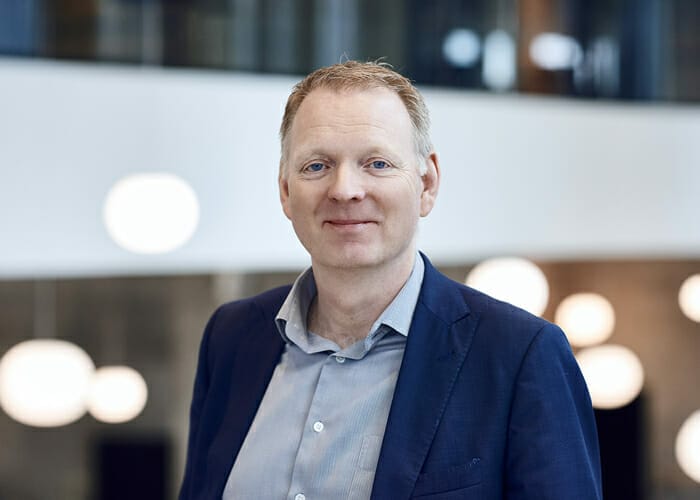
Strategy at Denmark’s $15 billion insurer SEB Pension is focused on building a robust alternatives portfolio within a risk-proofing investment approach, the fund’s chief investment officer, Jørn Styczen, explains.

SEB, a defined-contribution (DC) multi-employer pension provider, offers guaranteed and non-guaranteed DC pensions. Assets under management have increased on the back of growth in Danish demand for non-guaranteed products.

A quarter of SEB’s assets are invested in an alternatives portfolio established in 2000, which has since grown to become one of the biggest allocations to alternatives amongst its European peers. It is here, Styczen explains, where he is prepared to spend parts of his risk and cost budgets, using active external management in allocations to distressed debt, senior secured loans, hybrid mezzanine funds, infrastructure and private equity.

Recent strategies include investing in senior secured loans through 2015 and 2016 while being short high yield, in a bid to protect the fund from geopolitical risk.

“2016 was not the best year to be short high yield and long loans, but loans have protected the fund against geopolitical risk and as the yield spreads currently are nil, loans are very attractive,” he says.

Along with loans, infrastructure is also a big allocation within the alternatives portfolio. Here, Styczen prefers value-added opportunities, rather than infrastructure that “just gives income”, like a toll road. He also favours strategies and managers that go one step further than simply “buying the asset”. An example is SEB’s investment with Copenhagen Infrastructure Partners in a new biomass-fired combined heat and power plant in the UK. The plant is set to generate enough energy for 50,000 homes when complete in 2018.

Sponsored Content

Copenhagen Infrastructure Partners typically taps the mezzanine part of the market; however, Styczen also invests with Global Infrastructure Partners and EQT, where assets are structured more like private equity. SEB received a 30 per cent return from its infrastructure allocation in 2016, due to mature funds “selling assets”. Infrastructure investments have already returned 4.3 per cent in 2017.

Side-cars address fees

The large alternatives allocation makes tackling high fees an ongoing priority. One way to achieve this is through co-investment with SEB’s prime managers, setting up side-car arrangements.

“Our managers increasingly set up a side-car vehicle, whereby we invest, say, $50 million [through] the fund, and $30 million [through] the side-car. It allows us to reduce our fees by 25-30 per cent.”

He adds that because SEB’s total portfolio is already well diversified by asset classes and managers, any loss of diversification from this strategy “is not a problem”.

Styczen says the alternatives portfolio is a stalwart in the face of today’s geopolitical uncertainty and high debt levels, and plans to build the allocation further.

“We have the expertise to commit more to alternatives,” he says. Recalling the global financial crisis, he notes the alternatives allocation withstood the crisis because SEB didn’t have to sell any assets and “all the values came back”.

Along with the 25 per cent allocation to alternatives, SEB has a 25 per cent allocation to listed equities, a 10 per cent allocation to real estate and a 40 per cent allocation to liquid credit, Danish mortgages and government bonds.

Liability management stays in house

Across the fixed income portfolio, SEB has developed a liability matching overlay. This enables managers of SEB’s only active external fixed income mandate to focus on the benchmark.

“When we outsource the fixed income portfolio, we don’t outsource the liability management,” Styczen explains. “We watch it all the time ourselves and adjust our hedge to make sure the duration is in line with our liabilities and expectations. It is much easier for the asset managers if you don’t give them liability targets, you just give them the benchmark.

“Large fixed income allocations are challenging because the returns are so low. This way we can do the duration matching as an overlay.”

The bulk of the equity allocation is indexed, with a derivative overlay, in a low-cost strategy that has allowed the fund largely to eschew active equity management and hedge funds. The exceptions are one active mandate to Danish equities, which accounts for 10 per cent of the equity allocation, plus two active, niche equity strategies.

Styczen has also developed a risk premia program to work alongside the equity allocation.

“Most smart beta or risk premia strategies are correlated to equity; if equity markets fall, you can lose money in a smart beta portfolio, and the strategies are difficult to view as separate asset classes,” he says.

SEB’s solution is to use part of the risk premia program alongside the equity portfolio and replace some equity exposure with short volatility strategies.

“We need something that works better with the equity,” he concludes.

A recent innovation included developing a tail risk-hedging portfolio in response to the geopolitical uncertainty of Brexit and the new Trump administration.

“It was successful but it proved very expensive when there wasn’t any volatility,” he says. “A tail risk hedge doesn’t work if nothing happens.”

Still keen to protect against geopolitical risk, but loath to reduce the equity allocation, and with risk “uncompetitive”, Styczen has now decided to restructure the risk-factor portfolio and add a defensive tilt to make it work alongside the tail-risk portfolio. To this end, SEB is developing a number of defensive strategies that would give a large gain should equity markets fall.

Leave a Comment

Long term lens shields Colorado from private credit jitters

Long term lens shields Colorado from private credit jitters

As concerns in private credit mount, Colorado PERA CIO and COO Amy McGarrity says the pension fund isn’t seeing any strains in its growing allocation to the asset class, arguing that long-term investors are shielded from the risks because they can lock up their capital to weather market cycles.

Sort content by

NYSTRS defends defined benefit funds

The defined-benefit New York State Teachers’ Retirement System is defending its 8 per cent assumed rate of return at a time in the US when the limelight is focussed on pension fund structural issues.    mrec4inarticleinline Sponsored Content scnative1 scnative2 scnative3

ADIA looks to GM for economist

The Abu Dhabi Investment Authority has hired General Motors’ chief economist and director of global economic and industry analysis, Ted Chu, as its chief economist.mrec4inarticleinline Sponsored Content scnative1 scnative2 scnative3

European shocks strike Norway fund

The world’s second largest sovereign wealth fund, Norway’s Government Pension Fund Global, has experienced a material effect of the European sovereign debt challenges, a region where it holds more than half its equity holdings, and the BP oil spill.mrec4inarticleinline Sponsored Content scnative1 scnative2 scnative3

How active management saved the UN

The $32 billion United Nations Joint Staff Pension Fund has outperformed due to a commitment to active management, a willingness to invest away from the trending market, and a realistic target return. mrec4inarticleinline Sponsored Content scnative1 scnative2 scnative3

Chinese whisper over CIC turf wars

The $300 billion China Investment Corporation (CIC) aims to sidestep official barriers to investing in the US by offloading its stakes in home-country banks. The proposal would see the sovereign wealth fund (SWF) relinquish responsibility for the Chinese government’s majority stakes in the country’s largest banks, such as Bank of China, the Financial Times reported.

APG’s Asian strategy

As part of an increasing focus on emerging markets, APG Asset Management, has an increasing interest in emerging markets. As part of that strategy an office in Hong Kong employs 28 staff to cover the Asian region. Amanda White spoke to the president of APG Asset Management Asia, Fer Amkreutz, about the perils and profits

Previous



