
Denmark’s ATP creates new overlays to manage future bond equity correlation

One of Denmark’s largest pension funds, the DKK 712 billion ($103 billion) ATP, is introducing two new overlay strategies in its investment portfolio to better manage unwelcome correlations between bonds and equities that have had a disastrous impact on its risk parity strategy in the past.

New overlays, mostly developed since 2022, will be rolled out through 2024.

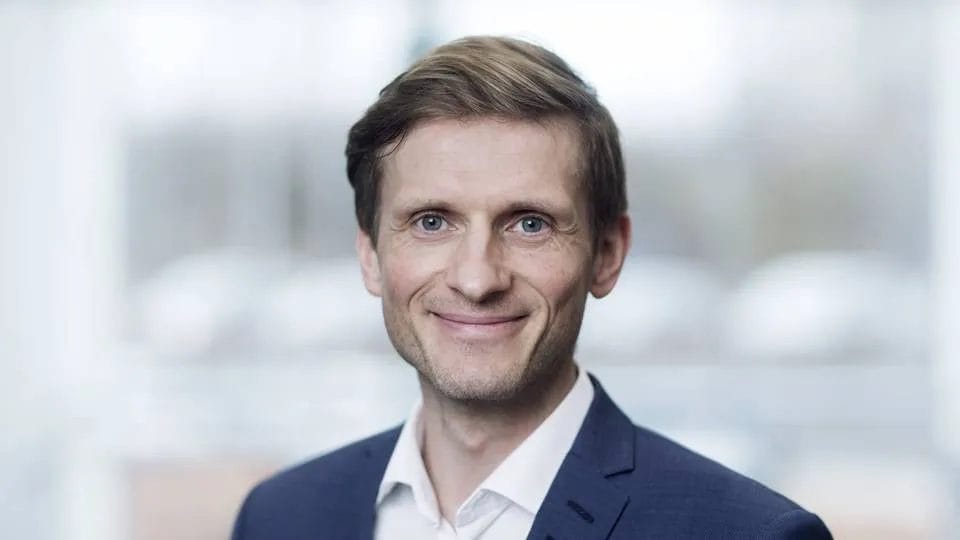
“We have been preparing for the equity bond correlation spikes to happen again. It’s important to prepare for a war during peacetime, and this is what we have done,”  Christian Kjær, senior vice president and ATP’s head of liquid markets, told Top1000funds.com.

Of the two overlays, ATP’s ‘correlation overlay’ draws signals from the market that warn the investment team correlations are changing and ATP risks losing money on both equity and interest rates.

“It sends us a signal to take risk off,” said Kjær. “The overlay flags the beginning of losses in the portfolio, particularly the interest rate portfolio, combined with shifting correlations.” The correlations are measured with intra-day data across different markets so the team can detect correlation shifts as quickly as possible.

The process that combines two key elements, he continues. Firstly, it warns the team about any spike in volatility – which directly increases the risk. Secondly, it highlights any move in the correlations that also changes the risk –aka sending warning bells that any assumption it will get back on equities what it loses in bonds is now in doubt.

Sponsored Content

“In 2022 the volatility came up and the negative equity and bond correlation which is usually our saviour, disappeared. This negative correlation is important for all investors, but for a risk balanced investor like us, it is more important.”

Another, second overlay, will tilt the portfolio when it sees changes in correlations in general. Unlike its sister overlay, which Kjær describes as “a zero-one strategy,”  the second approach is more continuous. It involves constantly trying to manoeuvre and position to adjust for the changes in correlations.

Neither of the new overlays have a large risk budget.

“ATP is humble in its ability to beat the market,” he says.

Kjær acknowledges the new overlays add to the complexity of a portfolio that already relies on pulling multiple levers, and has been criticised for not receiving sufficient compensation for this higher level of risk.

But he argues the small risk budget portioned to the latest strategy tweak doesn’t really change the appearance of the portfolio: the risk level – which is what primarily draws attention to the investment portfolio – is unchanged and the hedge portfolio ensures pensions are safe.

Still, he does stress the overlay strategies require robust digital infrastructure, particularly tools to draw on the right data and the trading ability to handle the orders.

ATP’s complex portfolio comprises the investment portfolio (20 per cent of AUM) and a large hedging programme that guarantees pensions for ATP’s 5 million beneficiaries.

This internal loan from the hedging portfolio gives the investment team more funds to invest while a large part of the interest hedging consists of interest rate swaps which do not tie down liquidity.

Latest performance

The investor has just announced its 2023 numbers, posting a 5.5 per cent return in the investment portfolio, boosted by government and mortgage bonds and listed equities. Returns from inflation related instruments  – namely breakevens and commodities which have fallen or traded sideways since the Covid-fuelled inflation boom – and the illiquid allocation, which didn’t keep pace with liquid markets in 2023, were negative.

The latest numbers were also affected by ATP diversifying equity risk in a global portfolio across geographies and companies. In recent years, any diversification away from market capitalization-weighted U.S. stock indices that have done exceptionally well has punished investors.

Still, ATP’s positive results are a marked change from 2022 when torrid markets – and the correlation between bonds and equities – resulted in the investment portfolio shedding -40.9 per cent, equivalent to 54.5 billion kroner ($7 billion).

The return-seeking fund, run on a risk-parity basis since 2005, introduced four risk factors in 2016 based on equity, interest rates, inflation and other risk factors – namely illiquid risk factors and an allocation to long/short hedge funds or alternative risk premiums. The strategy has always sold itself on an ability to function well in almost any market environment due to its perfect balance between different asset classes.

Kjær says ATP will remain overweight equities in 2024.

Levels published at the end of 2021 marked market equity factor at 47 per cent, interest rate factor at 32 per cent, inflation factor at 14 per cent and other factors at 7 per cent.

Despite the challenges of the risk parity allocation, Kjær says ATP is sticking to the approach which continues to work well. “We still like balancing equity and interest rate risk on average. We are a bit different to others, and the risk balance works well keeping our funding ratio relatively stable.”

Some investors lost faith with risk parity when interest rates started to climb. Arguing that the strategy can open the door to hidden interest rate risk seeping into other allocations and upsetting the balance.

For example, high interest rates can convert into lower equities. Rising inflation is another source of disruption because of its impact on interest rate risk. In short, the different factors may end up throwing off the same cashflows and stack up the same exposures. It can leave risk parity investors struggling to diversify and reduce risk – or running more risk than they thought they had.

Asset Owner:ATP

Leave a Comment

How CPP is evolving risk management for a faster, more interconnected world

How CPP is evolving risk management for a faster, more interconnected world

In an environment where multiple risks are emerging and their effects are compounding on the portfolio, CPP Investments' chief risk officer Priti Singh says the $572 billion fund is rethinking risk management from the ground up, shifting from reaction to preparation and embedding risk thinking earlier in investment decisions. She speaks to Amanda White about the fund's risk approach.

Sort content by

APG private markets CIO articulates the value of being based in Asia

Dutch investor APG is showing its deep commitment to Asia by installing its chief investment officer of private markets in the Hong Kong office, a prime location from which to proactively source opportunities. The fund outlines its plan to increase allocation in infrastructure and private equity while integrating impact themes.

CPP Investments, NBIM reflect on lessons from a 5-year transparency journey

The Global Pension Transparency Benchmark has been a driving force in improved transparency of disclosures and reporting among global asset owners. As the project comes to its close after five years, two leading funds reflect on why transparency has been a clear focus for their organisations. 

NEST’s private markets strategic review includes manager scrutiny

NEST is conducting a strategic review of its private markets allocation to ensure the program – launched in 2020 – is still capturing a liquidity premium for its young member base. Its private market head explains the key seams including no performance fees and evergreen structures to monitor deployment.

UK corporate DB consolidation: TPT throws its hat in the ring

Trustees and employers overseeing the UK’s 5,000 corporate pension plans, which hold an estimated £1.2 trillion ($1.6 trillion), have another option to help manage their defined benefit assets following TPT Retirement Solutions' proposal for a new superfund that will access managers through a fund-of-funds structure.

Fordham University dials up growth equity, cools on private credit

Fordham University CIO Geeta Kapadia is cutting back on private credit, calling it an asset class “less able to financially engineer returns” in a higher-rate world. She’s instead redirecting the $1.1 billion endowment to venture and growth equity and entrusting larger mandates to a smaller roster of high-conviction managers.

‘So far so good’: Sweden’s FTN bags 150bps equity fund return improvement

In an endorsement of its hard work over the last year, Sweden’s Fund Selection Agency, which procures and monitors the funds on offer on the country’s premium pension platform, is already starting to see improved returns and lower fees from the wave of new equity funds it mandated.

Previous



