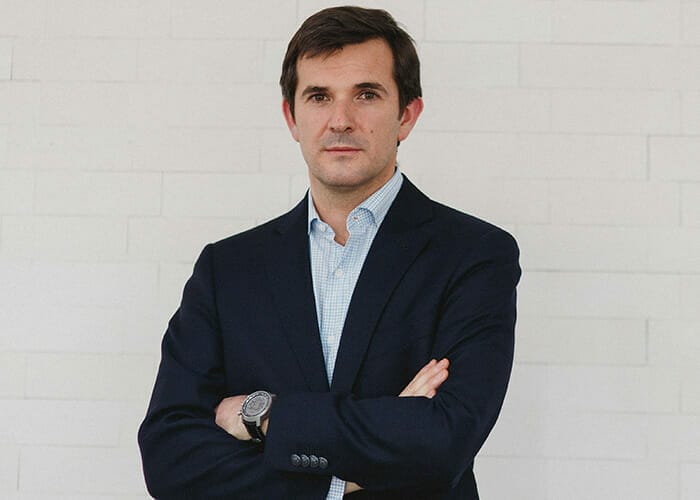

Chile’s AFP Habitat’s adventurous course

Investment strategy at Chile’s second largest pension fund, the $45 billion AFP Habitat, is characterised by both a large exposure to emerging markets and a growing global alternatives portfolio.

“We are an emerging market ourselves and feel comfortable assessing the risk return profile of those markets,” explains chief investment officer Alejandro Bezanilla Mena, speaking from the fund’s Santiago headquarters in Chile’s capital.

It’s where protestors recently took to the streets to voice their discontent with the country’s private pension system. Set up under the dictatorship of Augusto Pinochet, Chile requires workers to contribute 10 per cent of their salaries to funds known as Administradoras de Fondos de Pensiones, (AFPs).

It has nurtured a $170 billion pension pool that has encouraged other countries to copy the Chilean model, yet people living longer, saving less, and poor returns from financial markets has fanned today’s demand for reform.

Bezanilla also notes that the Chilean system doesn’t cater for those either without a pension, or who have been unable to regularly contribute during their working life, leaving too many without retirement provision.

“We are in the middle of a reform process that should address a new scenario of expected returns and higher longevity. In the last 35 years we haven’t changed the main parameters of the system, so the level of contributions and the retirement age are the same as they’ve always been,” he says.

Sponsored Content

As the government tries to settle on a new system, AFP Habitat remains set on its own, adventurous course.

Emerging market equities account for almost 60 per cent of the fund’s total equity allocation, while emerging market bonds account for 45 per cent of the international fixed income allocation.

Japanese equities ‘disappointing’

“At the beginning of the year we started to rotate from developed markets into emerging markets, on the back of less perceived risk and very low valuations. It proved to be good timing,” says Bezanilla, detailing that investments in international fixed income include credit, mainly US and European high yield, hard currency emerging market corporate bonds and local currency emerging market government bonds.

He says he has been “disappointed” with Japanese equities where he hoped changes in corporate governance and the renewed focus on profitability in Japanese companies would pay off.

Asset allocation at the fund depends on its two million contributors’ own risk appetite. Since 2002, AFP Habitat, like the other five AFP funds, was required to run five different funds with different levels of exposure to equities and risk, ranging from the conservative to the very risky.

“This multi-fund system was created to allow contributors to choose amongst any of the funds while taking into account their age and risk preferences,” says Bezanilla who joined the fund as a domestic equity portfolio manager in 2005.

Contributors can invest in two funds at any given time. The most aggressive fund, Fund A, can have up to 80 per cent in equities and has seen real term returns since inception of 6.4 per cent, while the most conservative fund, Fund E, has an equity allocation capped at 5 per cent and has posted returns since inception of 4.1 per cent in real terms.

“Our asset allocation depends primarily on the decisions our contributors make regarding their risk appetite. Currently, they are very active and opt towards changing from aggressive funds to conservative funds back and forth often,” he says.

AFP Habitat has posted an 8.4 per cent return in real terms since inception 35 years ago.

Stiff competition

Stiff competition for returns within Chile’s borders has encouraged a diversified, global strategy.

“The Chilean pension system manages about $170 billion, which represents more than half of Chile’s GDP. This means we don’t have any other option but to diversify our investments outside of Chile,” he says.

A growing global alternatives allocation is one consequence. The fund used to have local investments in private equity, infrastructure and real estate, but the allocations were too small to make much of a difference to the portfolio, mainly because of the lack of local managers with the experience and track record, he says. After the financial crisis, global

alternative managers seeking new opportunities began to appear in Chile.

“It allowed us to enter an asset class that was interesting and diversifying for our portfolio. Since then, the alternative portfolios have been growing slowly but steadily,” he says.

The fund favours passive management in US equities and “some passive” in Japanese and European equities, but actively manages its emerging markets and high yielding debt allocations.

“The decision to invest in active management is based on quantitative analysis to assess the ability of the manager to generate alpha consistently, and on the conviction that, in certain markets, it is easier to produce that alpha due to information asymmetries and indices that are too concentrated in a few companies,” he says.

“We only invest passive when we can prove that there is no alpha generation or when we need more liquidity for our decisions.”

The fund tends to use its own in-house team to invest in local assets, but favours external managers in international markets.

However, it recently began to invest directly in international government bonds to better hedge and manage liquidity, and is also beginning to invest directly in Latin-American equities and bonds for the first time.

“This was a natural step, since we already invest directly in Chilean companies, many of which are already competing within the same markets as Latin-American companies, and that we have therefore already studied to have a better understanding of the competitive environment.

“We believe we can produce alpha with our knowledge of the markets and savings from the external managers’ fees.”

External managers’ costs are down 40 per cent in comparable terms since 2002, accomplished by “several rounds of negotiations with our counterparts,” he concludes.

Leave a Comment

More from this fund

Long term lens shields Colorado from private credit jitters

Long term lens shields Colorado from private credit jitters

As concerns in private credit mount, Colorado PERA CIO and COO Amy McGarrity says the pension fund isn’t seeing any strains in its growing allocation to the asset class, arguing that long-term investors are shielded from the risks because they can lock up their capital to weather market cycles.

Sort content by

TRS strikes gold: Tiny allocation crushes its benchmark

This year, TRS doubled its tiny allocation to gold via a special fund that buys gold ETFs and mining companies. The strategy returned nearly 60 per cent, thanks to market conditions including inflation, geopolitics, government debt levels and de-dollarisation pushing gold higher.

Limited alternatives keep global capital anchored to the US

Singapore’s Temasek said while US exceptionalism may be “fraying”, there aren’t many alternative markets that can handle the same volume of global capital. Meanwhile, fellow sovereign fund GIC believes the greenback’s reserve currency status remains solid even though currency swings could spell trouble for foreign investors.

LP demands for bespoke solutions define new era for private managers

Private asset managers can expect to work harder for LP capital as allocators increasingly look for more bespoke, flexible structures that meet their changing needs around liquidity, fee and types of exposures. Investors at FIS Oxford unpack how they approach manager relationships in the new era of private investments. 

Fordham University dials up growth equity, cools on private credit

Fordham University CIO Geeta Kapadia is cutting back on private credit, calling it an asset class “less able to financially engineer returns” in a higher-rate world. She’s instead redirecting the $1.1 billion endowment to venture and growth equity and entrusting larger mandates to a smaller roster of high-conviction managers.

South Carolina lifts private equity and credit as cashflow turns positive

The South Carolina Retirement System Investment Commission's improved liquidity position has allowed the plan to tilt its portfolio towards unlisted asset classes, including private equity and private credit. The fund grew fast thanks to funding reform, improved salaries, and positive investment returns and is now looking to boost long-term performance.

Investors unpack regime-based portfolio thinking 

Funds are operating in an extraordinary environment, with Scott Chan, chief investment officer of CalSTRS, saying he has never witnessed so many “large shifts stacked on top of the other” in his investment career. Amid the change, investors are increasingly shifting to a scenario and regime-based asset allocation.



