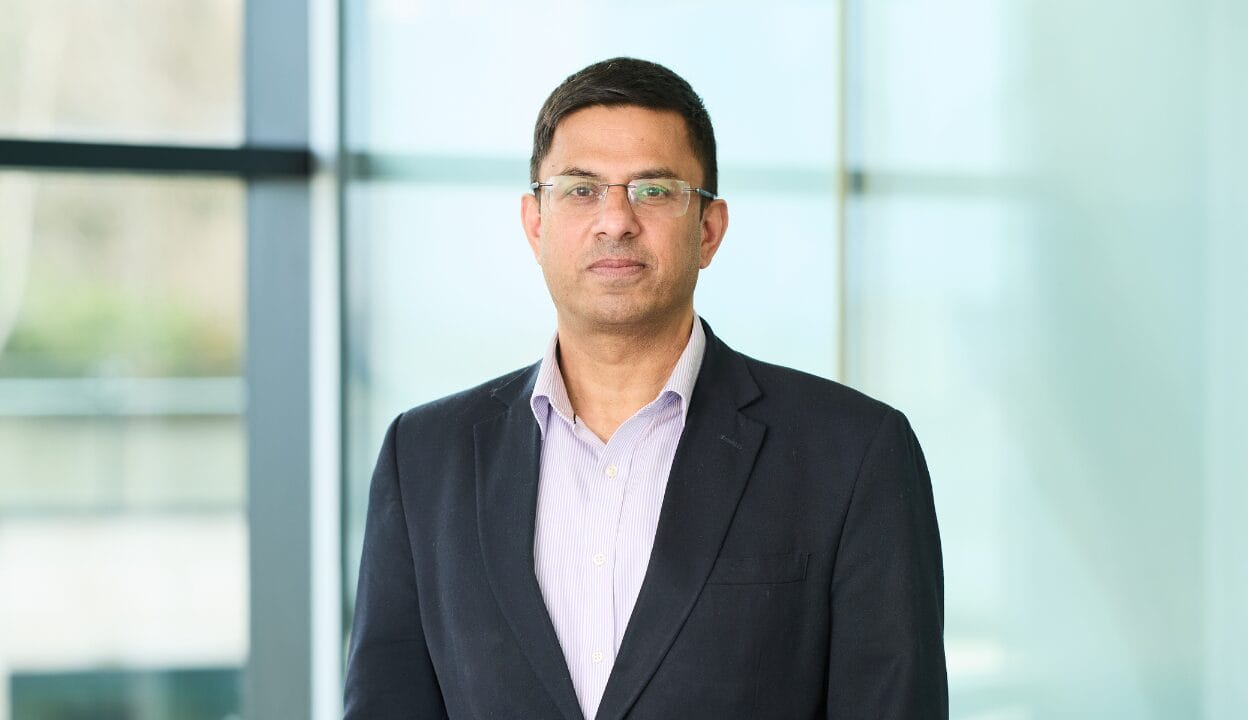

Chicago Teachers leans into diverse managers; exceeds targets

Chicago Teachers is bullish on allocating to diverse managers, more than doubling its target allocation to more than half of the fund’s AUM. Its CIO explains how the strategy adds value through access to differentiated strategies and competitive fee structures.

Chicago Teachers Pension Fund has smashed its target to allocate 20 per cent of assets under management to minority, women and disadvantaged-owned business enterprise firms (MWDBE), in a program that CIO Fernando Vinzons says adds value, mitigates the risk of groupthink and allows CTPF to tap niche strategies and fee benefits. The fund currently invests 57 per cent of its total AUM and equivalent to $7.6 billion in its emerging manager program.

“Emerging managers can offer several advantages, including differentiated strategies, competitive fee structures, and the potential to access less crowded opportunities. From a portfolio construction standpoint, they can also help diversify sources of return,” Vinzons, CIO at the pension fund since July 2022, tells Top1000funds.com.

By comparison, New York City retirement systems, with one of the most celebrated emerging manager programs, has pledged to allocate 20 per cent of assets under management to diverse managers by 2029 in an increase from current levels of 14.6 per cent of the portfolio and equivalent to around $26 billion. Elsewhere, MassPRIM’s PRIT Fund allocates approximately $15.1 billion, equivalent to about 13 per cent of its AUM to diverse investment managers across all asset classes.

CTPF has partnered with MWDBE firms since the beginning of the 1990s and early dollars were invested with firms such as Ariel Investment, Zevenbergen and Attucks. The strategy got a boost from regulatory changes in 2009 under Illinois Public Act 096-0006 that included new rules requiring the state’s pension funds to set up formal policies and goals to invest with emerging managers.

Today, women-owned managers account for half the $7.6 billion allocation to MWDBE firms and Disabled Veteran-owned firms the smallest proportion, managing $42.2 million. 

Sponsored Content

CTPF invests with emerging managers through direct mandates (with 42 MWDBE firms) and (75) manager of manager or fund of funds programs. Since the inception of the MoM programs, 10 firms have graduated to direct mandates with CTPF and due to their small size, opportunities for many of these firms would not be available without the manager of managers programs.

Emerging managers must meet the same performance and risk standards as any other managers CTPF employs and the pension fund doesn’t distinguish diverse manager returns from the returns of its wider manager cohort. Vinzons explains that all managers are evaluated using the same performance, risk, and operational criteria, regardless of ownership status and emerging managers are central to CTPF hitting its target return of 6.5 per cent.

“Ownership characteristics do not change our performance expectations. Our focus remains on hiring the best managers for the portfolio based on merit, performance potential, and risk management. Our investment manager diversity efforts are longstanding, policy‑driven, and fully consistent with our fiduciary responsibilities as long‑term investors.” 

In fiscal year 2025 the pension fund returned 12.05 per cent while five and ten-year annualised gross returns were 9.66 per cent (vs. benchmark of 9.24 per cent) and 8.09 per cent (vs. benchmark of 7.75 per cent) respectively.

In recognition of the challenge emerging managers face getting in front of pension funds, CTPF hosts a first look meeting every other month to provide new managers with the opportunity to meet the CTPF team including investment consultants, staff and the board.

Short term events shouldn’t drive long term decisions

Vinzons says he isn’t adjusting anything in the portfolio in response to today’s volatility and inflation coming down the line because of the war in the Middle East. He says CTPF periodically reviews its asset allocation and portfolio construction to ensure alignment with its long‑term return objectives, risk tolerance, and liquidity needs and any adjustments are “evolutionary rather than reactive”.

He says strategy is driven by long‑term capital market assumptions, diversification benefits, and disciplined rebalancing rather than short‑term market conditions and his focus remains on maintaining a well‑diversified portfolio that can perform across market cycles.

“As a long‑term investor, we emphasise discipline, diversification, and adherence to policy rather than tactical market timing. For long‑term investors, geopolitical conflict reinforces the importance of diversification and risk management rather than prompting immediate portfolio changes. We monitor potential second‑order impacts such as energy markets, inflation expectations, and broader global growth, but our investment approach is designed to withstand geopolitical uncertainty over time. Our policy framework helps ensure that short‑term events do not drive long‑term decisions,” he said.  

Still, he is closely monitoring liquidity, pacing across private markets, and manager performance relative to expectations to ensure resilience in a higher‑volatility environment – while continuing to meet those long‑term return objectives.

A resilience that is challenged, given Chicago’s pension systems remain among the most poorly funded retirement systems in the country. CTPF has a 47 per cent funded status exacerbated over the years by late contributions from the city’s employers.

He says contribution timing is an important consideration, particularly from a liquidity and pacing perspective. But that investment strategy also takes these factors into account through disciplined cash‑flow forecasting, conservative liquidity management, and measured pacing in private markets.

Leave a Comment

Why NYC pensions CIO hasn’t drunk the ‘TPA Kool-Aid’

Why NYC pensions CIO hasn’t drunk the ‘TPA Kool-Aid’

Three decades of investing have given Monte Tarbox sharp eyes for recognising risk and opportunities, and he’s putting it to use as the new permanent chief investment officer of the $306 billion NYC Bureau of Asset Management. In an interview with Top1000funds.com, Tarbox outlines his vision for the fund, why he’s bullish on infrastructure but “nervous” on PE, and why he hasn’t drunk the TPA “Kool-Aid”.

Sort content by

Panama’s sovereign fund mulls the future of digital assets

Abdiel Santiago, CEO and chief investment officer of the Fondo de Ahorro de Panama, Panama's $1.5 billion sovereign wealth fund, is one of many CIOs watching from the sidelines as digital asset markets develop.

Guardians of the Future: The evolution of New Zealand Super

New Zealand Super’s new chief executive Jo Townsend inherits an organisation with a strong culture but facing some challenges posed by rapid growth. An internal project aims to reduce complexity and focus on simplicity for a fund already rated by WTW as operating at global best practice levels.

Culture Club: CalPERS puts people first in talent reboot under new CIO

Only two months in and CalPERS' new CIO Stephen Gilmore has already made his mark, with plans to overhaul talent and culture in the investment office, meeting frequency and the number of strategic initiatives slashed and an increased focus on data and technology to improve efficiency and reduce risk.

Utah’s URS: Why fossil fuels and alt energy hold key to climate crisis

US public funds should stop wasting time on thinly veiled political activism, ditch ESG conferences and repurpose most of their sustainability staff, says URS’ CIO John Skjervem. Instead they should invest in proven energy investments and move from either/or to both/and which allows fossil fuels to jostle alongside alt energy.

Church Commissioners: Managing historic real assets for the future

The jewel in the crown of the Church Commissioners’ portfolio, the London-based asset manager for the historic assets of the Church of England, is its allocation to real assets, which contributes to returns used to support the work and specific needs of the church, alongside clergy pensions.

Why AP4 has decided to integrate Scope 3 emissions across equities

Swedish buffer fund AP4 has begun integrating Scope 3 into its systematic equity allocation, convinced a company's up and downstream emissions data signposts the green winners of the future.

Previous