Beating risk with alternatives

In an attempt to reduce tail risk, a large US west coast endowment allocated up to 15 per cent to a Man Investments’ portfolio of alternative strategies that includes global macro and managed futures.

Most institutional investors are coming to terms with the large amount of risk in their portfolios due to their high allocations to equities – it is how they choose to diversify the risk exposure where interest lies.

One way is to consider liquid alternative investment strategies that capture directional opportunities, both long and short, in a range of asset classes.

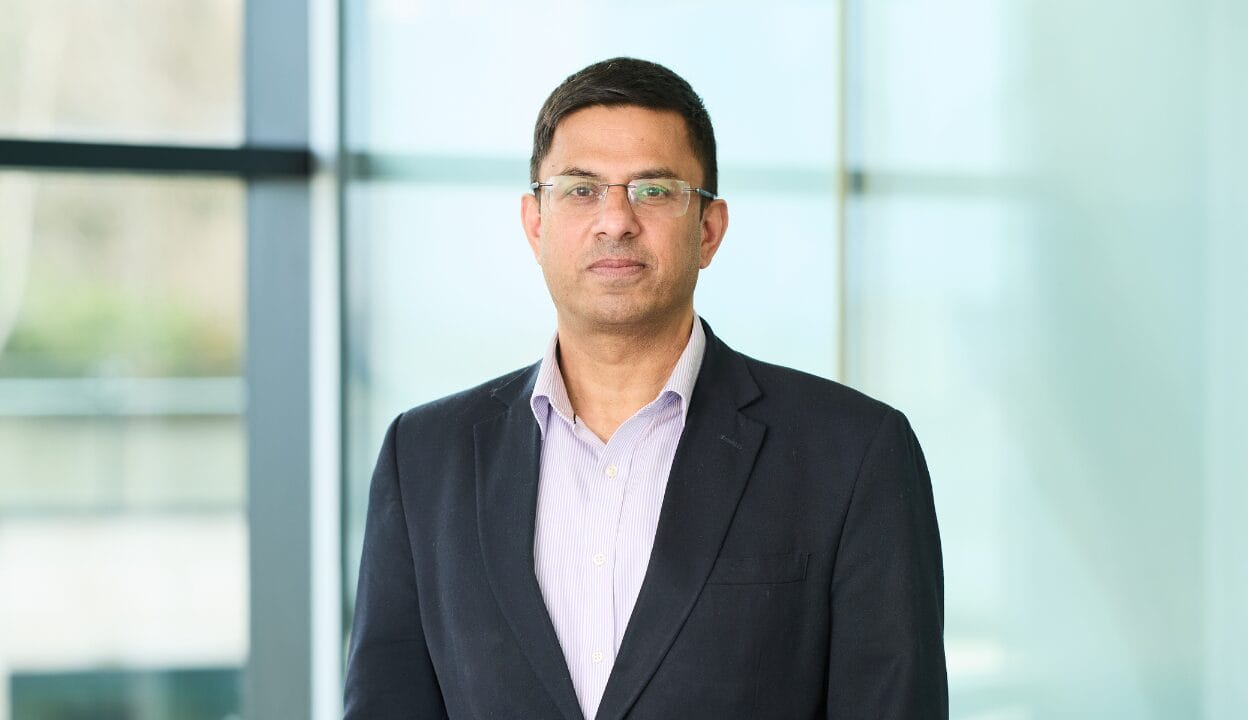
Head of portfolio management at Man Investments, Art Holly, says the major problem for many investors is they have embedded equity in their portfolios far too much.

“There have been 50 years out of the past 90 years where equities didn’t make a dime for you. Why should that be 70 per cent of your portfolio?” he says. “You can smooth your returns and get a better ride without that sort of volatility. We believe you can use hedge funds to achieve that – specifically equity hedge, global macro and managed futures.”

Sponsored Content

Holly says most investors build portfolios on two strategies – equity traditional beta and fixed-income traditional beta.

But, he says, hedge funds can expand that scope by considering traditional beta alongside alternative beta and primitive trading across various asset classes such as equities, fixed income but also commodities and foreign exchange.

In this way he says an “all weather” return-enhancing portfolio can be built with both long-only equity and liquid alternative investment strategies including global long-short equity (equity hedged), managed futures and global macro.

The giant alternatives manager did this for one client, the west coast endowment, which has been running a version of Man’s Proposed Refinement strategy since 2008.

“The endowment already had allocations to equity hedge and event-driven strategies, but in 2008 they were concerned and wanted to build something to alleviate left tail-risk, so we added global macro and managed futures,” Holly says, adding the latter two strategies are the best diversifiers of the downside.

Managed futures, in particular, he says are so diversified, and non-correlated, to equity.

“As equity markets go up or down they can make money, agnostic to the direction of equity markets.”

Holly says equity volatility and high-equity draw-downs can be reduced by substituting part of a pension fund’s long-only equity with directional, liquid alternative investment strategies: global long-short equity, managed futures and global macro. Its model portfolio, the Man Proposed Refinement, is made up of 21 per cent of managed futures, 44 per cent equity hedged and 35 per cent global macro.

“We build only customised solutions and our clients see us as being an extension of their research team. For example they see us as a 120-people extension to their own investment team. We literally hand-held them during the build of their portfolio,” he says.

The allocation, comes out of equities, with the amount varying from about 15 to 10 per cent depending on their chief investment officer’s view of the world.

Man Investments’ Holly says growth assets tend to show a return profile with cycles, while these suggested ‘liquid strategies’ display a dynamic adjustment of the correlation through time, which is an attractive diversification opportunity.

Man’s analysis shows that a balanced allocation to the three liquid strategies creates a portfolio with a strong track record – 10.5 per cent annualised return over the 10-years of January 1999 to April 2010, compared with a growth asset allocation of 7.06 per cent return. But it is also creates a portfolio minimising losses.

“It is a way to win without losing,” Holly says. “We wanted to come up with a better mouse trap, what would make people happy and satisfy their problems. We want two thirds of the upside and one third of the downside of equity returns and are trying to get clients to build portfolios with alternative alpha and beta.”

“Alternative beta is a relative beta game, it’s very liquid and transparent environment. Hedge funds fall over because they are: overly leveraged, overlay concentrated, or overly illiquid, they succumb to style drift.”

Holly categorises hedge funds into five groups:
1. equity hedge
2. event driven, including merger arbitrage, distressed managers and special situations
3. relative value, including fixed income arbitrage, credit arbitrage, equity market neutral, and multi-strategy
4. global macro, including commodities, emerging markets, energy and global traders
5. managed futures, including long term and short term trend followers.

Man Investments has 160 managers in its universe and 76 per cent of its assets are allocated to those in more nimble managers that have between $500 million and $1.5 billion under management, those Holly calls in “the sweet spot”.

The weighted average asset allocation of the endowment, which is made up of the individual campus endowments, is 18.4 per cent to US equities, 23.1 per cent to non-US equities, 14.4 per cent to alternative equities, 14.1 per cent to US fixed income, 3.7 per cent to non-US fixed income, 3.1 per cent to cash and 23.2 per cent to absolute return.

Leave a Comment

Finland’s Elo: Larger equity allocations promise new media scrutiny

Finland’s Elo: Larger equity allocations promise new media scrutiny

As Finland's pension funds prepare to increase their equity allocations to unprecedented levels compared to global peers, they must also navigate a new and unfamiliar risk. Elo's chief investment officer Jonna Ryhänen explains the fund's investment approach going forward and how it will manage stakeholder and media scrutiny as they react to swinging volatility and returns.

Sort content by

PSP expands total portfolio approach

In just 20 years the Canadian fund PSP Investments has grown from a standing start to more than C$200 billion. As it enters its next five year strategy, Amanda White spoke to CIO Eduard van Gelderen about the next phase of portfolio management and the development of its total portfolio approach including assessing and allocating investments on a sector basis.

Church of Sweden manages concentration risk

The SEK10 billion Church of Sweden fund invests all its assets through a sustainability lens. It’s had stellar performance driven largely by a chunk of the fund invested in the Generation Investment Management global equity fund, an investment that was diluted last year to manage concentration risk. Amanda White spoke to CIO, Anders Thorendal.

OPTrust leads on AI innovation

The C$23 billion Canadian fund OPTrust is using AI to reduce risk in a strategy it hopes to roll out to the wider portfolio. Wei Xie explains the benefits and challenges of machine learning including AI's ability to identify complex dimensional relationships.

AIMCo enhances top down strategy function

In October 2020 AIMCo, the C$118 billion Canadian fund appointed its first chief investment strategy officer splitting the investment function between the top down strategy and bottom up implementation responsibilities. Amanda White talks to Amit Prakash about how the new function will add valuable investment insights to clients.

Future Fund sceptical on correlations

The Future Fund, Australia’s A$226 billion sovereign wealth fund, has embarked on an ambitious project instigated during the crisis which includes re-examining its investment assumptions, risk tolerance and the way it allocates capital. Amanda White talks to the fund’s new CIO, Sue Brake about where the fund will be allocating in the future including alternatives and active management.

NEST’s PE challenge to the industry

The UK defined contribution fund, NEST has added a number of new asset classes to its portfolio over the past year – including infrastructure with a focus on renewables – but the fund is still missing an allocation to private equity. CIO Mark Fawcett spoke to Amanda White about the fund’s challenge to the industry on private equity fees, its focus on climate-aware portfolios and innovative approaches to portfolio management.

Previous