
Alecta doubles down on governance, risk management and culture

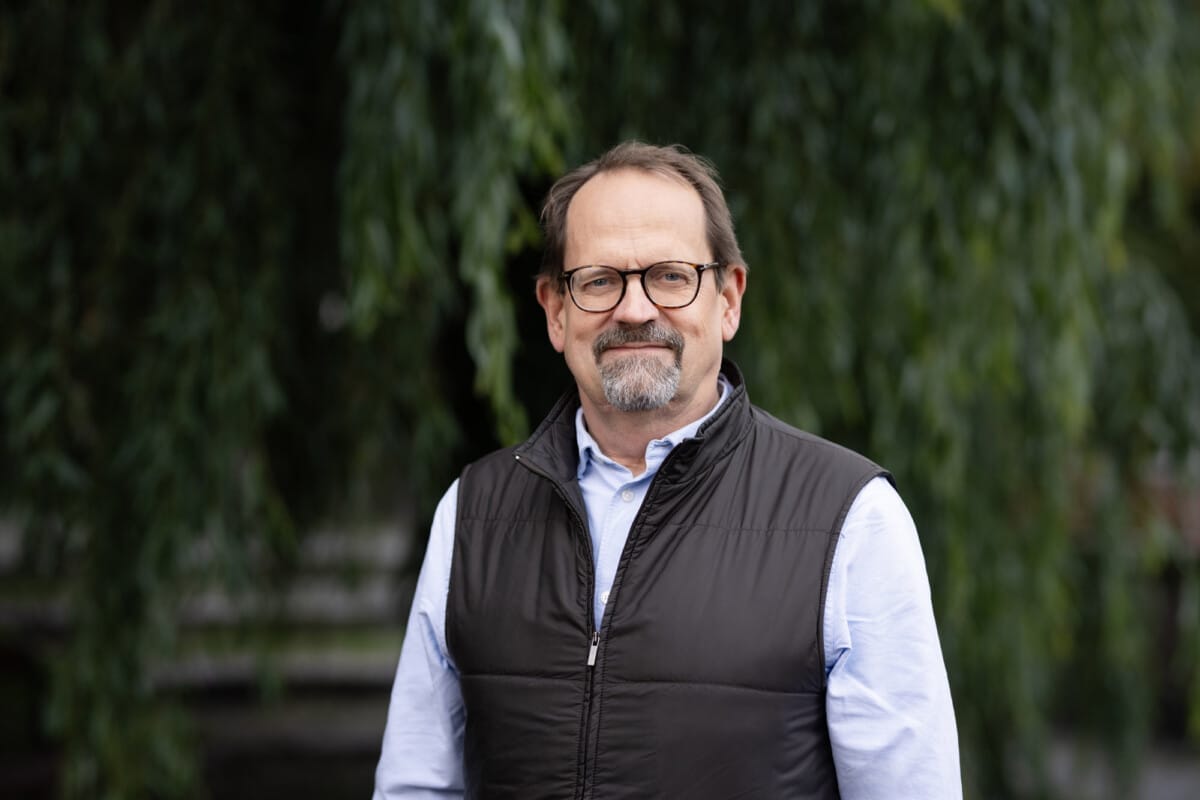
Peder Hasslev, Aletca, pressbild

Sweden’s largest pension fund, Alecta, has spent much of the last year continuing to work on improving governance, risk management, competence and culture in the wake of a $2 billion loss in 2023 attributable to investments in US regional banks, including Silicon Valley Bank, turning sour.

Alecta, Sweden’s biggest pension fund with 1.31 trillion Swedish kronor ($126 billion) of assets under management, has spent much of the last year continuing to work on improving governance, risk management, competence and culture.

It’s been essential, says chief executive Peder Hasslev, to rebuild damaged trust in the wake of the investor losing $2 billion in 2023 when its investment in US regional banks Silicon Valley Bank (SVB), Signature Bank and First Republic Bank turned sour. The fund also experienced losses from its investments in Scandinavian real estate company Heimstaden Bostad.

“We have worked intensively on developing and implementing improvement measures to strengthen Alecta,” said Hasslev who has been in the top job since September 1.

Alecta began investing in SVB in June 2019 and made its last investment in November 2022. The pension fund was the fourth largest shareholder in SVB.

In the immediate aftermath of the losses, Alecta fired its chief executive Magnus Billing and head of equities Liselott Ledin. This year it has continued to tighten governance following an April 2024 board meeting when four new board members were elected of which three are independent from the social partners. Alecta is a mutual fund, owned by the Confederation of Swedish Enterprise, Unionen, PTK, Sveriges Ingenjörer and Ledarna.

Sponsored Content

Alecta has also struggled to fill the position of chair on its board following the resignation of Ingrid Bonde in October 2023.

In January 2024, the committee proposed Lars Rohde but withdrew this due to a conflict of interest. Next up was Carina Åkerström, former CEO of Handelsbanken, but she resigned after just 11 days. Currently, Jan-Olof Jacke is chair of the board.

The Swedish Financial Supervisory Authority (FSA) opened an investigation into the bank losses in May 2023. A remit it then expanded to include the fund’s investments in indebted real estate company, Heimstaden Boden in which Alecta lost SEK 12.7 billion.

Preliminary findings of the FSA investigation released in July found that the company violated regulations. The FSA said it has notified Alecta of its observations from its investigations and the pension fund has been given until the 6 September to respond to the FSA.

“The fund has assisted the Financial Supervisory Authority with material and answers to ensure that the investigations can be carried out as thoroughly and efficiently as possible. At the end of June, we received an opinion letter with the Financial Supervisory Authority’s preliminary assessments. We are now working on going through it and formulating our response, in accordance with the usual process,” said Hasslev.

The pension fund returned 7.7 per cent in the first half of 2024 with the strongest performance from equities which returned 12.9 per cent in the period. Volatility in interest rates  and rising long-term interest rates in Europe and the USA had a negative effected alternative investments.

However, the fund said that the prospect of lower short-term interest rates in the future has improved the outlook for real estate.

The value of Alecta’s holdings in Heimstaden Bostad rose by 3.9 percent during the period and now amounts to SEK 39.2 billion.

Alecta’s operating costs for the interim period amounted to SEK 586 million, higher than the target of SEK 576 million. The higher outcome is mainly attributable to one-off costs related to the extraordinary events in 2023.

Leave a Comment

Beyond asset classes: Active credit becomes the test case for Florida’s portfolio evolution

Beyond asset classes: Active credit becomes the test case for Florida’s portfolio evolution

Florida State Board of Administration has built an active credit portfolio spanning public and private markets, CIO Lamar Taylor says the initiative could be the first step in a broader shift away from traditional asset-class investing towards a framework centred on return drivers and risk exposures.

Sort content by

Postcards from the edge: How CPP Investments will grow to be a $1 trillion

The C$C532 billion ($587) billion CPP Investments has identified four clear “sources of edge” that it will build its organisational transformation on as it prepares for life as a C$1 trillion fund.

How Canada’s PSP Investments is getting to grips with climate data

In an interview with Herman Bril, PSP Investments’ new head of responsible investment, Top1000funds.com looks at how the fund is collecting and reporting on sustainability information based on a technology-enabled, data-driven approach that spans a bespoke, green taxonomy for climate investing to ESG scores derived from AI.

Impact of a slowing China, rising rates on portfolios: UniSuper CIO

John Pearce, chief investment officer of the A$115 billion UniSuper discusses his long-term view on China, inflation and the impact on the fund’s portfolio.

CalSTRS’ Ailman on why funds need to go big or go home

The $298 billion California State Teachers’ Retirement System (CalSTRS) has struggled to find meaningful investment opportunities to protect its portfolio against inflation, highlighting one of the key challenges funds potentially face as they grow, according to the fund’s chief investment officer Chris Ailman.

GIC: Building balanced portfolios for the long run

Navigating the two challenges of heightened macro uncertainty and an increased allocation to private assets could require a fundamental evolution of the asset-allocation process, argue Grace Qiu Tiantian and Ding Li from Singapore’s GIC in a paper written with MSCI’s Peter Shepard entitled Building Balanced Portfolios for the Long Run.

CalPERS board reflects on liquidity and leverage; higher delegation limits

The investment team at CalPERS asks the investment committee for an increase in staff delegation limits for private assets to help meet the new SAA to private markets, and the board reflects on the liquidity and leverage program in place.

Previous



